Harman Phoenix II 200 - 120 Film Impressions
In the summer of 2025 Harman Photo released the follow up to their Phoenix 200 emulsion, known as Phoenix II. Though I’m sure you know this already, as you’re reading this for further information/opinions on the film. :-)
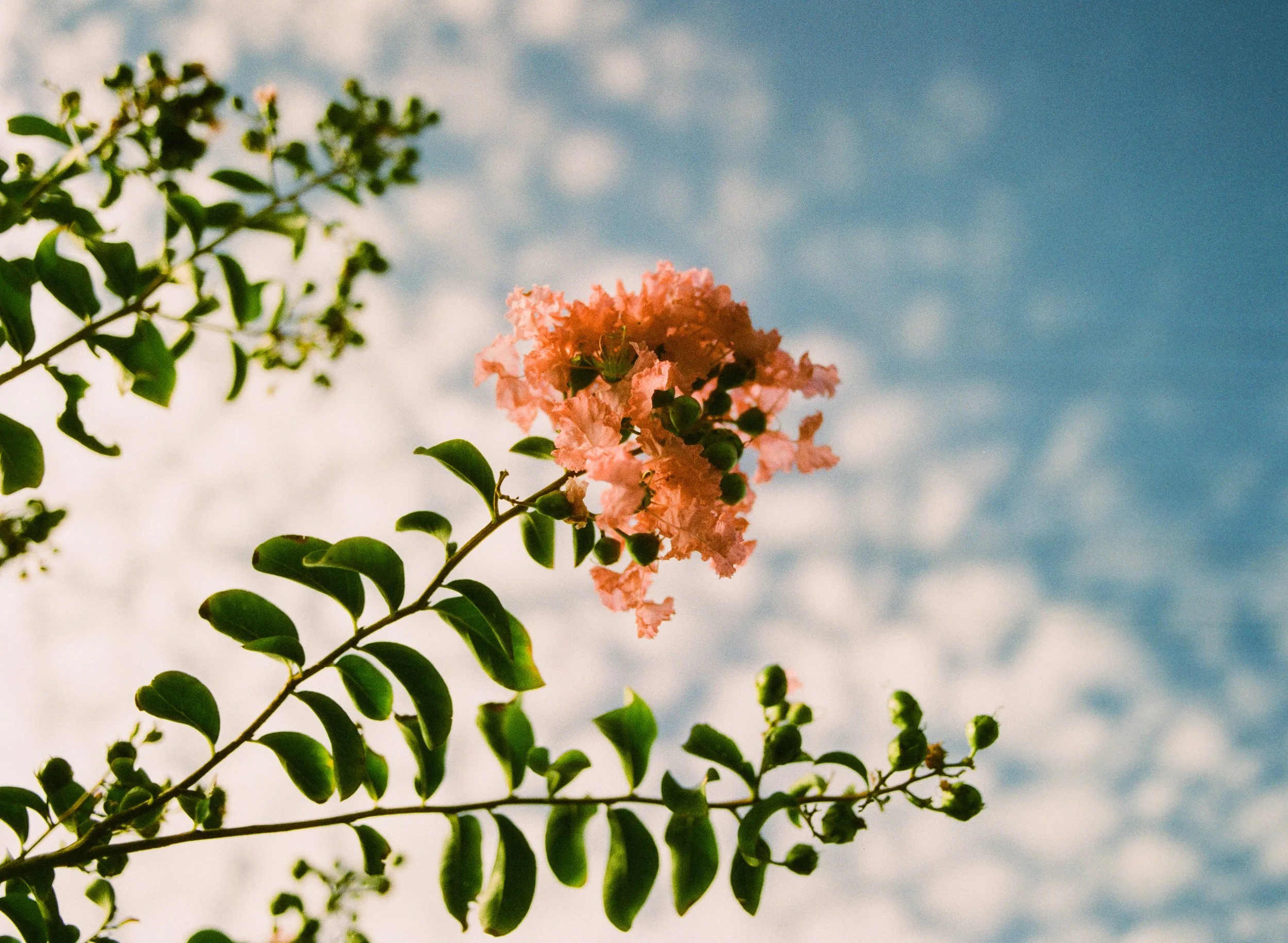
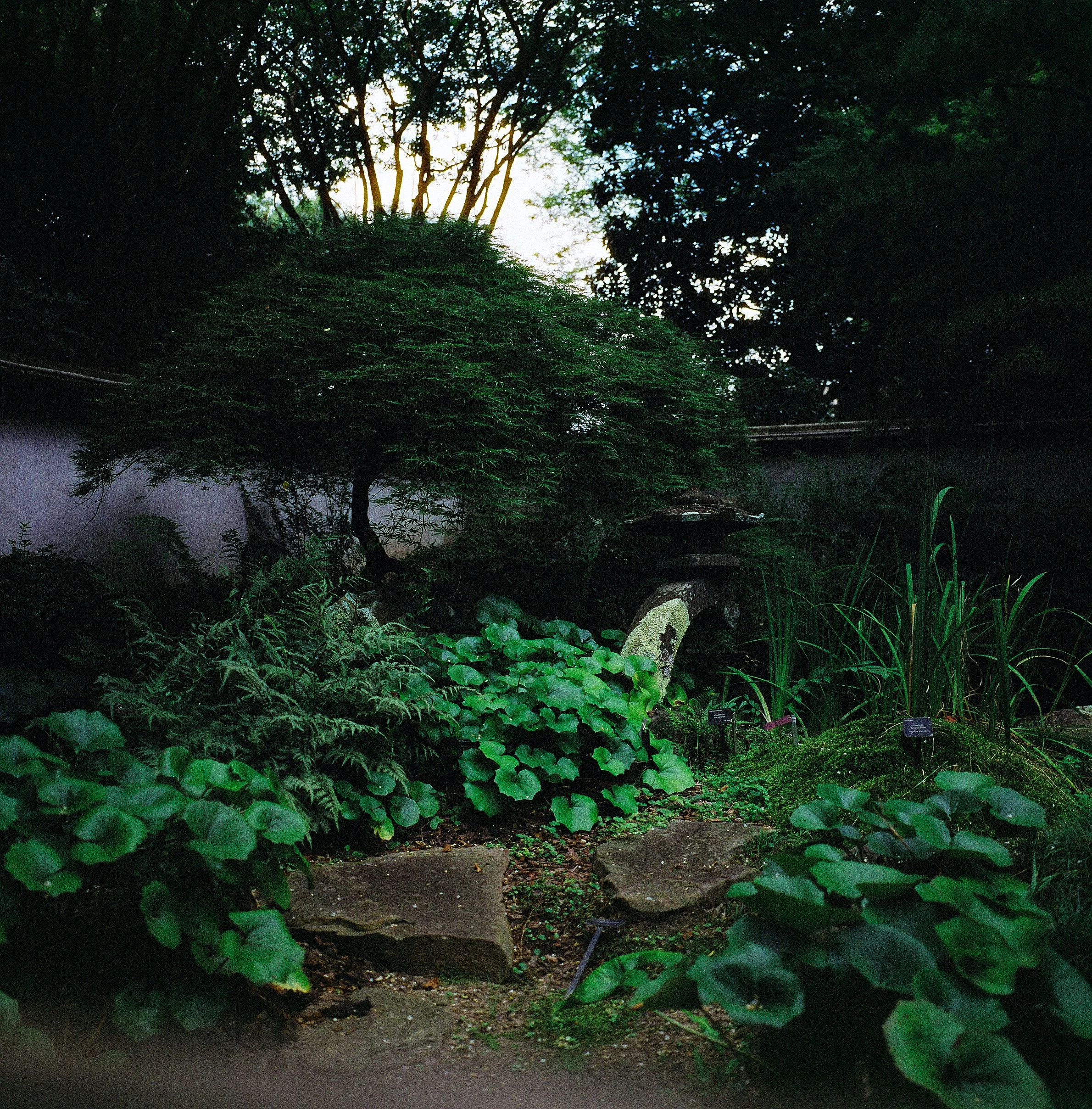
Phoenix II, Bronica ETR-SI 40mm, Brooktree Film Lab
Getting to the point, I picked up this film for 2 reasons.
I want to support Harman with their continued development of new film emulsions. The more diversity and options we have, the better. It would be really bad for consumers in the long term if only Kodak was making color film. Monopolies never benefit consumers.
Unfortunately, I think trying new films and burning piles of cash on it is fun.
Additionally, this past summer I’ve started playing with medium format cameras and with Phoenix II releasing in 120, I ended up picking it up to experiment with more “looks” while I got to know the medium format experience.
Pros:
This film delivers a distinctly unique look and can be a powerful tool in a photographer’s arsenal when their work calls for this type of aesthetic.
Phoenix II is a noticeable improvement over Phoenix I in color accuracy and latitude (based on examples you can find on YouTube and Reddit)
When shot on medium format, it holds up pretty well for cropping/zooming in and can probably be used for larger prints.
The price is right. At ~$12 USD, this film does not overprice itself and knows where it stands. I have even seen this film go on sale down to $10 on occasion.
A new film is a good thing for all of us. With FujiFilm seemingly pulling out of the market, having more options emerge is a benefit for consumers.
Cons:
This film is unpredictable. You will shoot reasonably lit and exposed shots and sometimes colors will shift anyway.
Halation on bright or reflective surfaces is poorly controlled and can quickly be too much.
Despite the improvement in latitude, it still does not match up to Kodak and Ilford’s black and white offerings. Shoot in controlled lighting for best results.
Color-correcting this film can be a bit difficult. Color casts are all over the place and getting it “true to life” takes more work than Kodak’s, FujiFilm’s or ORWO’s offerings.
Phoenix I was discontinued when Phoenix II came out. When/if Phoenix III comes out, this may be discontinued. If you grow attached to this film, there’s no guarantee it will stick around.
Questionable quality control. Having my first roll of this film turn out half a roll of nothing was frustrating.
Experience
As someone who primarily does nature, travel and daily life documentation, that’s the majority of what I did with this film as I waited for my next opportunity to travel.
Being rated as a 200 ISO film, I found it to be perfectly adequate for most everything I’ve wanted to do. Even hand-held macro shots with a Mamiya RB67 wasn’t too much of a problem.
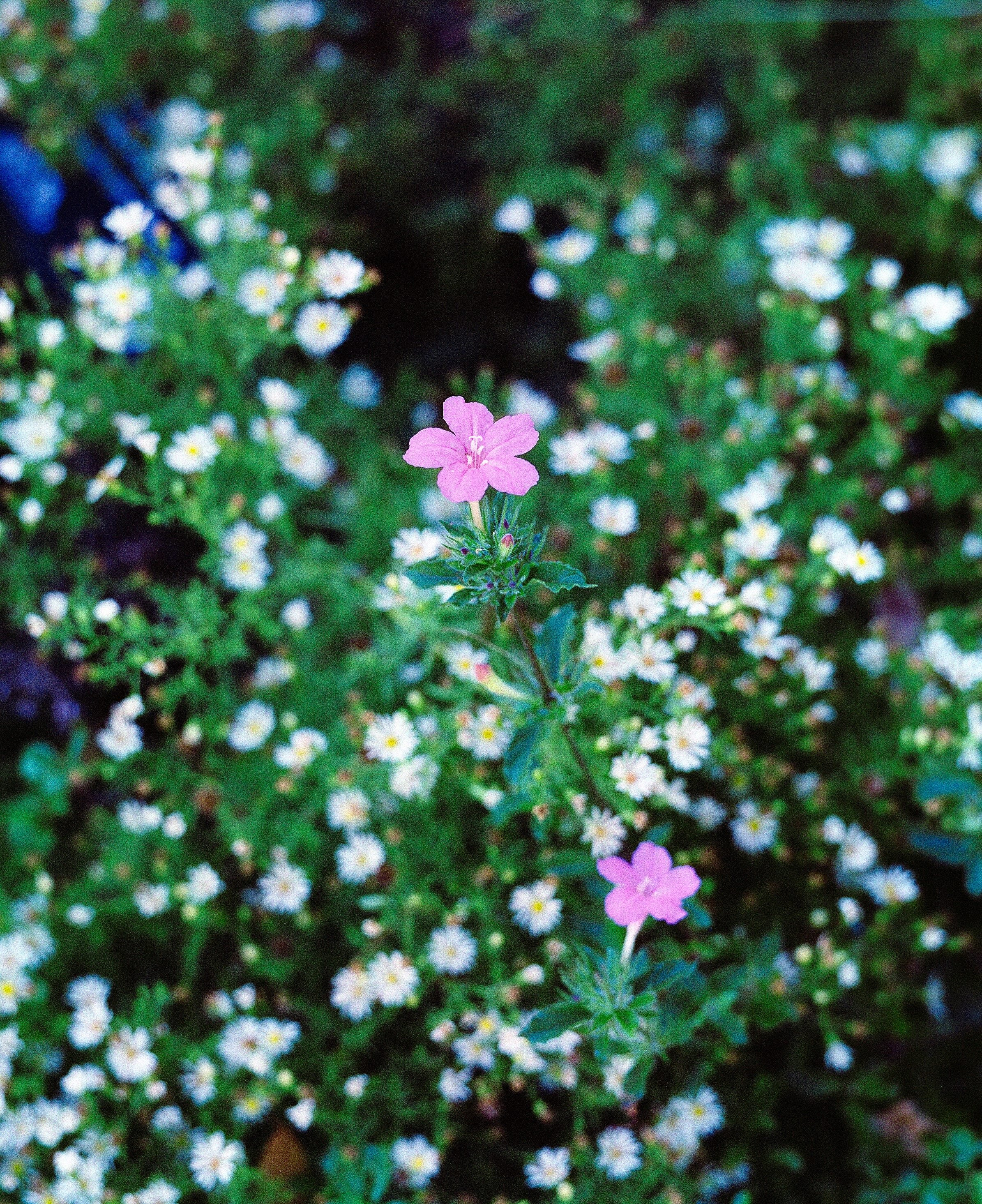
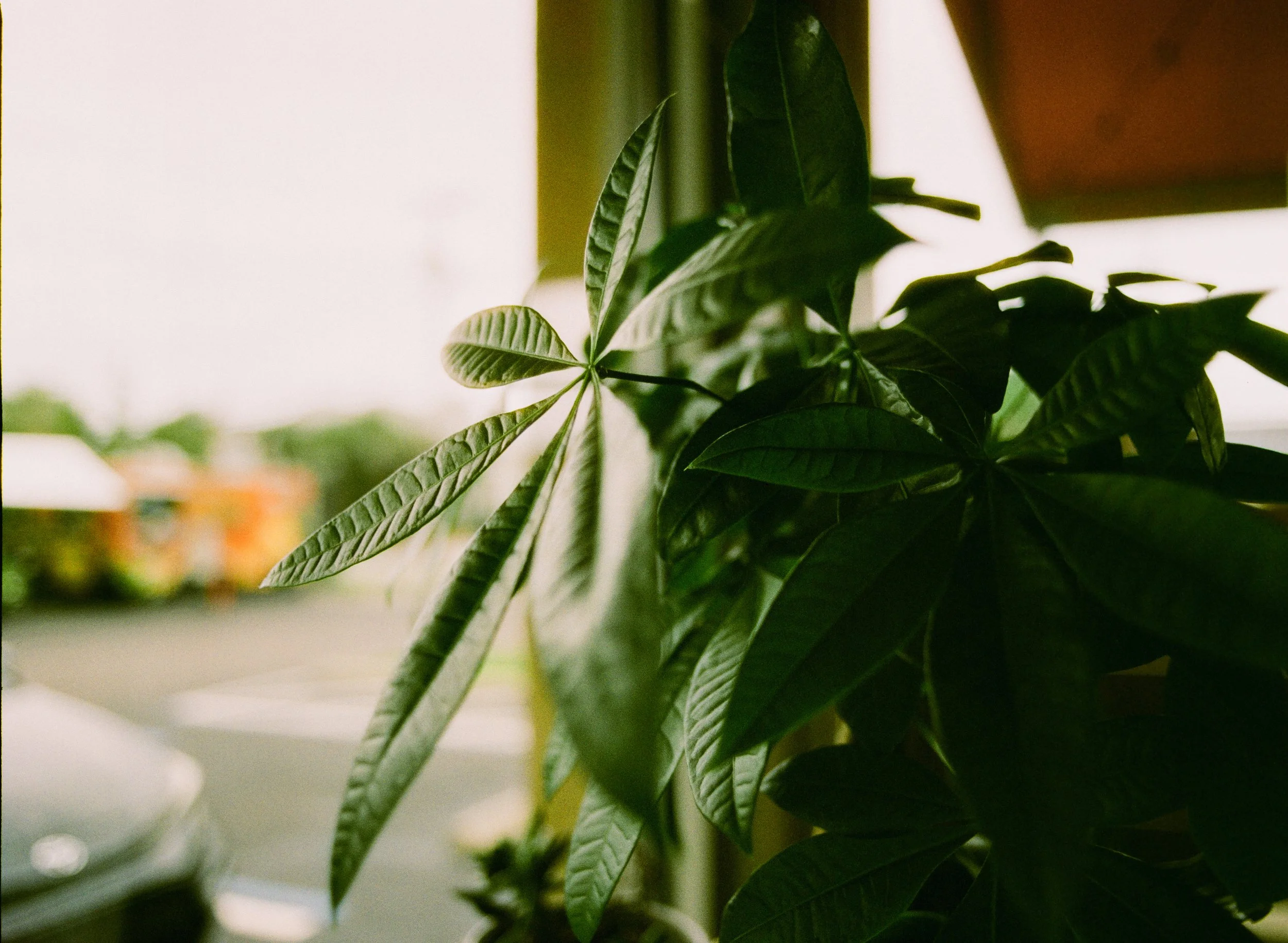
Phoenix II, Mamiya RB67 127mm, Brooktree Film Lab
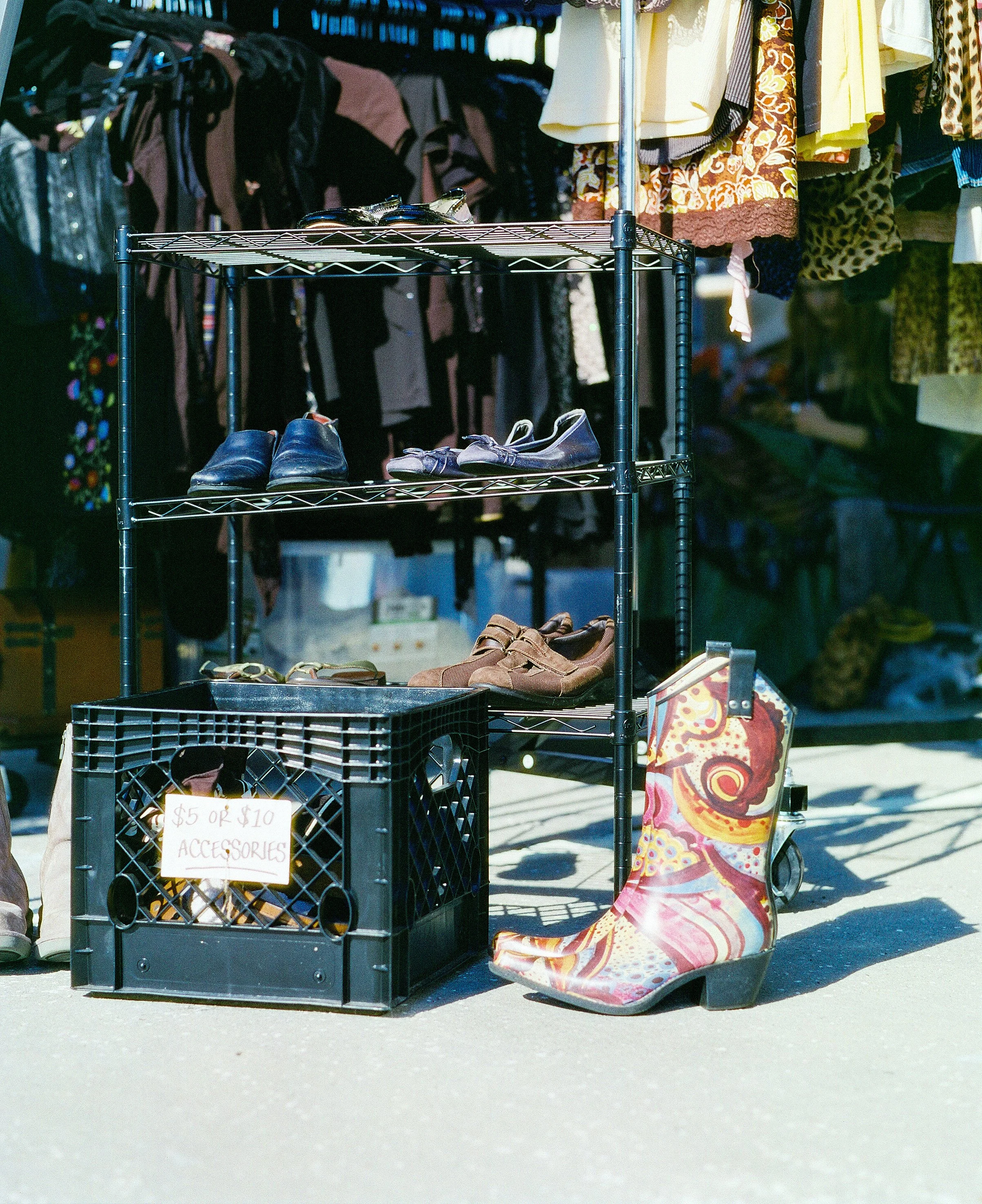
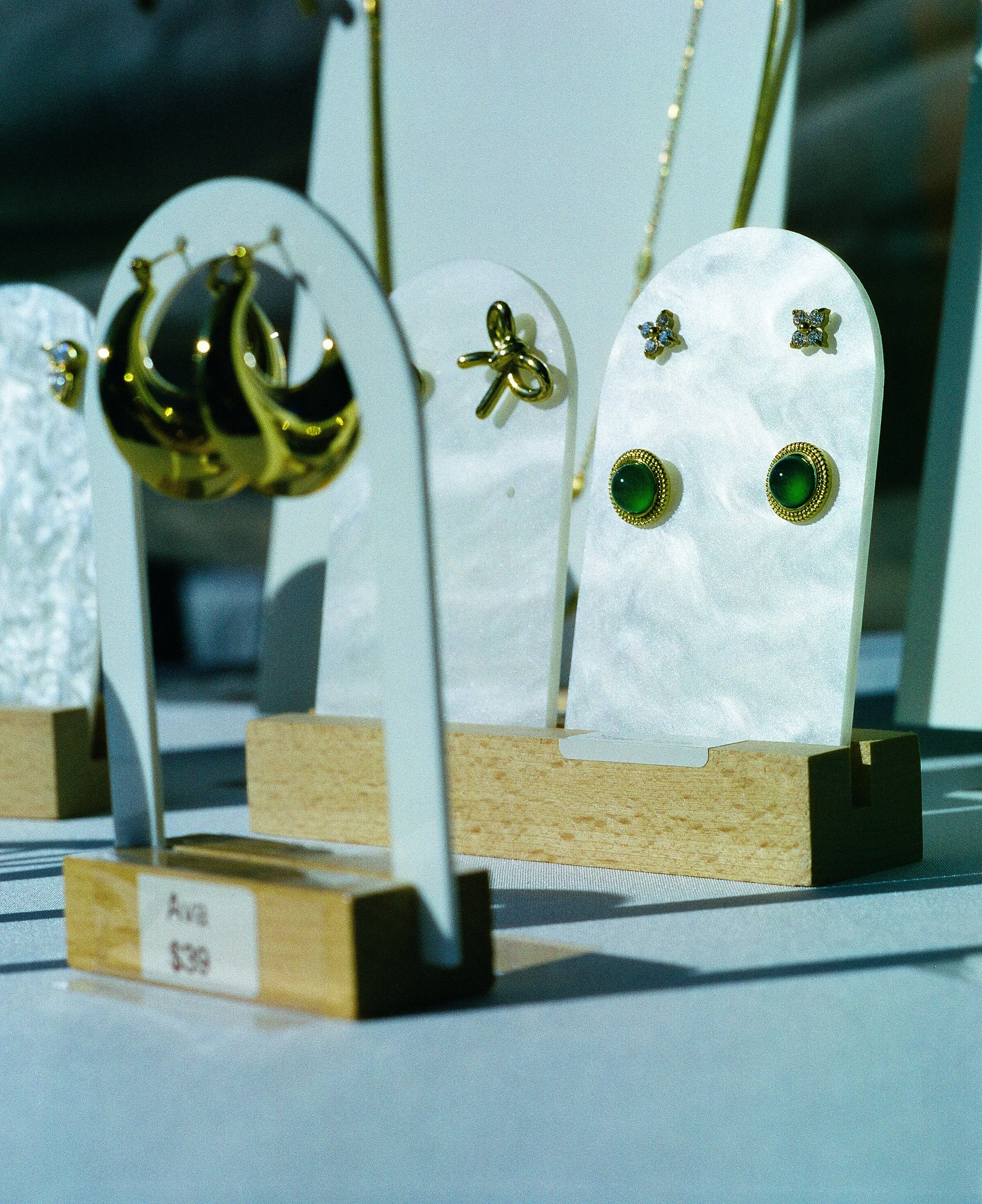
In an interesting turn of events, I also had the opportunity to test the film at a Vintage Market as an event photographer. This gave me the fortunate chance to see how the film handles skin tones in daylight, under shade, etc.
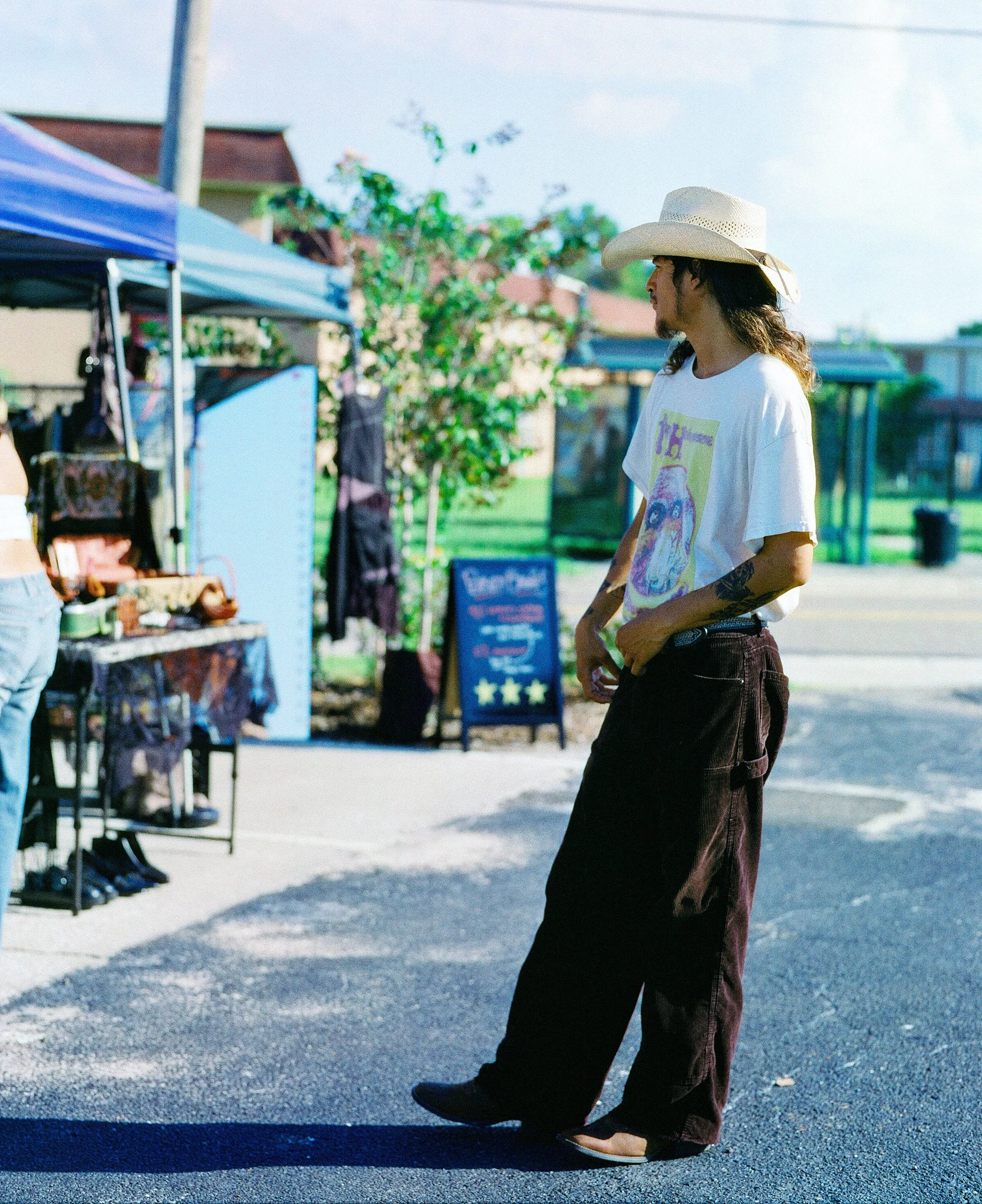
Phoenix II, Mamiya RB67 127mm, Brooktree Film Lab | Retrospectively, I cannot tell if he’s checking his wares or her wares…
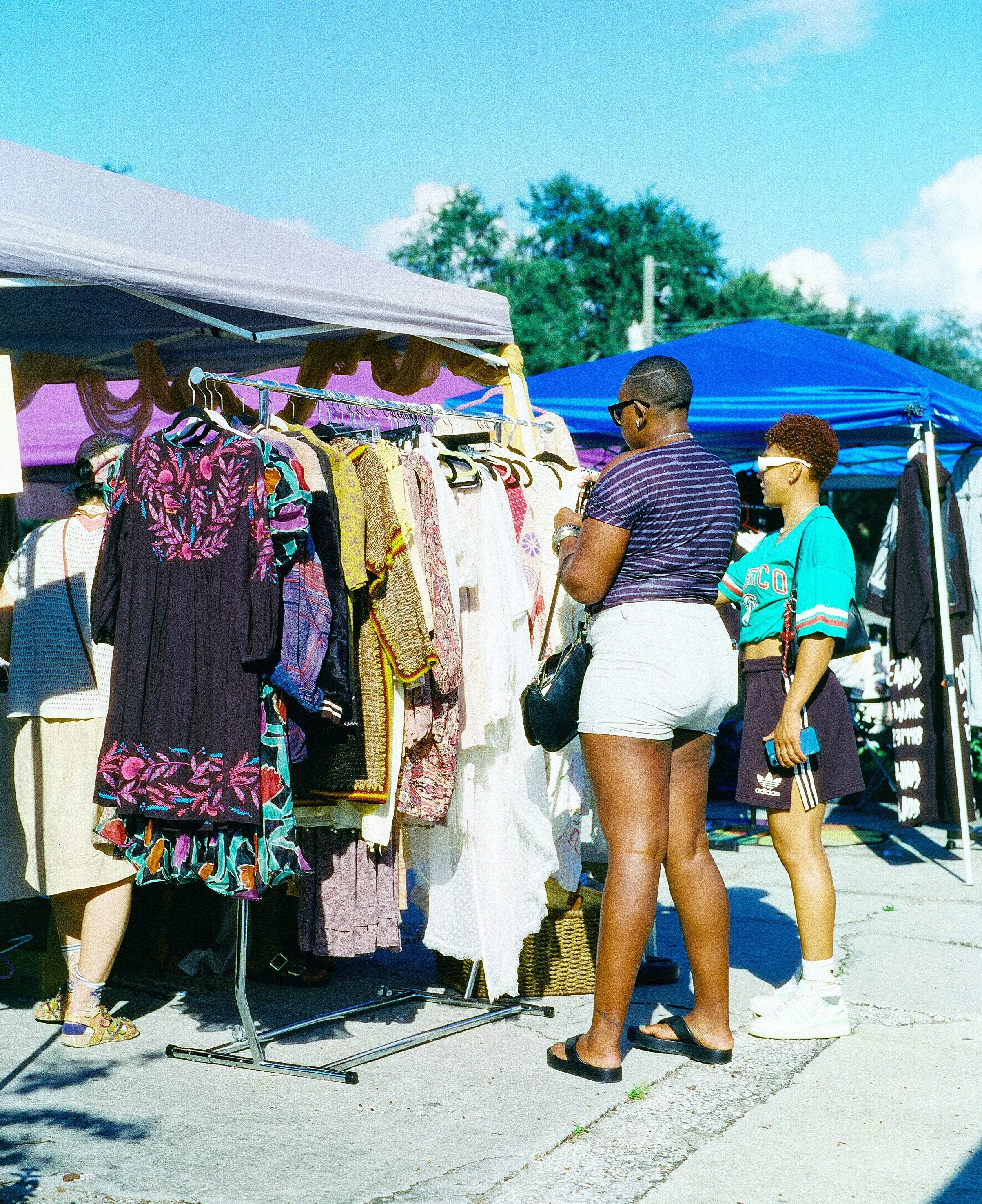
Phoenix II, Mamiya RB67 127mm, Brooktree Film Lab | Darker skin tones are kind of a toss up with this film
Going into this I had known of the tendency of Phoenix 200 (the predecessor) to produce tones and colors comparable to an experimental film emulsion. What I’ve found from Phoenix II is that while the tones are somewhat accurate, leaning towards “vintage”, I would still consider this film to be more experimental.
It helps to use this film when the sun is out or on a tripod to properly give an image half a stop or a full stop extra of light. I feel as if the weird color casts were less frequent and noticeable with an abundance of light.
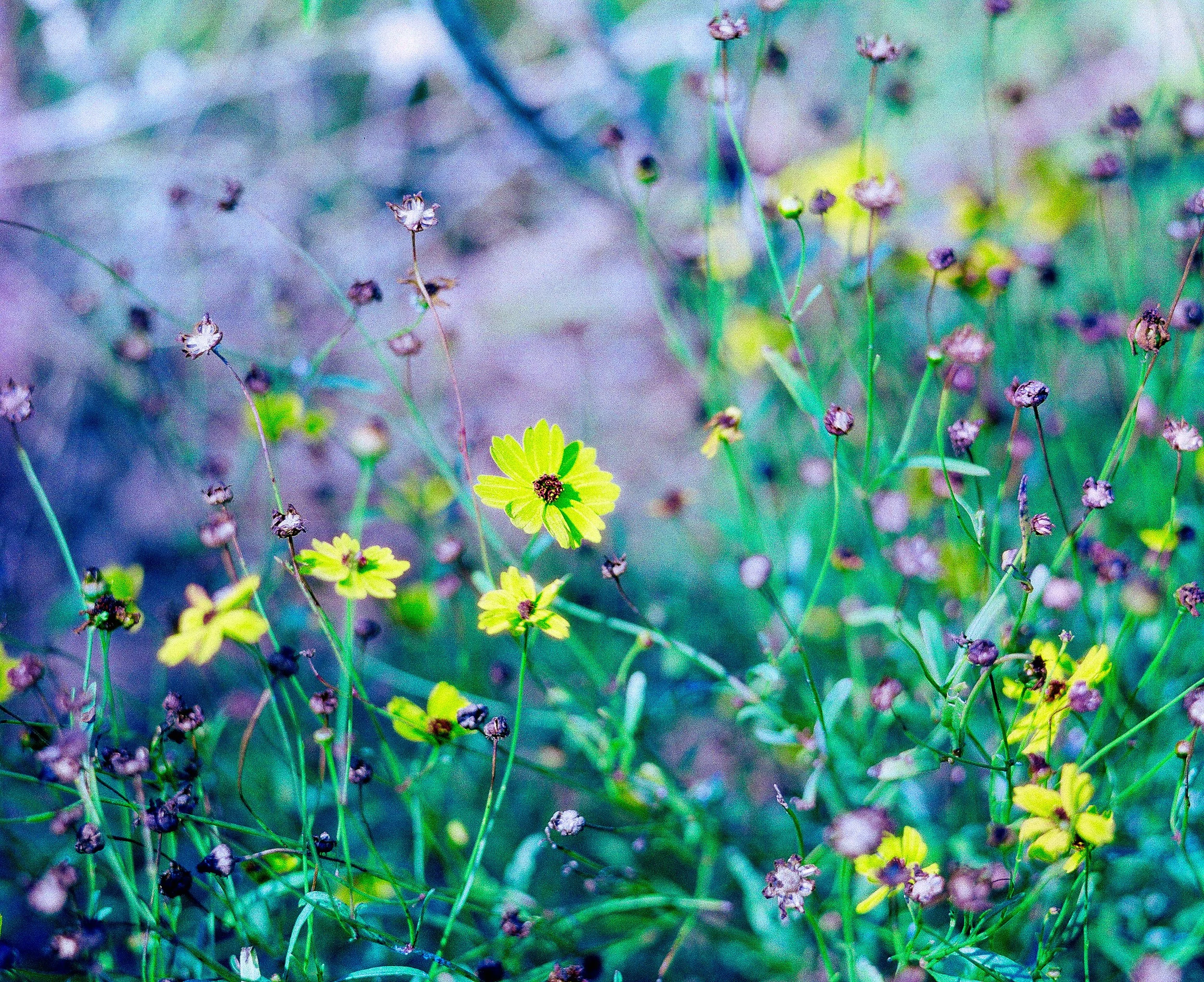
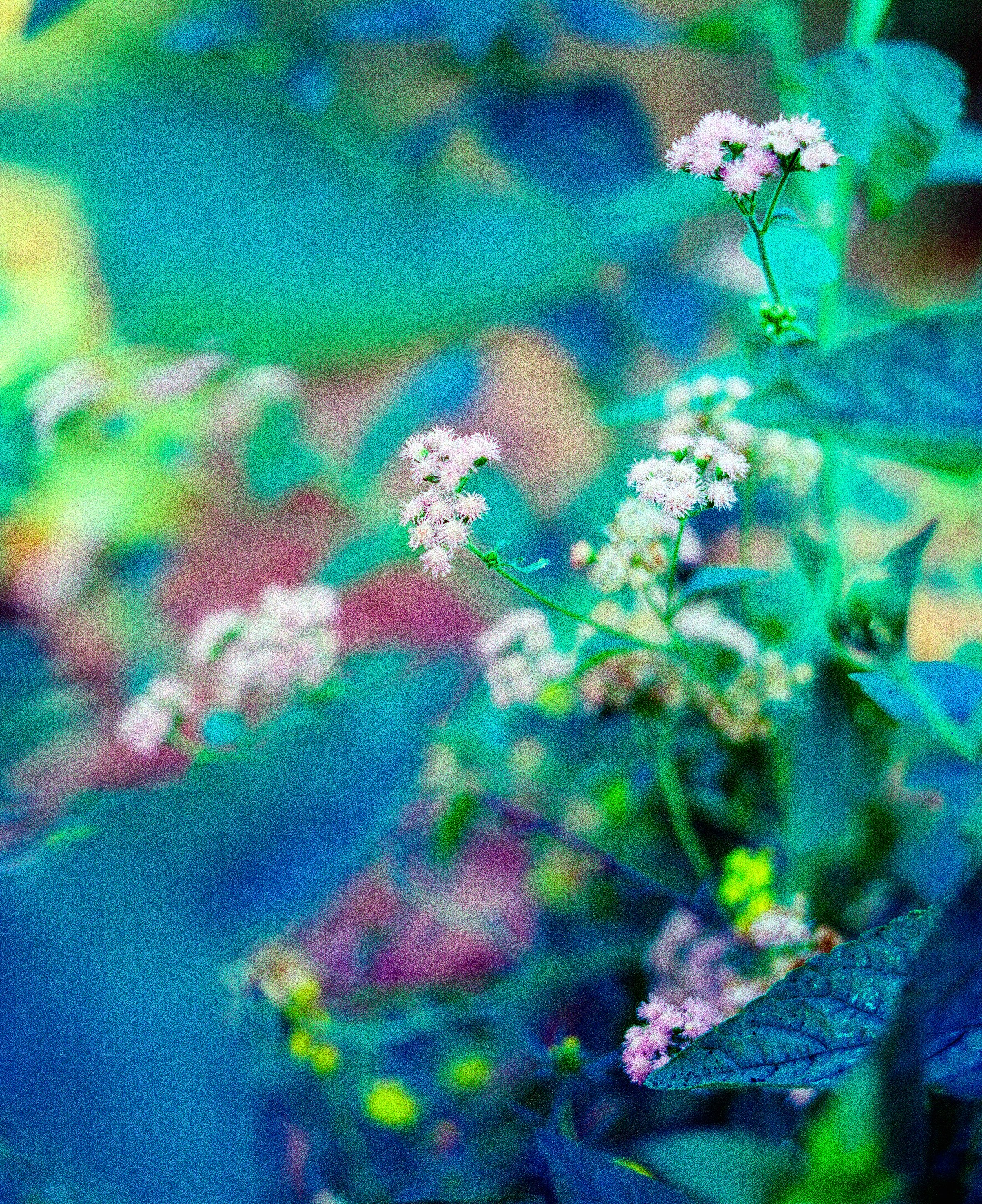
But any shots where the image is not at least properly exposed if not over exposed would almost surely have “off” colors. It’s almost as if the film was expired? Behavior like this can be expected from most films, of course. However, even in shots that I think were more than properly exposed, I found came out with weird blue or green casts or undertones.
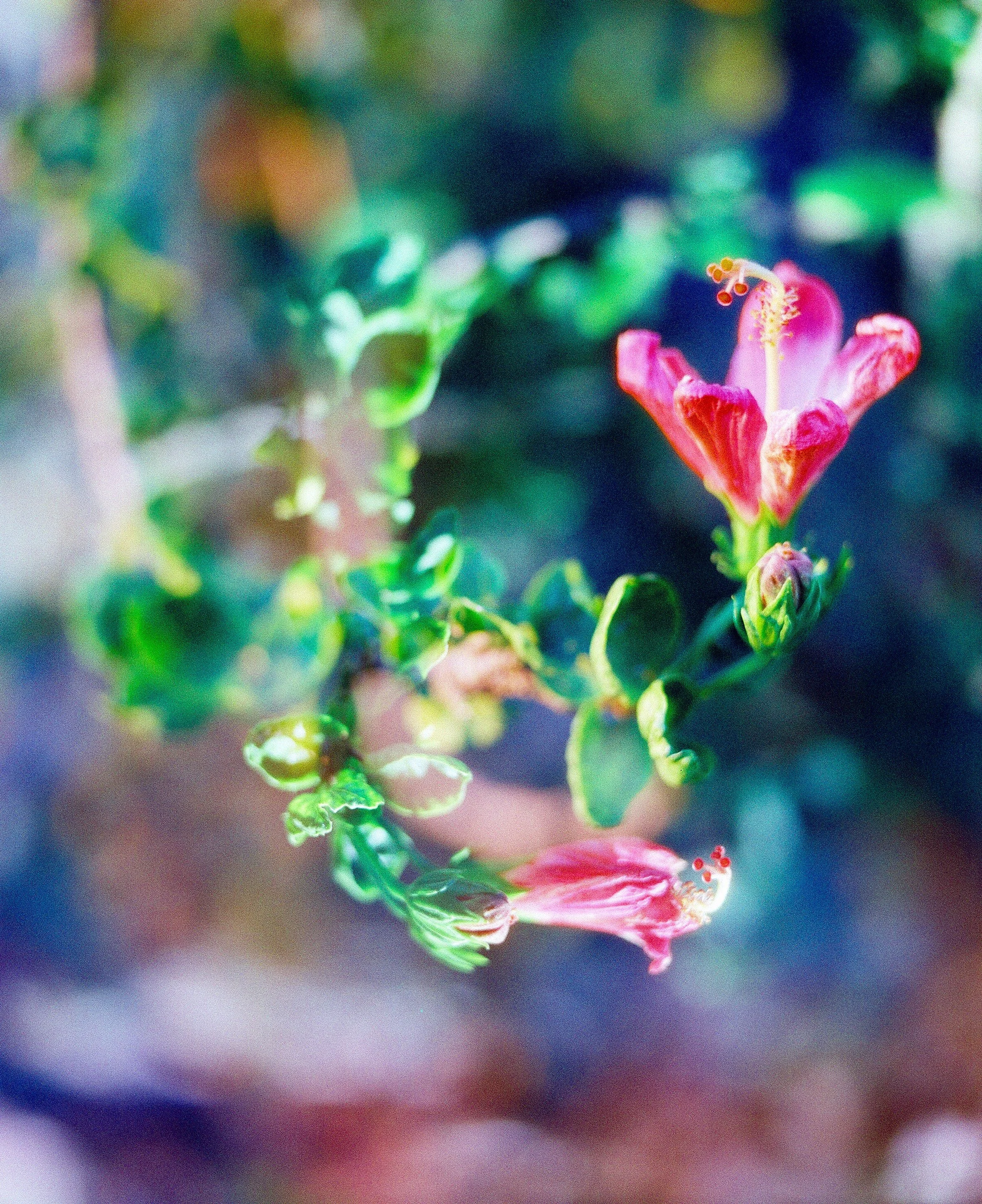
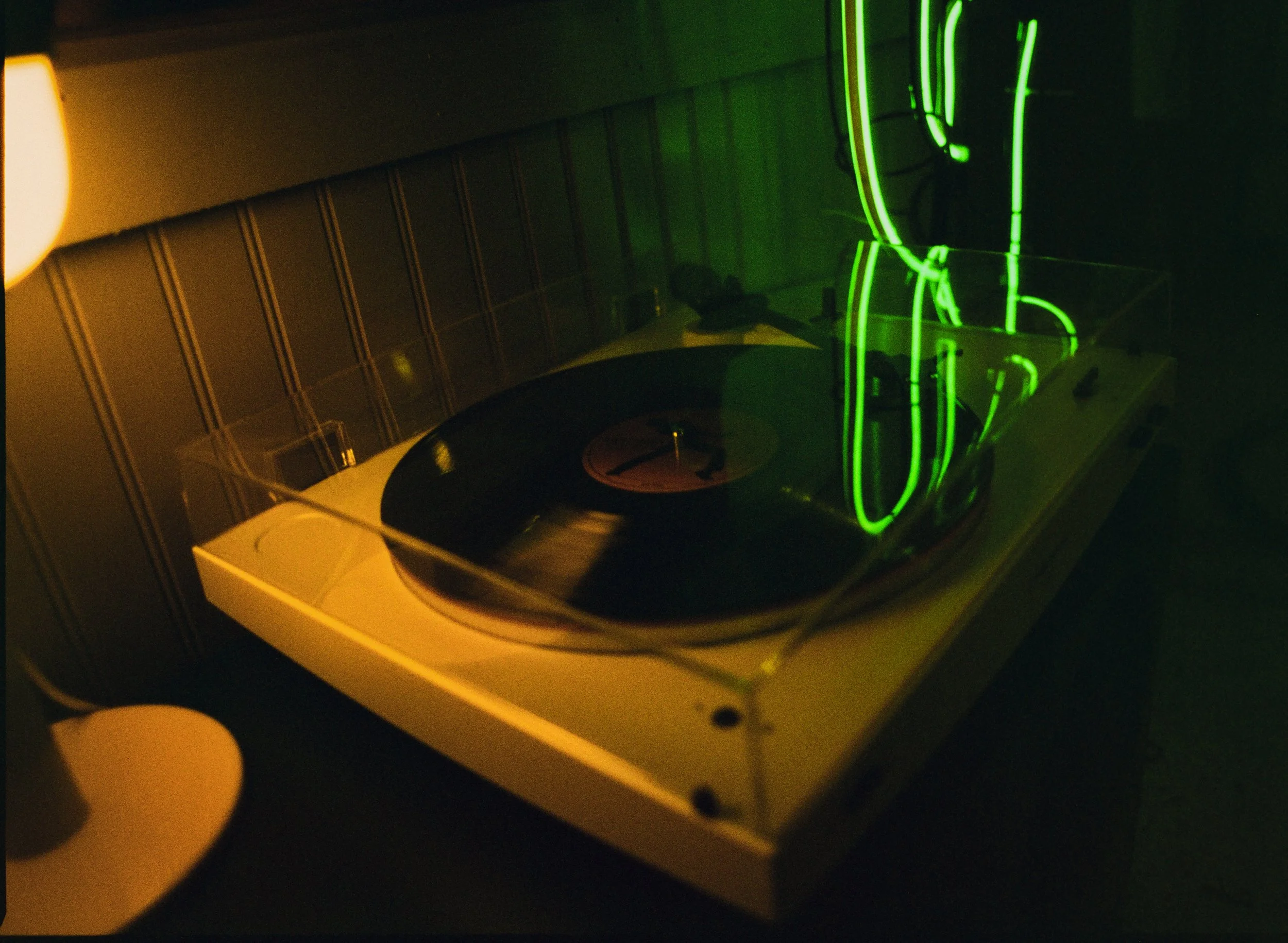
Phoenix II, Mamiya RB67 127mm, Brooktree Film Lab
Alternatives:
Compare this to film you’d use to document important moments in life. Films where you want to look back on the picture and see something nostalgic and true to life, such as Kodak Portra, Gold or Fujifilm’s offerings such as Superia. I would trust those with my life moments more than Phoenix II and Kodak Gold is cheaper and more available than Phoenix II.
But for photographing floral, nature and every day moments I think that this film put a fun spin on the images I received. It’s interesting to get back my images and see something “plain” come back in with a new look or color scheme I hadn’t imaged it in.
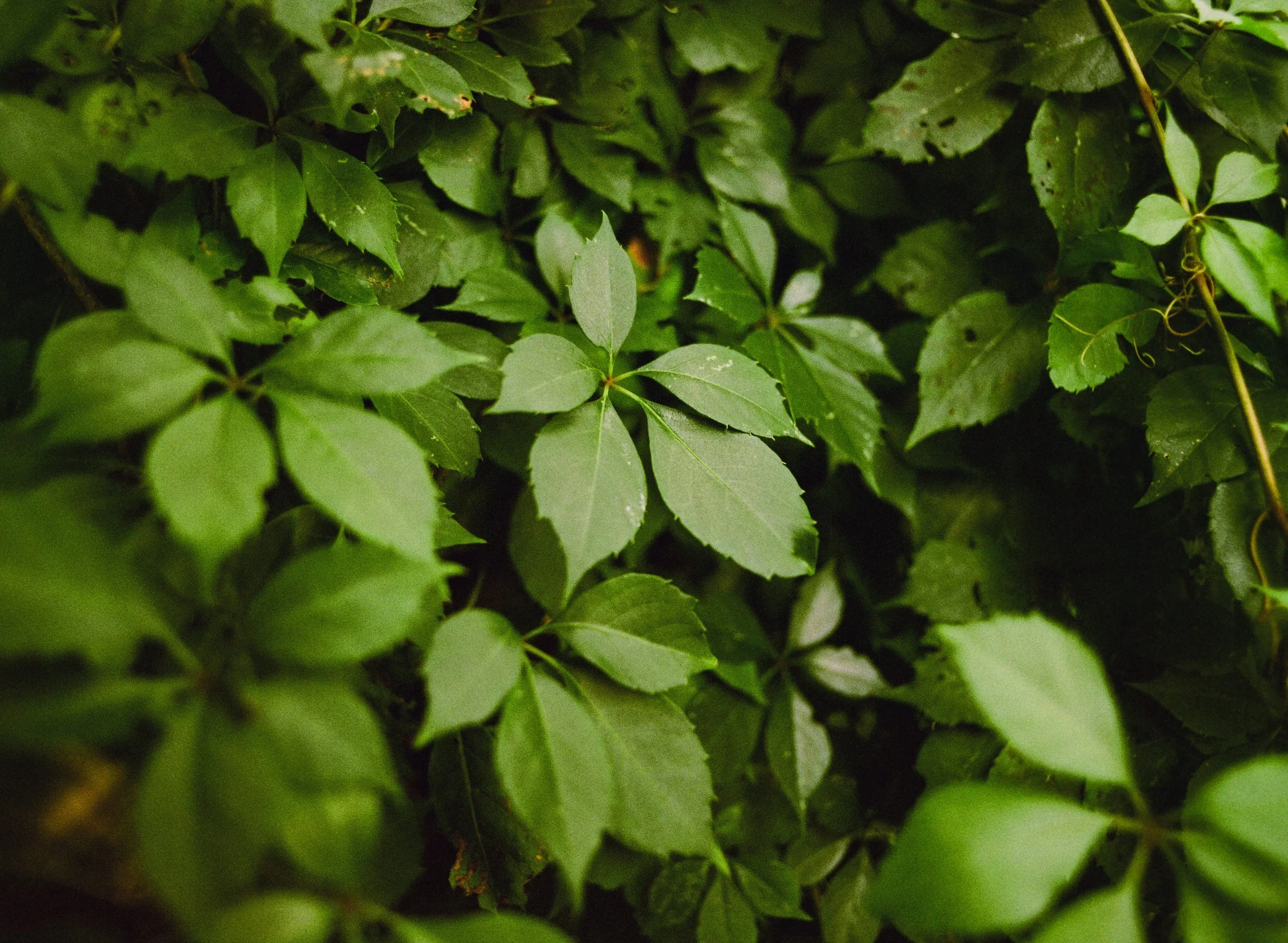
Bronica ETRsi | 40mm | Brooktree Film Lab
Gotcha(?):
Something I must mention is that I found my first roll of this film had half the roll be unusable.
I received the roll from the very first batch that my local film lab had received before the film was supposed to be on sale so maybe Harman hadn’t ironed out quality control yet but that was a super disappointing first impression.
Getting 6 images out of a roll that was supposed to produce 12 images and having them all be “experimental” type shots was not a great first impression but you have to go through growing pains to see a product mature and become competitive. I guess.
Since this lemon I received in July, I have not had this issue occur again but it was so frustrating and disappointing since I used the roll during a trip across the country that I felt the need to bring it up. Had it just been every day moments I probably wouldn’t have cared as much but I now feel like I cannot trust this film for anything important such as vacations with friends/family, monumental life moments, client work, etc.
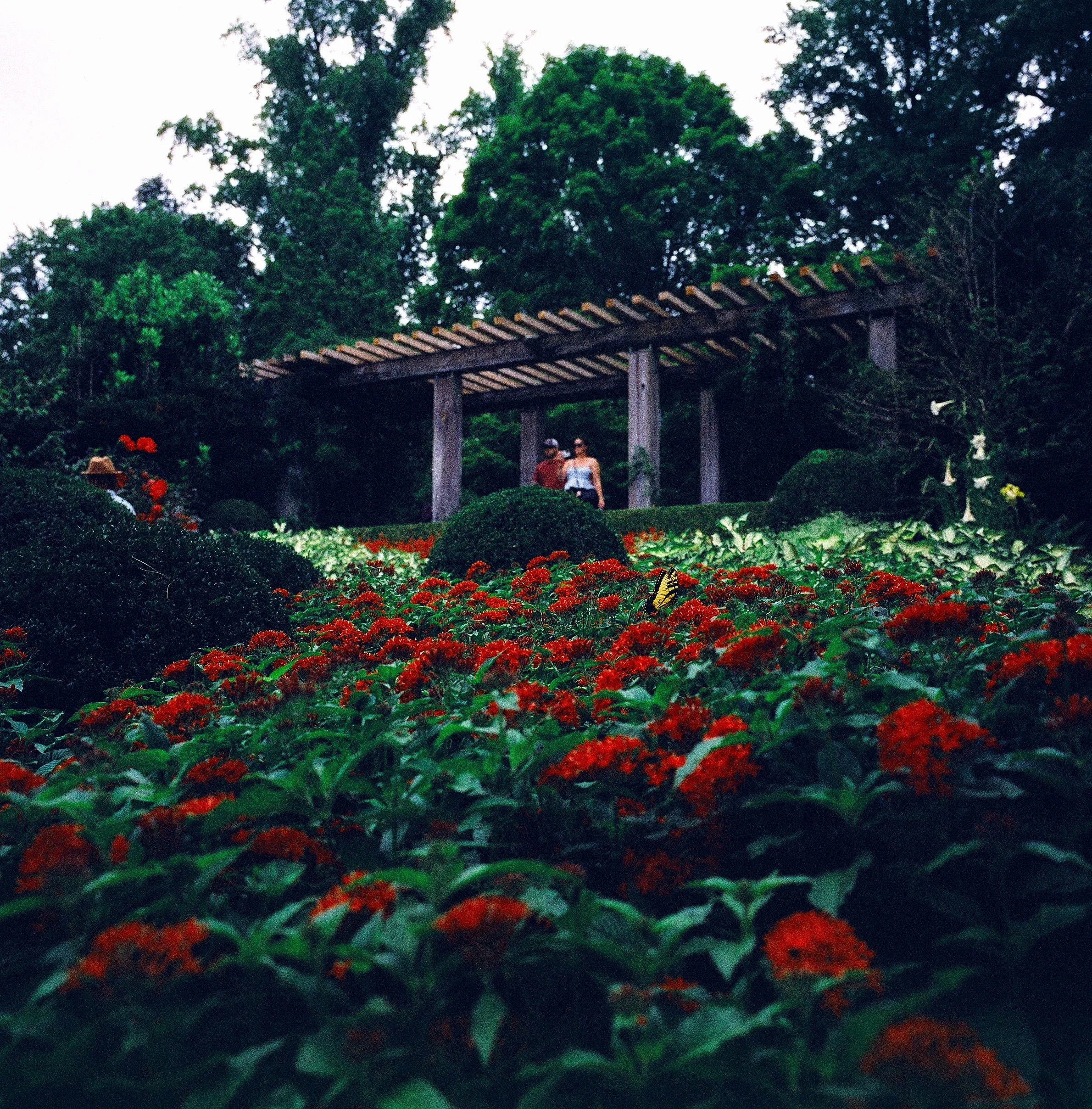
Mamiya 6 | 50mm | Brooktree Film Lab
Closing Thoughts
In the end, I like this film. I don’t know why. Maybe I just like the packaging and what it means for film photography as a whole, maybe it’s the aesthetic only it can deliver or maybe I’m telling myself that since I spent money on it and I can’t un-spend that money..
I wouldn’t necessarily recommend Phoenix II to people who aren’t film nerds. I just think it’s neat that another option exists.
The colors are wonky, the results are hard to predict and the latitude isn’t great. But I think that’s fun. I think it plays into the delayed gratification aspect of analogue photography in a way that more “perfect” films can’t.
What I don’t like is that my first roll was basically cooked straight out of the factory and I only got half my images out of it. It has basically made me feel as if I’d never use this film for any work that’s even remotely important. This film just exists to spice up the monotony of every day life for me.
I hope Harman keeps going with their new color films. While I can’t say how this compares to Phoenix 200, I think that this film is promising for their future. Now that Fujifilm no longer produces film, we need options outside of Kodak.
If you’re deep into film photography, are bored/uninspired and need a film to spice up your photography perhaps this is something to consider. Or maybe you just want to be different and not shoot Kodak, this film is now an option.
At a relatively low price of ~$12 a roll (as of 2026), it’s not a huge loss if you try it and don’t like it.
Small note: Images shared are exactly what I got back from the lab. I did not edit the exposures or crops. I was not sponsored or anything; I just like photography and trying things to get me out and shooting photos.
Additional images:
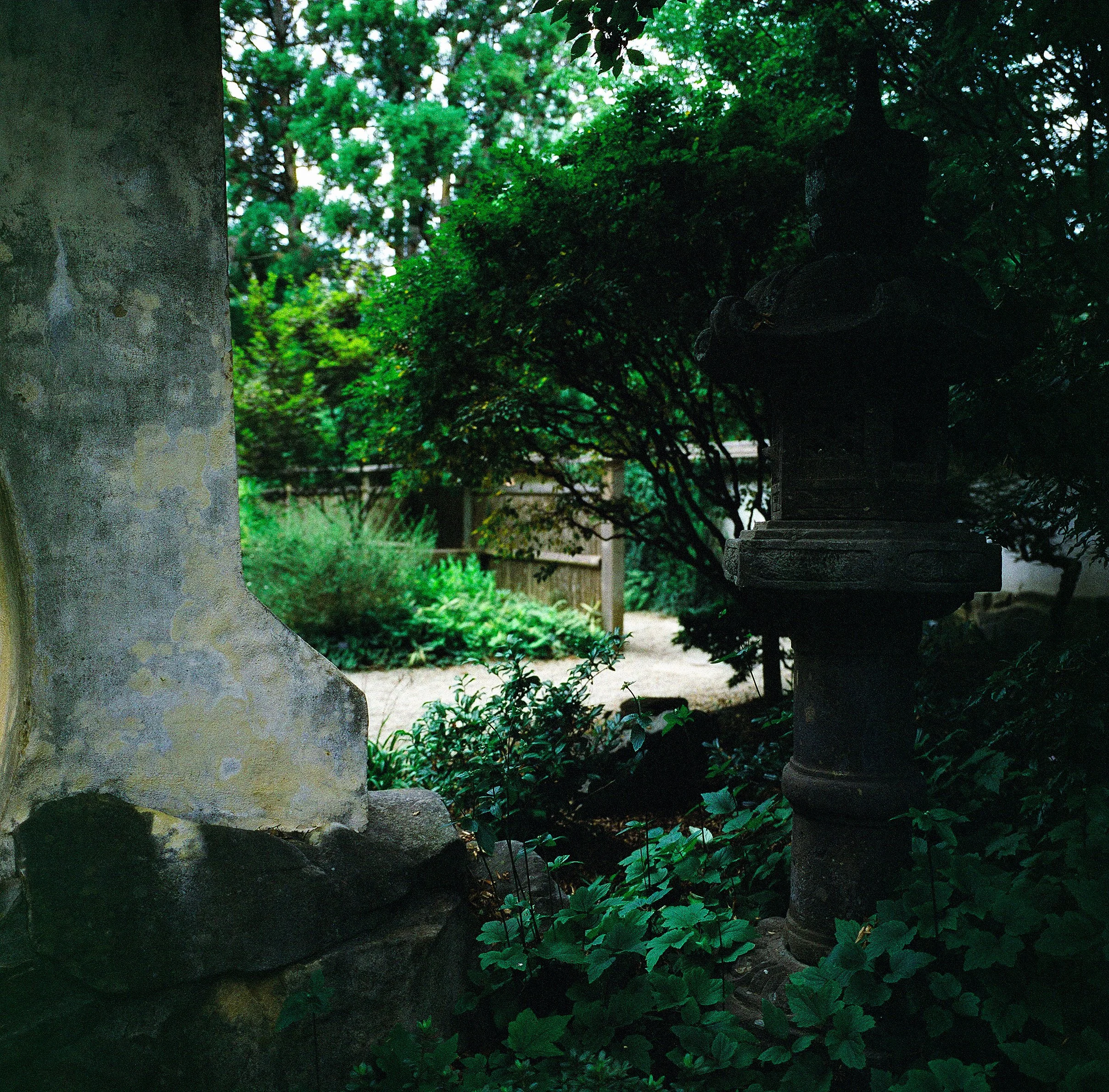

More Film Reviews:
If you enjoyed this article, I have some reviews on other niche films here: