Is Lucky 200 35mm Any Good? Honest Impressions + Sample Images
Lucky Film has brought a new color film in 35mm and 120 to the market in 2025. It’s one of the few new film emulsions we’ve seen since the heyday of film prior to the turn of the millennium.
Lucky Film, while not as prolific a name as Kodak, is a company that has been around for decades. Lucky initially backed out of the film production market in the 2010s but is now back as film is seeing a resurgence.
Truthfully, I don’t know much about Lucky, their past products or what the sentiment of them was. I was too young back then.
So I’m going into this basically blind. I don’t know what to expect, I’m just excited that there is more film to be shot and that this hobby will continue on for at least a little longer. I’m guessing you are too, hence being here looking into this niche product in a niche hobby.
Edit: As of March 2026 ReflxLab offers this film at $10. At that price, this is much easier to recommend for anyone who’s looking for a new film to use.
Lucky Color Pros and Cons:
Pros:
The price is competitive with Kodak and other color films you can find at film shops
The emulsion is new, which is promising for the future of film photography
Color rendition has a unique look that you can’t find with other film stocks.
Latitude ended up being decent (based on my experience)
Grain is not off-putting or too coarse while still having filmic character
There were either next to no scratches/imperfections on my roll or my shop did a great job cleaning it up.
Pushes well to 400. See here
Cons:
Supposed the best prices which would beat Kodak and other film stocks are exclusive to China
The warm/red color cast is pretty strong so you have to know this going into shooting this film.
As this is a new film, it’s possible your local lab may not have a work flow defined and optimized for it.
Availability. This film has not been in many shops I’ve been to.
If you’re reading past the Pros and Cons I guess you won’t mind if I babble about the experience. :)

Contax G1, 45mm f2 | Filmlog Seoul
The Results:
I would say I’m happy with what I ended up receiving! I was apprehensive due to my experience with trying 2025’s other new film, Phoenix II and being burnt by it. With Lucky Color 200 I didn’t know what to expect but I was in a creative rut and figured, “why not?”
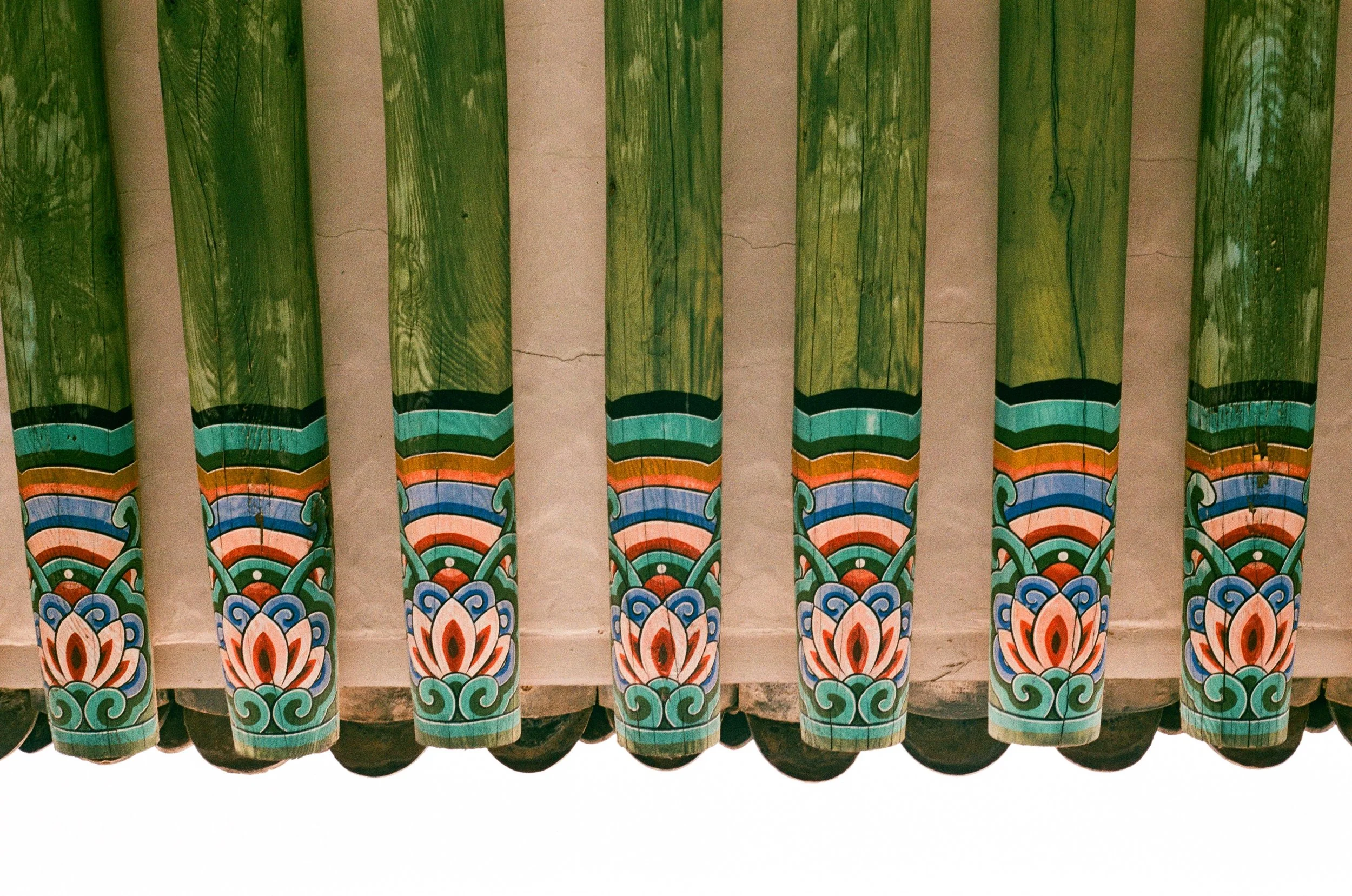
The images definitely came out rather… red with green undertones but that ended up being perfect for shooting at Seoul's Gyeongbokgung Palace!
One aesthetic I tend to lean into is using flares and shooting high contrast shots against the sun and I think that it was handled perfectly. I figured if the film was going to fall apart, it would be during these shots but I think the results speak for themselves.
Another important aspect of a film emulsion is the contrast and grain. The images, while contrasty, did not get overly contrasty. I do think that Lucky’s film would lean more towards a contrasty and punchy image than Kodak’s offerings but it wasn’t excessive in my experience. Furthermore, I didn’t find the grain was too harsh. It’s definitely noticeable and may not be the finest grain you can find at 200 rated film but it does the job and also has that “filmic” look that we shoot for.
I did shoot in bright sun and did not have photos that would be considered underexposed. It’s possible that with underexposure the images and grain could fall apart quickly but I did not observe this.



Price and Alternatives:
The first thing that stood out to me about this film was its price. While it’s not as low as the prices that buyers in China get, I was pleasantly surprised to see it in line with Kodak prices. When I first saw this film back in the United States it was at $21 which I had 0 interest in paying when I could just get Gold 200 for $9. However, here in South Korea and Asia in general, Kodak is more expensive and Lucky comes in at around $14-15 after conversion which is inline with Gold 200 and Kodacolor 200 which makes the conversation much more interesting. And I guess Phoenix II 200 is there too.
With these 4 films coming in at roughly the same price point, you now have the opportunity to make the meaningful decision of what film stock you want to use for the photos you want to take.
Gold 200 has a nice warm tone that many love, Kodacolor/Color Plus 200 tends to be a bit cooler and now Lucky enters the conversation with its unique red color cast and green-tinted shadows. Even if the aesthetic of Lucky 200 isn’t for you, it is nice that you can choose to use it if your situation calls for it.




Final Thoughts:
If it isn’t obvious by now, I’m stoked with Lucky’s Color 200. It’s probably because I just really like the pictures and how they came out but I’m excited to try shooting it again with different subjects beyond something that seems almost too perfect for this film. I’ve heard this film is also available in 120 so I’d really like to try that too. :)
Is Lucky 200 better than Kodak Gold 200?
It’s different. Objectively, it does not out perform Kodak Gold 200 but subjectively brings something new to the table that Gold 200 doesn’t. Worth trying if you can get it at the same price as Kodak, otherwise Gold 200 is the safer bet.
Is Lucky 200 available in 120 format?
Yes, I cover that in a separate piece here. TLDR: Sharpness and grain quality benefit greatly from the jump to 120 and is an excellent alternative to Gold 200.
Who is it for?
Honestly, I’d say only get this film if you can get it at least at the same price as Kodak’s offerings or cheaper. Otherwise for 99% of people I think you’ll be happier with Kodak’s offerings and your film labs will be happier too. Since this is new, most labs will probably have a harder time dealing with this film to get good scan results. It’s not to say they can’t but as of early 2026, I’ve heard that the workflow for it just isn’t as streamlined as something like the workflow for Gold 200. Not only that but I would say that Kodak’s films are just more neutral and true to life.
Conclusion:
Lucky 200 did something amazing releasing a new film in this day and age. From this experiment I think it did a great job for what I was specifically shooting but we’ll have to see how it handles other use cases. The colors of my subject matter were basically perfect for this film. But how does it hold up when shooting foliage? How does it hold up in portraits or automotive or food or product macro photography? I think the latitude and sharpness is there but I’m not sure about how these colors would do.
If you’re in a creative rut, the results of this film may surprise you and get you out of it.
But ultimately, shoot it if the price is right; if it’s not, just use Kodak.