Olympus Pen FT First Impressions (Compared to the Pen F)
If you want prior context about the Olympus Pen F, I have an article here.
Pros & Cons (Vs Pen F)
Pros:
The viewfinder’s micro-prism allows critical focus to be hit effortlessly
The camera now has a light meter that gives exposure readings (albeit in an unusual manner)
The winder has been upgraded for improved handling
A self timer has been added
The majority of the Pen F’s best features are still here
Cons:
The viewfinder, while greatly improved with a focus aid, has various new issues:
Viewfinder’s brightness results in poor low-light visibility, especially at night or inside
The light meter needle lacks a backlight and is invisible when light doesn’t enter the viewfinder, IE: when wearing a hat
Limited ISO options for the light meter (25-400)
Film loading is not as seamless as the Pen F
Introduction:
The Olympus Pen F has been my favourite film camera for years now.
The Pen F, FT and FV line of cameras hit a sweet spot of great film economy, quality, ergonomics and having that special something with their lenses. However, as with all things in life, the more time we spend with something or someone the more we notice subtle flaws and imperfections.
After 2 years with the camera one of those "flaws" I've noticed is that there's no focus aid with the Pen F. This is to say, you need to have damn good eyesight to land critical focus every time. The Pen F has no micro-prism, split image, etc. It's just a matte ground glass that you're working with. As time has gone on, I've felt that I've been missing focus more and more. Shots on my rolls didn't look as sharp as I remember them being the day I got the camera.
Eventually, I thought to myself, “it can't just be my eyes.” When asking locals at my camera shop, they also confirmed my Pen F can't focus. It couldn't even hit focus at infinity. The owner of the shop was gracious enough to lend me his Olympus Pen FT which does have a micro-prism focus aid. I figured, hey this is a great chance to compare my favourite camera thus far against its successor.
The proof is in the scan. You can see above that the cameras aren’t in focus. We can see there’s an issue. Let’s look deeper at the comparison below.
Verdict:
This article will be about the differences between the cameras but to wrap up the problem I wanted to solve and why I wanted to compare them: In this side by side, it’s clear that one image is sharper than the other. On the left, my Pen F + the shop’s 38mm lens and on the right, the shop’s Pen FT + my personal 38mm lens.
Despite the viewfinder showing both shots being properly focused, only one came out as expected. This isolated the issue to my body and I’ll need to repair it.
Micro-prism Focusing Experience:
I’d like to start with the most positive aspect of the Olympus Pen FT when compared to the Olympus Pen F. When Olympus set out to create a successor to the incredible Pen F, they obviously were focused on making the camera an even greater joy to use.
The micro-prism focusing aid alone makes the Pen FT worth considering. When focusing with the Pen FT you now have a micro-prism focus aid in the center of the viewfinder. It’s something that when you don’t know what you’re missing out on with the Pen F, you won’t miss it. But using the Pen FT’s focus aid made me feel much more confident in my shots. Regardless of what I photographed, I always felt like the micro-prism added to the experience and didn’t feel “intrusive” or in the way.
If you shoot wide open, do macro work or just want to get the most out of each and every shot, micro-prism is a great addition from Olympus. The Pen F line can produce stunning images and if you adapt full frame lenses to it, the quality of your shots increase even further. I’d love to try a Pen FT with some of my M42 lenses or Nikon F lenses some day.
While the Pen F has a brighter viewfinder (more on this later) having a focus aid is extremely helpful. This is particularly relevant for half frame shooters who want to use slower film to offset the larger grain on half-frame cameras. Slower films means shooting wider and if you’re shooting wide open, all the focusing aid you can get helps.
The Pen FT’s Viewfinder Brightness
It’s fine. Until it’s not.
Let me elaborate. Based on the Pen FT’s ISO dial range of 25-400, it seems that Olympus only intended for the Olympus Pen FT to be used in brighter conditions where ISO’s 25 up to 400 would be sufficient for sharp images. To their credit, in these scenarios like on a sunny day, during a beautiful sunset or in a well-lit cafe, there’s no problem. Focusing is easy. You can compose effortlessly. The camera is an even greater joy to use than the Olympus Pen F was. When the conditions are right, the Olympus Pen FT is a worthy successor to the Pen F SLR line.
But when the sun sets, the lights start to dim in your cafe-turned-bar-at night, or you just want to use a slower lens like the telephoto lenses… well, you’re going to understand why so many people online complain about the Pen FT’s viewfinder.
The viewing experience can be likened to something such as wearing sunglasses. Sure, it’s fine during the day, but at night it just leaves you feeling blind. See this image below for a comparison of the Pen F’s viewfinder vs the Pen FT’s viewfinder.
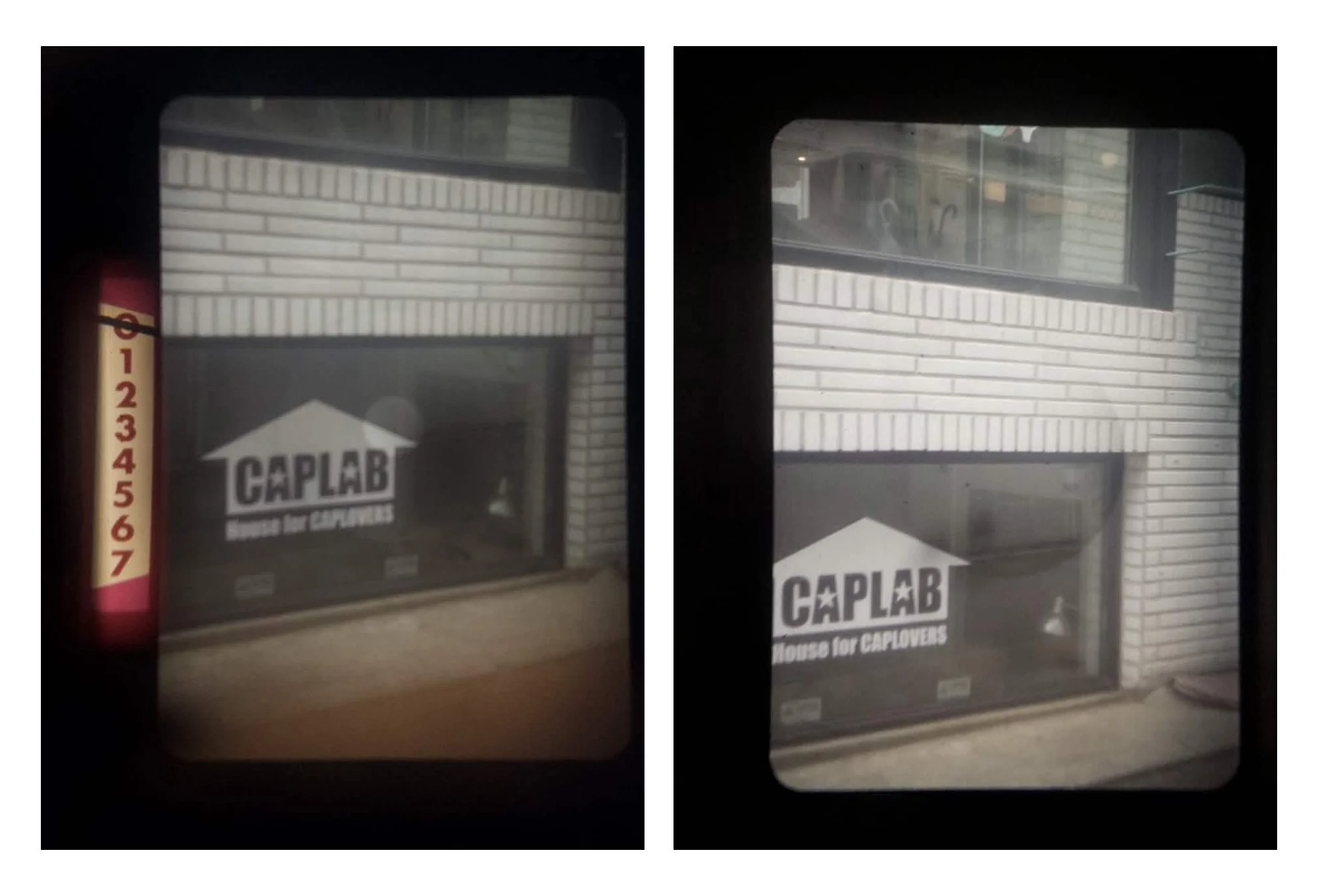
To the left, the Olympus Pen FT. To the right, the Olympus Pen F.
I would describe this as a best case scenario. I’m looking out the window of a cafe towards a white building at around noon with the 38mm f1.8. Sure, it was an overcast day but even this is enough to demonstrate the difference in viewfinders. It’s almost like you get a stop or two less light with the Olympus Pen FT.
When light is at a premium at night or in dark buildings, the amount of light lost can be the difference between being able to use the camera or not.
One could remedy this by using a lens with a faster aperture like the 40mm f1.4 or 42mm f1.2. The 40mm f1.4 isn’t too much more expensive and you could likely find a kit of the Pen FT and 40mm 1.4 for the same price as the 38mm f1.8 kit.
However, I think that the 38mm f1.8 is also a relatively fast lens. The fact that this lens struggles at night with a sub-f2.0 aperture really drives home how much light you’re losing with the Pen FT.
Olympus Pen FT Light Meter
The TTL light meter seems to be the headline feature when it comes to the Olympus Pen FT. When you look up the Olympus Pen FT and its differences from the original Pen F, this is what most people will discuss.
By having a light meter, you save yourself from needing to carry a light meter or constantly pull out your phone. It makes the process of shooting more intentional and keeps you more focused on photography.
The experience with the light meter does do that. Mostly. In reality, the Pen FT does deliver on that with a caveat. The light meter’s exposure assistance works with a needle system. Rather than give you advice on if you’re under or over exposed, the light meter tells you what aperture to use with your selected ISO and shutter speed.
That sounds great, right? Well, it is but only if you memorize the obtuse number system used by the Pen FT. Instead of telling you the aperture in f stops, you get fed a number that corresponds with a number on the lens barrel and that number is associated with an f stop specific to that lens. It sounds complicated but once you try it out in practice, it’s simple.
The issue lies in the fact that you need to get very experienced with using the Pen FT and that specific lens to be able to make those changes without pulling your eye from the viewfinder. Additionally, you now need to make sure to purchase lenses that have those numbers on the lens barrel. Lenses made before the Pen FT was released don’t have them as the Olympus Pen F didn’t need them. With some lenses being rare, this further limits the pool of lenses you’d buy from.
Of course, you can ignore the light meter altogether when your lens doesn’t have the numbers needed for it and just use the camera as if it didn’t have a meter. While testing, that’s how I used the camera. Honestly, it wasn’t even by my choice as I had found a quirk that rendered the light meter useless for me. When you’re wearing a hat, the hat blocks the light entering the viewfinder and illuminating the light meter, rendering it unusable. You simply can’t see it. What’s curious though, when shooting in the streets at night, the dim light of a streetlamp was consistently enough to clearly illuminate my viewfinder if my hat was off. The hat was the consistent issue.
One last thing to mention about the light meter is that with an ISO range of 25 to 400 the types of films you can use are somewhat limited. This isn’t too bad in the 2020’s as we don’t have many films above the speed of 400. However, if you’re a Portra 800, Cinestill 800 user, or if you push your films above 400, this is something you need to be aware of. This camera doesn’t play nice with that.

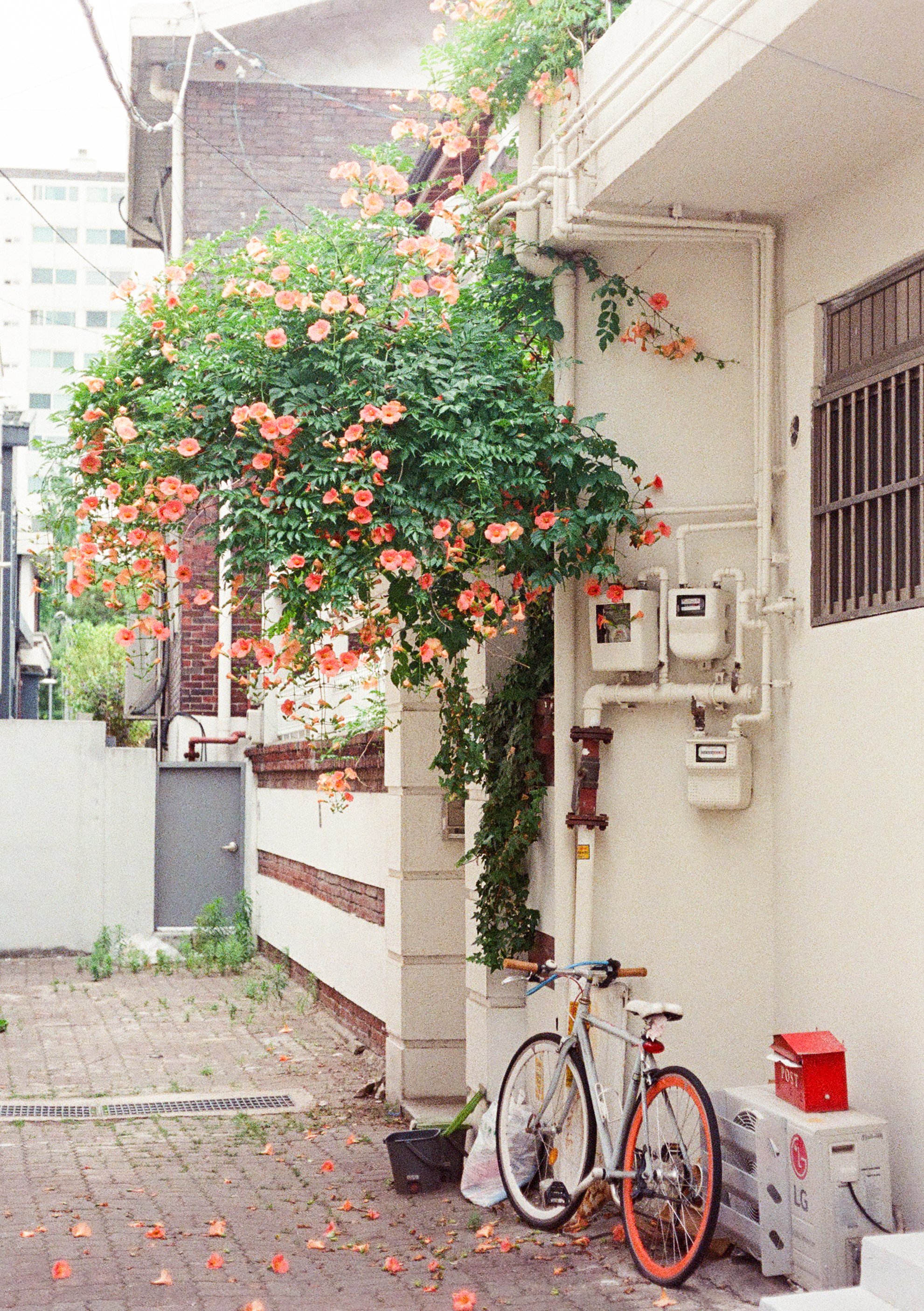
Olympus Pen FT, Zuiko 38mm f1.8, Kodak Ultramax 400, Yeonnam Film
Olympus Pen FT Handling
During the R&D of the Olympus Pen FT, Olympus probably wanted more than just adding some new features to the camera. I’m sure there was an intent to take existing aspects of the camera and make them better. One aspect this can be seen in is the film winder.
The Pen F features a double stroke winder. In practice feels nice but if you’re too aggressive with it, you can tear the film sprockets and end up with your film no longer advancing. This leads you to feel the need to baby it a bit. The Olympus Pen FT on the other hand is an area that is improved over the Pen F and it’s immediately noticeable. Between only needing one stroke and the stroke being smoother/nicer feeling, you can tell that Olympus wanted to improve the user experience.
On the topic of winding the film, the handling of loading the film into the Pen FT has also been changed compared to the Pen F. I can’t really explain what’s changed in the camera but I did find that loading the cartridge into the camera was easier. On the flip-side, trying to load the film lead into the camera was… more difficult? The spool just wouldn’t take up my film when the film door was open. This happened on two occasions and on both occasions, the spool took up the film after I closed the door.
I don’t like this because I like to confirm the film would a little before closing the door. It helps to confirm the film is properly loaded and that I won’t be firing blanks until I notice the tension of the winder isn’t changing as I progress through the roll.
Maybe it’s the copy I used that has this issue but I was disappointed that despite all the improvements in handling, this was a step back compared to my Pen F and other 35mm cameras. If I had to compare it to anything it felt as fiddly as trying to load 120 film that has slippery backing paper that doesn’t catch in the spool.
Final handling upgrade to talk about is that the camera now has a self-timer. I don’t use this feature on any camera and I didn’t on the Pen FT but for anyone who does slow shutter speed photography on a tripod, having a timer to help you avoid shaking the camera is a nice quality of life improvement. If it’s important to you, that’s one big difference between the Pen F and Pen FT.
Conclusion
As mentioned at the beginning, the Olympus Pen F is one of my all time favorite cameras. It’s light, it’s compact, it takes great images, it takes many images and it’s a joy to own despite the issues I’ve run into due to the age of the camera.
Going into this opportunity to try the Olympus Pen FT I had high hopes and a little apprehension. I wanted this camera to live up to the Pen F in every way and exceed it as much as possible. That’s what a successor should do, right?
And the Pen FT did exceed the Pen F in noticeable ways that made the camera more enjoyable to use. I can deal with the uglier logo if the camera is a delight to bring around.
But the Pen FT also brought its own new issues to the table and they were significant enough that they’re part of this camera’s reputation online: the viewfinder is dim, the light meter is lacking, the needle system for the light meter is obtuse.
I think that this camera succeeds at what I think Olympus wanted it to succeed at. It’s a great daytime camera that makes shooting pictures easier. As long as you use the camera how Olympus wanted you to use it, it does a fantastic job. The problem is, not everyone wants to be confined to what Olympus wanted for us.
In the end, if you want a camera that’s engineered to be used mainly during the day and you have no issue using something else at night, I can recommend this camera. But if you want something that you can use how you want, or if you like wearing hats, then I can’t recommend this camera.
With the Pen F and the Pen FT constantly being around the same price, you have choice to choose whichever camera suits you better.
If after all this, you want to know more about the Olympus Pen F, I have an article here you can read. It’s been my main camera for about two years now so I’d love to tell you more about it.
Gallery:







Additional Reading:
Reflx Lab Range Lux Meter: If the obtuse light meter system in this camera isn’t for you, consider this premium meter instead