If you’re looking up reviews of Alien NC400 then I assume you’ve also come across this film somewhere and want to know how it does. Less than a week ago, I was just like you and took a leap of faith with this film.
It’s currently the only non-Kodak 400 speed film in 120, as far as I know. If the performance is any good, it could be an exciting time to be a medium format photographer as other players return to the playing field.
Let’s look over the results and see how it did. This impressions piece is based on my first roll with the film.
Shooting Conditions
Camera set up: Mamiya M645, 80mm f2.8, Waist Level Finder
Format and frames: 120, 15 frames
Time: Shot between 4pm to 6pm in Seoul, start to end of golden hour
Metering: Off camera average meter between 0 -+2/3
Lab: Yeonnam Film, No Special Requests
Edits: Minor, see below
Pros and Cons
Pros:
Warm tones and soft greens of autumn foliage were captured faithfully while displaying nostalgic tones.
Saturation of NC400 in 120 is soft, playing well with saturated scenes allowing the brighter colors to become the subject like the yellow and red trees of fall
Skin tones captured are flattering and soft across different skin colors when exposure is accurate and exposed for the skin
Brighter areas of an exposure demonstrate good highlight roll off allowing this film to be a good candidate for some overexposure to lean into the muted pastel colors
Dynamic range was good up until most extreme scenarios, being able to accurately capture landscapes even when the landscape isn’t evenly lit
Price undercuts Kodak’s/Cinestill’s/Lomography’s various film offerings by up to 1/3 off the price here in South Korea, making it a more affordable way to get 400 ISO film
Cons:
Alien Film is hard to find info on and I can’t really tell how you can consistently source film from them. It is available online in Australia and Singapore and there’s a Taobao blog post about it but I don’t really know what to make of this
Skin tone consistency is not great, turning unflattering as light falls off
Dynamic range did struggle capturing anything fully in the shade while the rest of the image was bright IE: the sky or golden hour light. This is a worst case scenario and is acceptable for me but did require an exposure curve and red curve adjustment in post. YMMV
Light leaks at the start and end of the roll due to this being a respool
Grain is pretty noticeable which lines up with Wolfen NC400 in 135 but is more manageable thanks to the larger negative size
Results:
My experience with Alien NC400 only ran for about 2 hours from the end of the afternoon into golden hour. We’ll be looking at how the film did across various situations in this time frame. Night shots and indoor shots were not done, sorry.
Fall foliage:
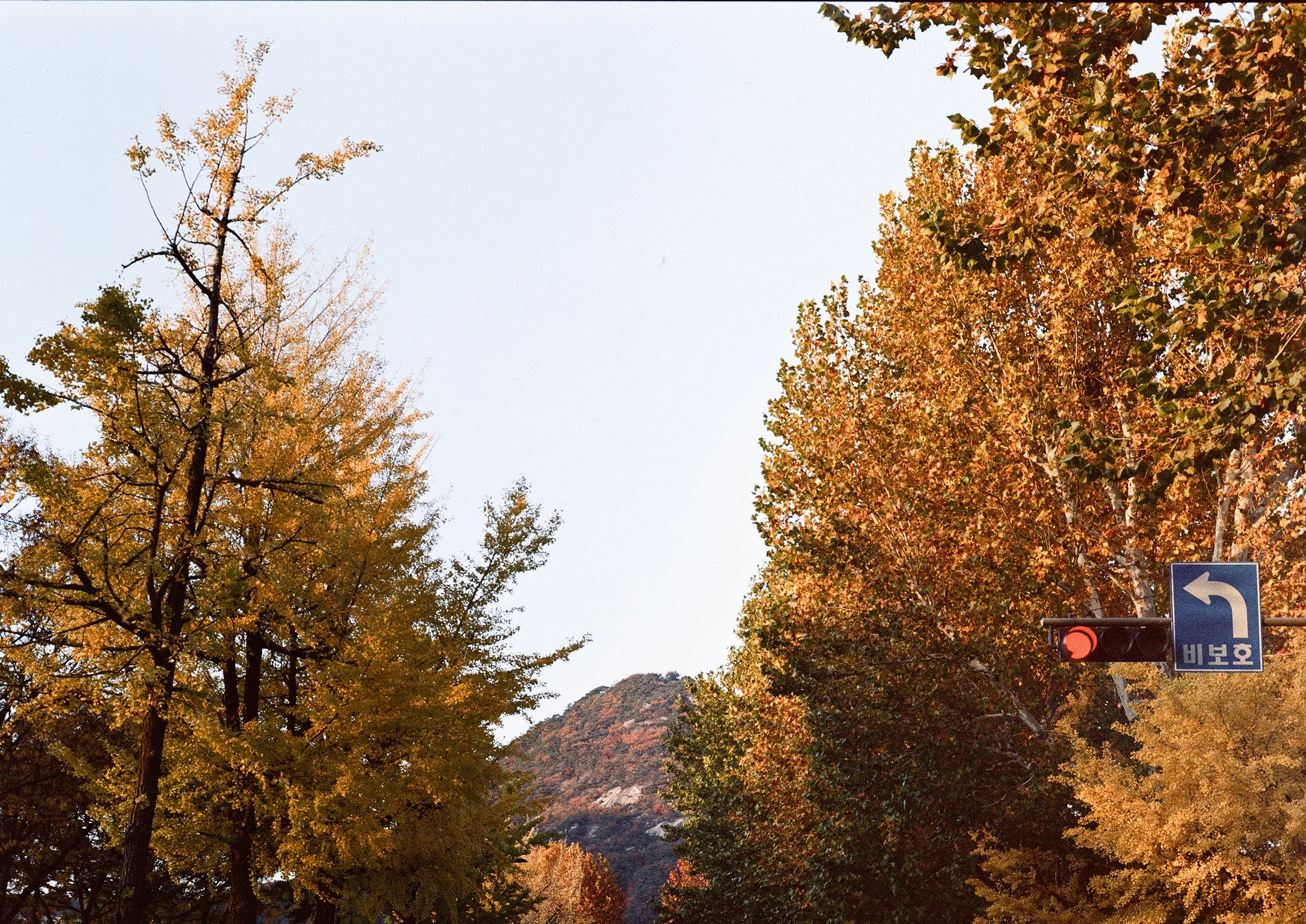
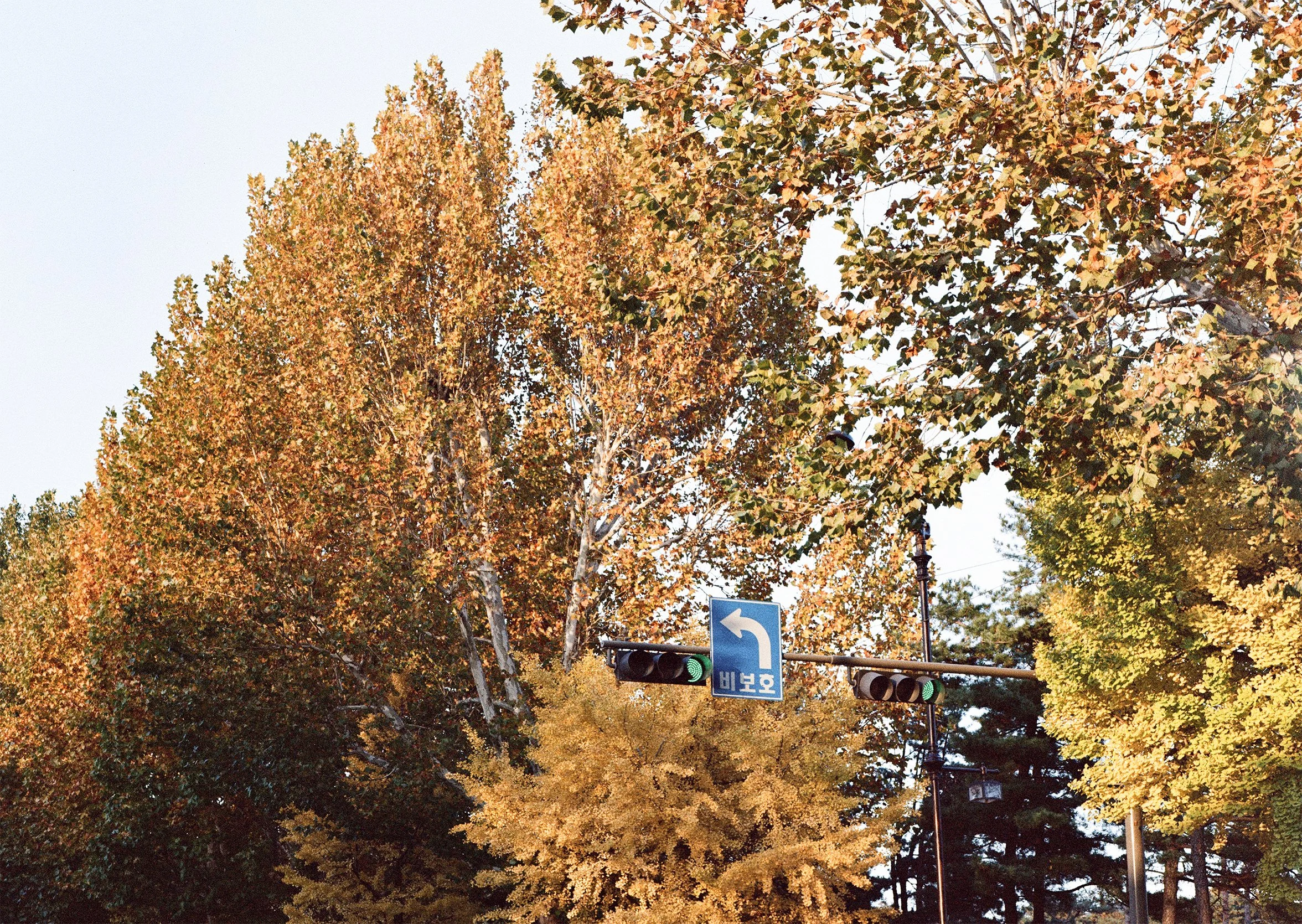
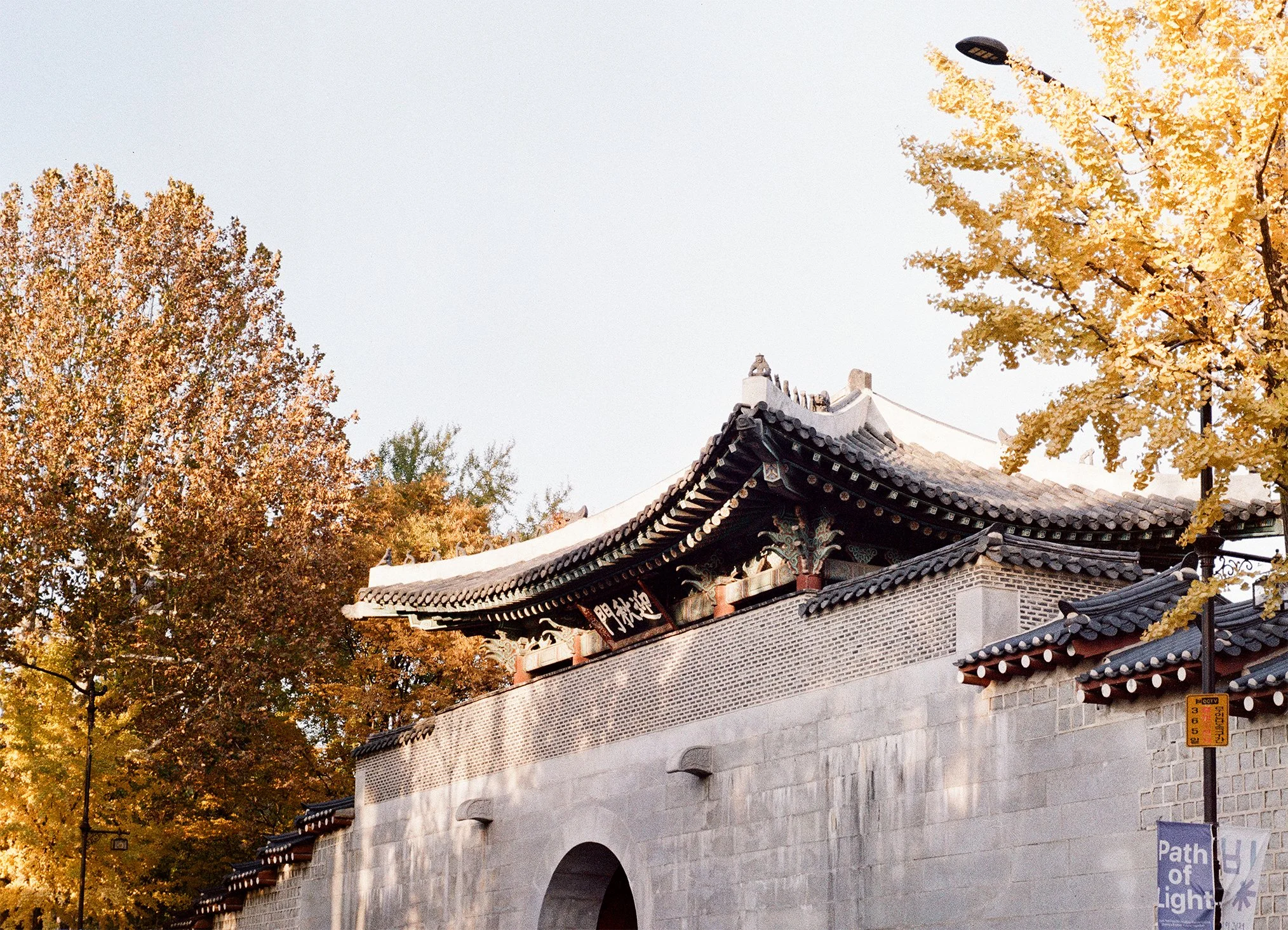
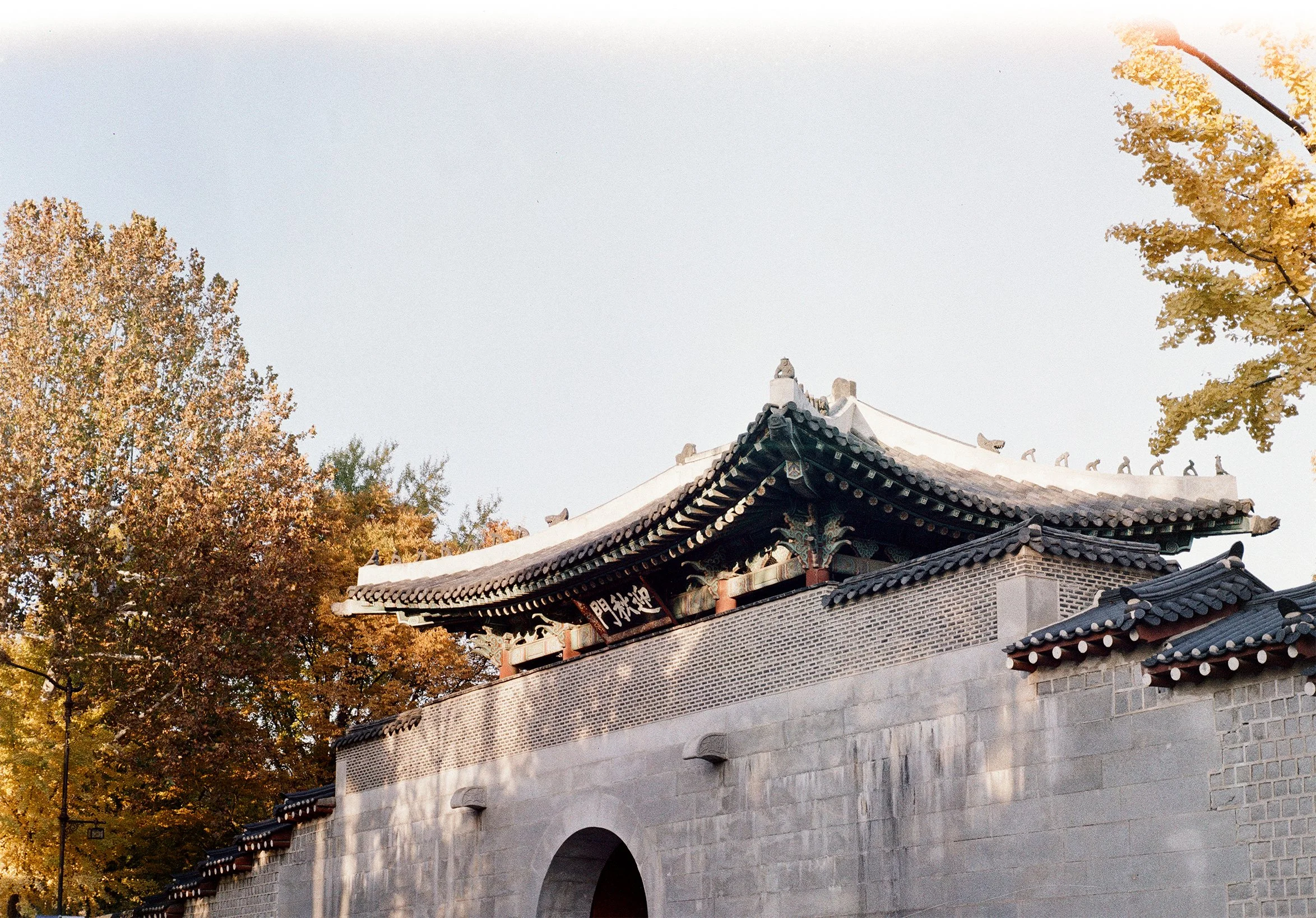
In the image above we can see a range of light on the golden trees lining the road beside Seoul’s Gyeongbokgung Palace. On the right, the sunset beaming on the ginkgo tree is captured with the warmth and vibrancy that we’re looking for. While there are hot spots on some of the leaves, none of them ever reach the clipping point.
On the left, we see some trees not quite at the same golden colors and in shadow but these are captured cleanly as well. Shadowy spots have a nice warm tone and retain detail, and while not as detailed as Ektar, it’s still easy to make out the branches of the tree. Colors across green to yellow are all preserved cleanly as well.
On the palace’s building we can see the highlight roll off from the sun beaming on parts of the building while other parts of the building are in shade. A good showing here as well. Additionally, the light shining on the wall through trees have pleasant warm tones without any noticeable halation.
Florals:
I’m really happy with the florals I captured in particular! Details in the flowers are fully visible, color reproduction is nice, and greens have a natural tone without being too saturated or not saturated enough which I find digital to struggle with.
Truthfully, the lighting here on the flowers is pretty simple since it’s in the shade, but I’m still happy with the range of highlights and shadows and how they’re rendered. I particularly like the highlights on the right side of the frame and their color rendition. Additionally, the white flowers both in the shade and light both capture well without any clipping and the rendition of the red in the shade is pleasant as well.
Candids of people:
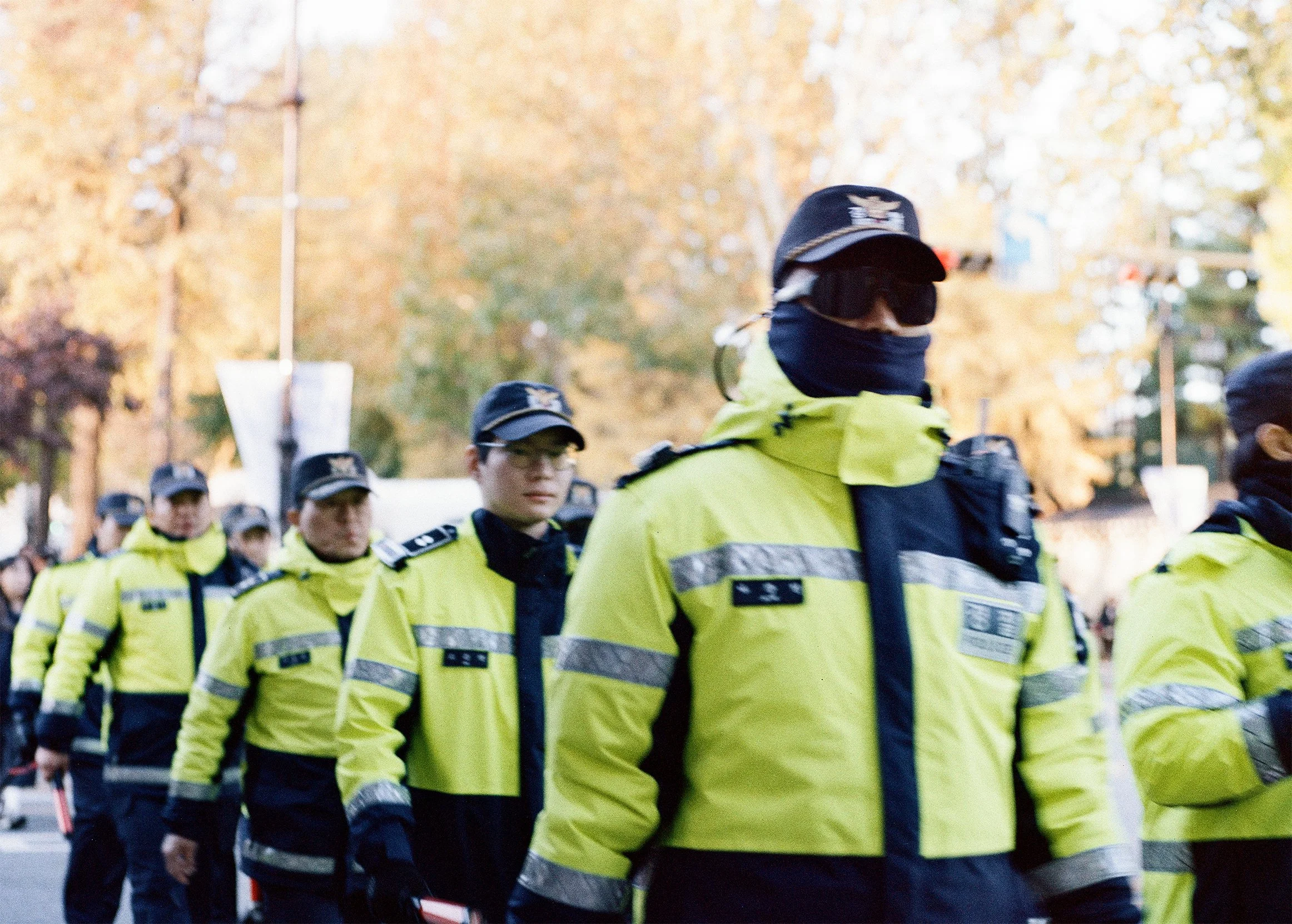
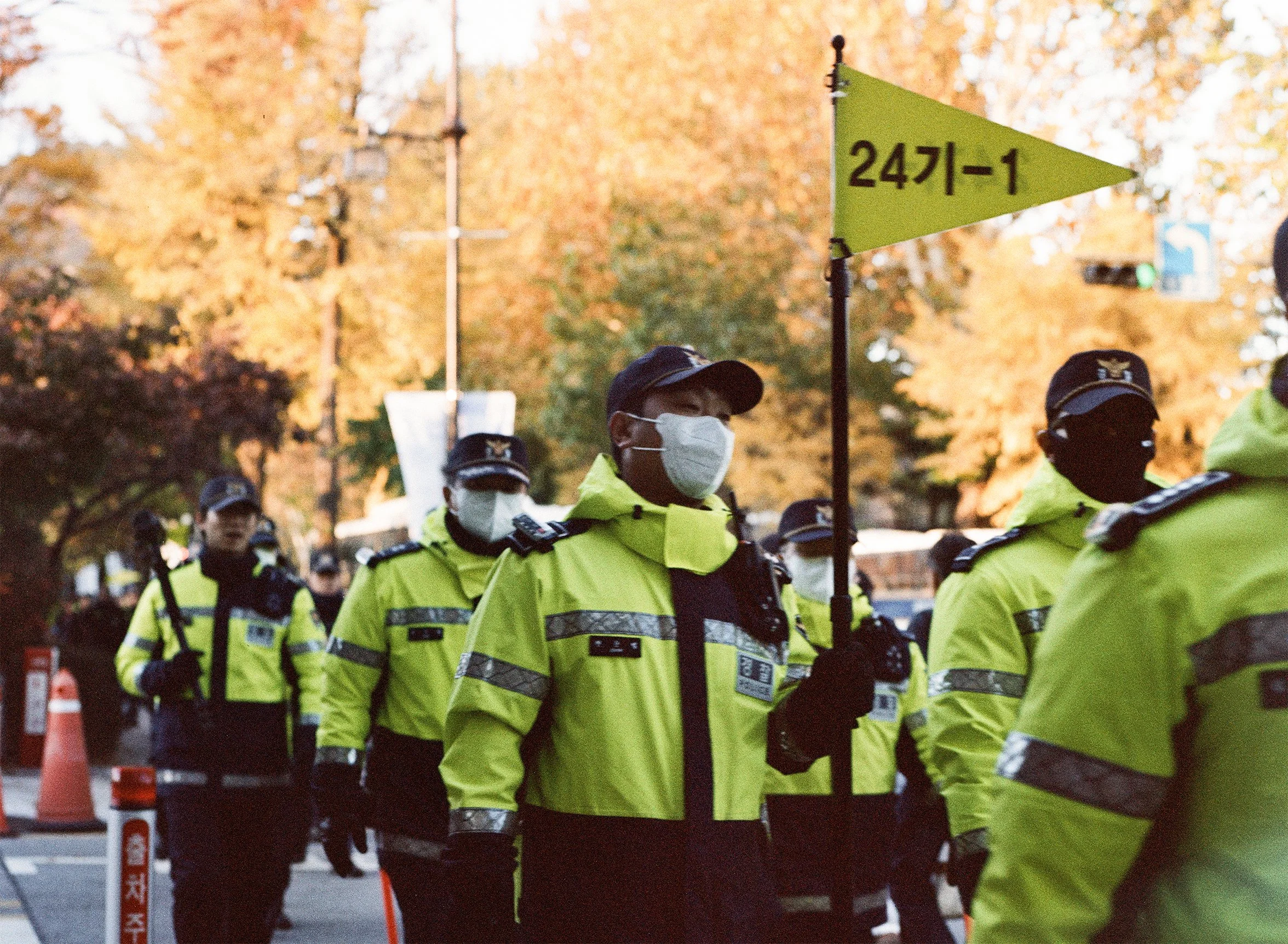
I would describe the candid portraits as being a bit challenging but despite that, I think that this is a valid demonstration of how Alien NC400 holds up.
Looking across the various men in the frame, we can see that across many skin tones the rendition of color is pretty true to life. The man closest to the frame does have the least amount of light falling on him and because of that, his skin is starting to show some color shifting in a less than ideal manner. The two men behind him, however, have just a bit more light on them and their skin tones are cleaner.
Zooming in on the man in the foreground, I can see that the film captured the general texture of his skin, his 5 o’clock shadow, the greying near his sideburns transitioning to the darker part of his hair. Most impressively, you can still make out his eyes, where he’s looking and a shine of light in his eyes despite them being in the shadow of his hat.
For being captured at a shutter speed of about ~1/30 or ~1/15 I’m happy with this performance. I’m sure with a more intentional portrait you can squeeze much better detail and performance out of this film.
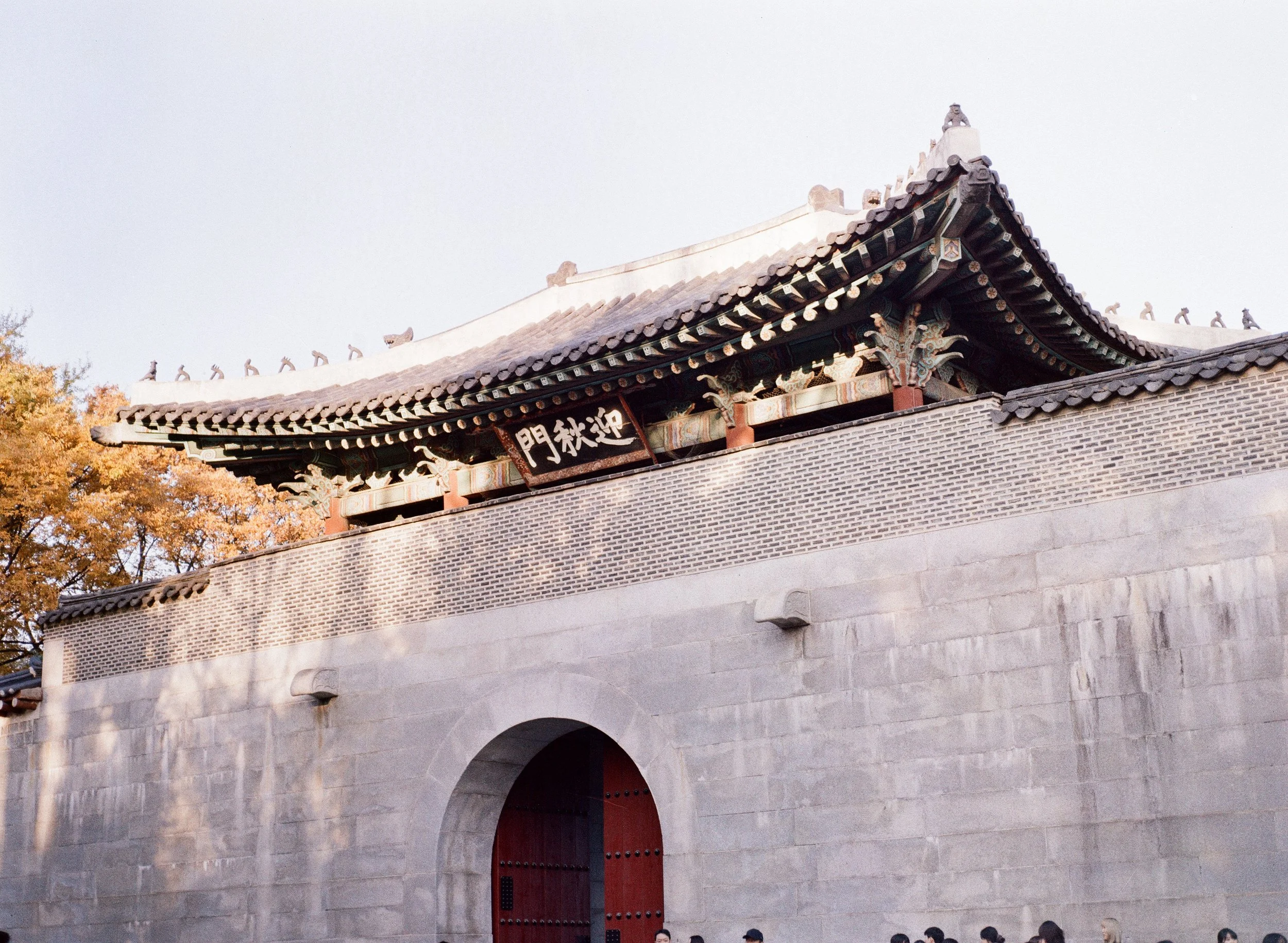


These images above were cropped out but show various other skin tones captured as well just to give a vague idea of how the film performs on subjects that aren’t in as contrast-y of light.
Landscapes:
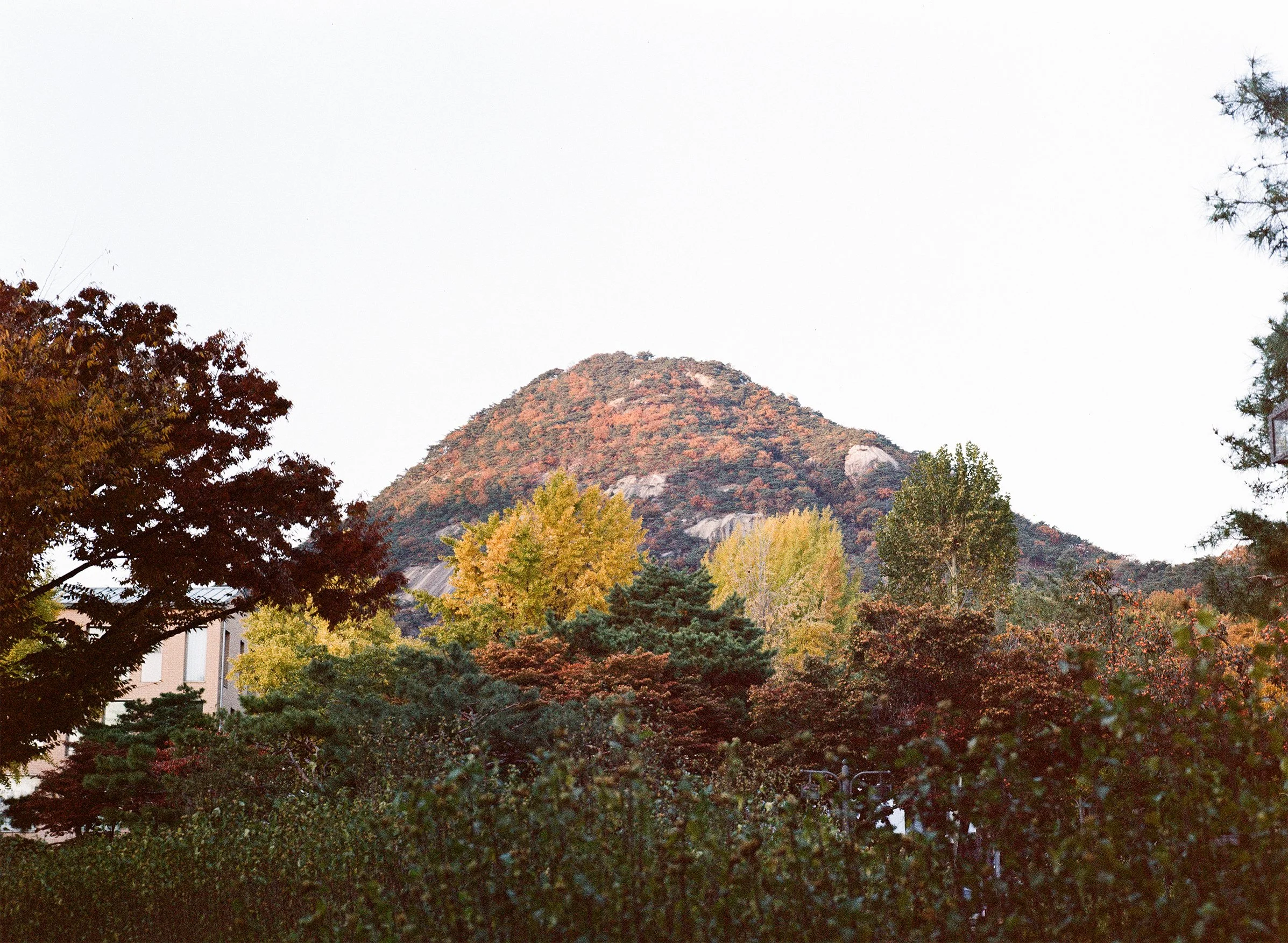
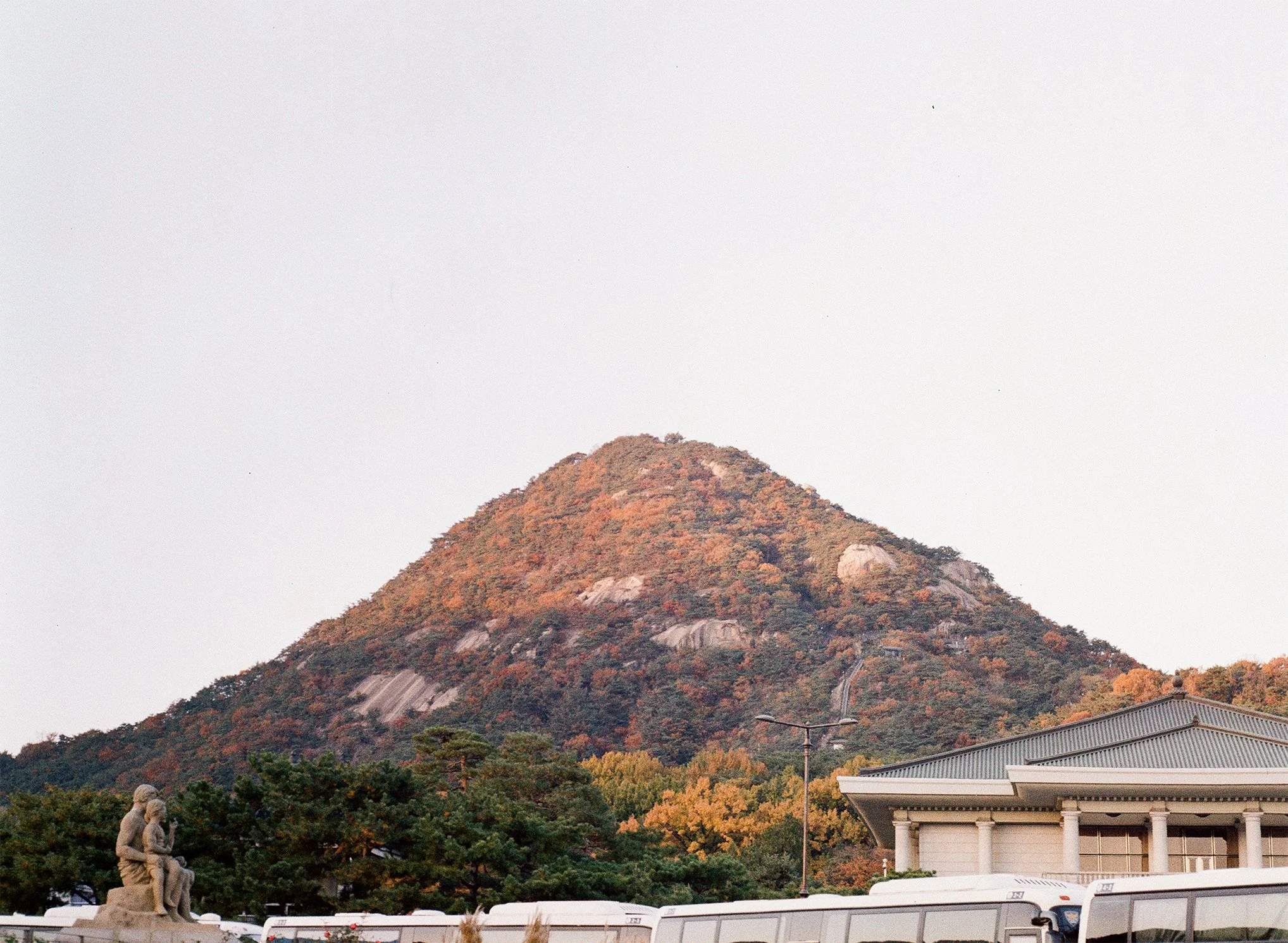
Looking at the statues in the foreground, detail is well retained; even more impressively when looking at the mountain you can see the trail going up the right side of it even though it’s in shade.
Unfortunately, we had no clouds this day to give the sky some texture or different tones. We can still see that despite the different exposure values of the landscape areas in shadow vs the soft blue sky, neither clip as too bright or too dark.
Some of the closer trees that are even darker DO display some of the muddiness in the areas that are effectively devoid of light. If you really wanted to you could likely go in and edit this to be cleaner. I don’t particularly like the color that these areas are without light but how you handle it is a stylistic choice. I chose to adjust my black point to make them a little less noticeable.
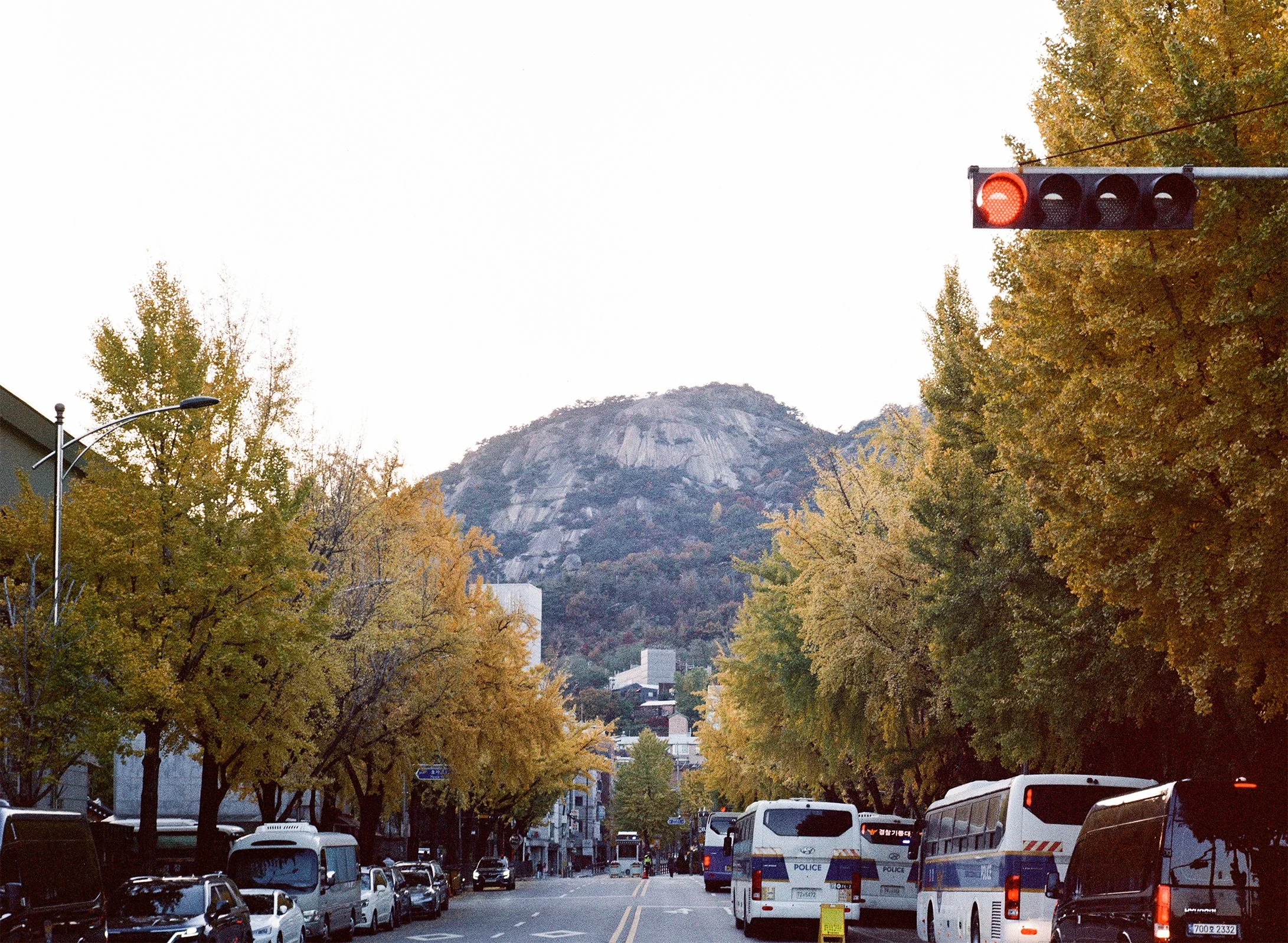
Mamiya M645, 80mm f2.8 | Alien NC400 | Yeonnam Film
Edits Made:
On the topic of black point adjustment and how to handle this film, here are the edits I made to my lab scans.
Contrast Curves:
When reviewing this film, I was pretty happy with the scans straight from the lab. Yeonnam Film tries to return scans that are as faithful to the film as possible.
That said, I did increase my black point a few values in Lightroom to introduce a little bit of contrast and reduce muddiness in some of the shadows that didn’t quite scan as black.
The blacks that aren’t quite black were the weakest part of Alien NC400 and I wanted to get rid of them as they scan as an unpleasant red muddy color.
Red Curves:
I did have to go into nearly image and tweak the red curve in a similar way to the contrast curves. The shadows demonstrate a color shift that I really didn’t like. The fix was to bring in the red curve’s black value by about 3-5 points. After this, most images came out more in line with what I wanted.
Personal Tweaks:
These tweaks were just personal changes I made for transparency sake. I used Lightroom for them:
Exposure: ± up to .66 to get the exposure I wanted
Contrast: - up to 10 to lean more into the softer tone of the film and reduce the busy contrast that foliage can intruduce
Vibrance: - up to 10, same reason as the contrast
Saturation: + 5 to offset anything that got too desaturated from the reduction of vibrance
Perspective correct: something I just like to do
Alternatives:
Kodak Portra / Ektacolor 400: This is basically the gold standard with the price of gold to match. Do you need the best of the best? Do you want colors as accurate as possible? Are you looking for something you’ll likely need to edit to get a “look” out of? This would be the stock for you. This film is designed for pros and comes neutral allowing for the photographer to craft the image how they want after the fact.
Lomography Color 400: I would describe Lomography Color 400 as the next best thing after Portra 400. If you want something neutral, nearly as good as Portra and are willing to take a gamble on Lomography’s quality control then this is worth considering too. I do see it close to as expensive as Portra here in South Korea but if you can get this for close to the same price as Alien NC400 then I would go for Lomo 400 unless you want NC400’s look.
Cinestill 400D: A respooling of Kodak’s Vison3 cinema film, this is another option to consider if you’re looking for a 400 speed daylight film. I personally didn’t like it as I found the colors of my scans to be all over the place and there were definitely strong halations in my photos. I personally prefer NC400 and found it easier to work with.
Thoughts so far:
In the end I can say I do recommend Alien NC400. The caveat is not knowing how easily available it’s going to be in the long run.
I went into this not expecting to enjoy the film as I generally haven’t enjoyed any of Wolfen’s “NC” films or the respools of it but this film did much better than I expected. I’ll have to see how the film holds up in the long run but at the very least, it performed well as an autumn and golden hour film stock. As long as the price stays where it is or the price of other film stocks don’t come down, Alien NC400 sits at an affordable price point with more than decent performance.