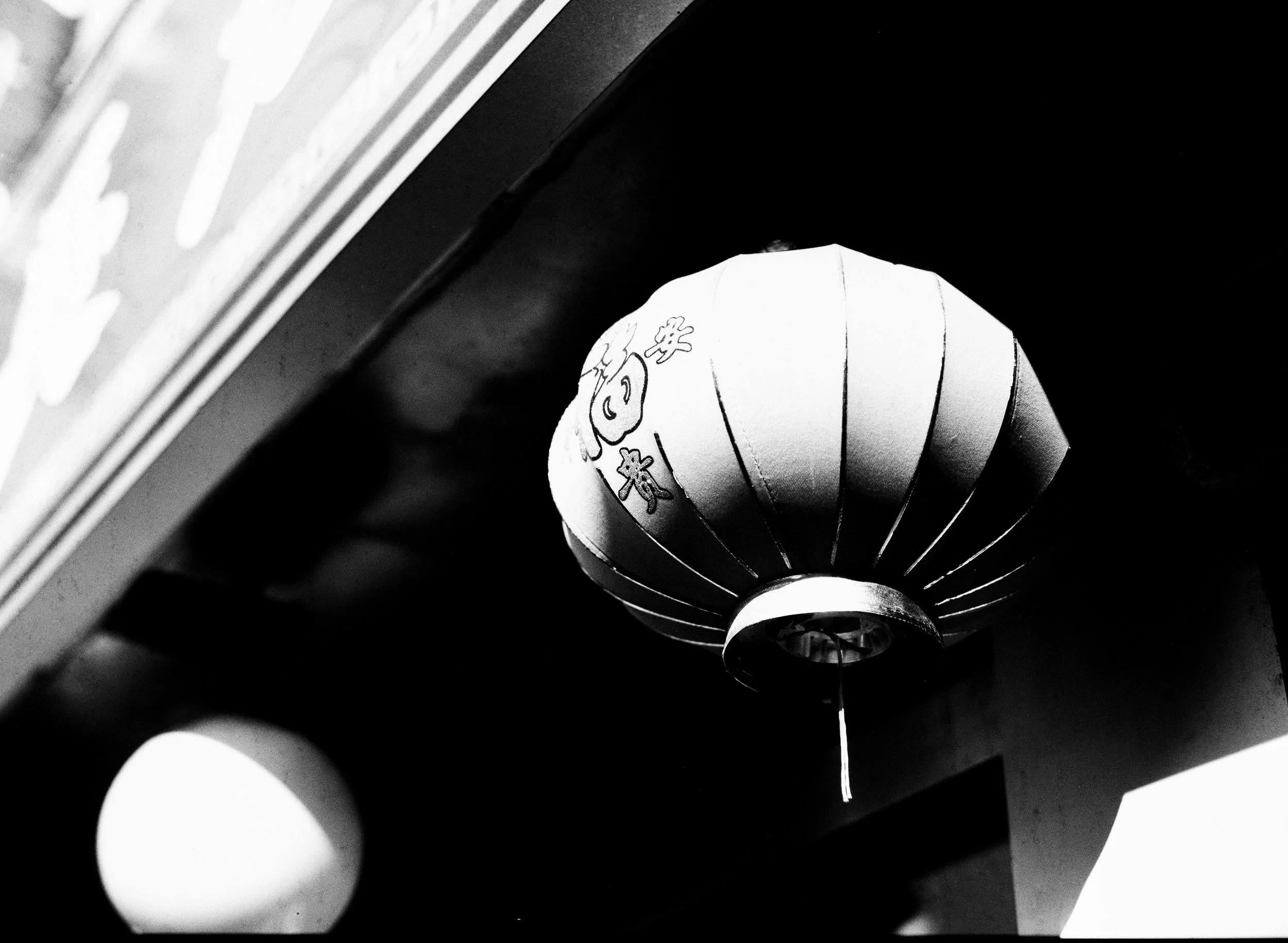
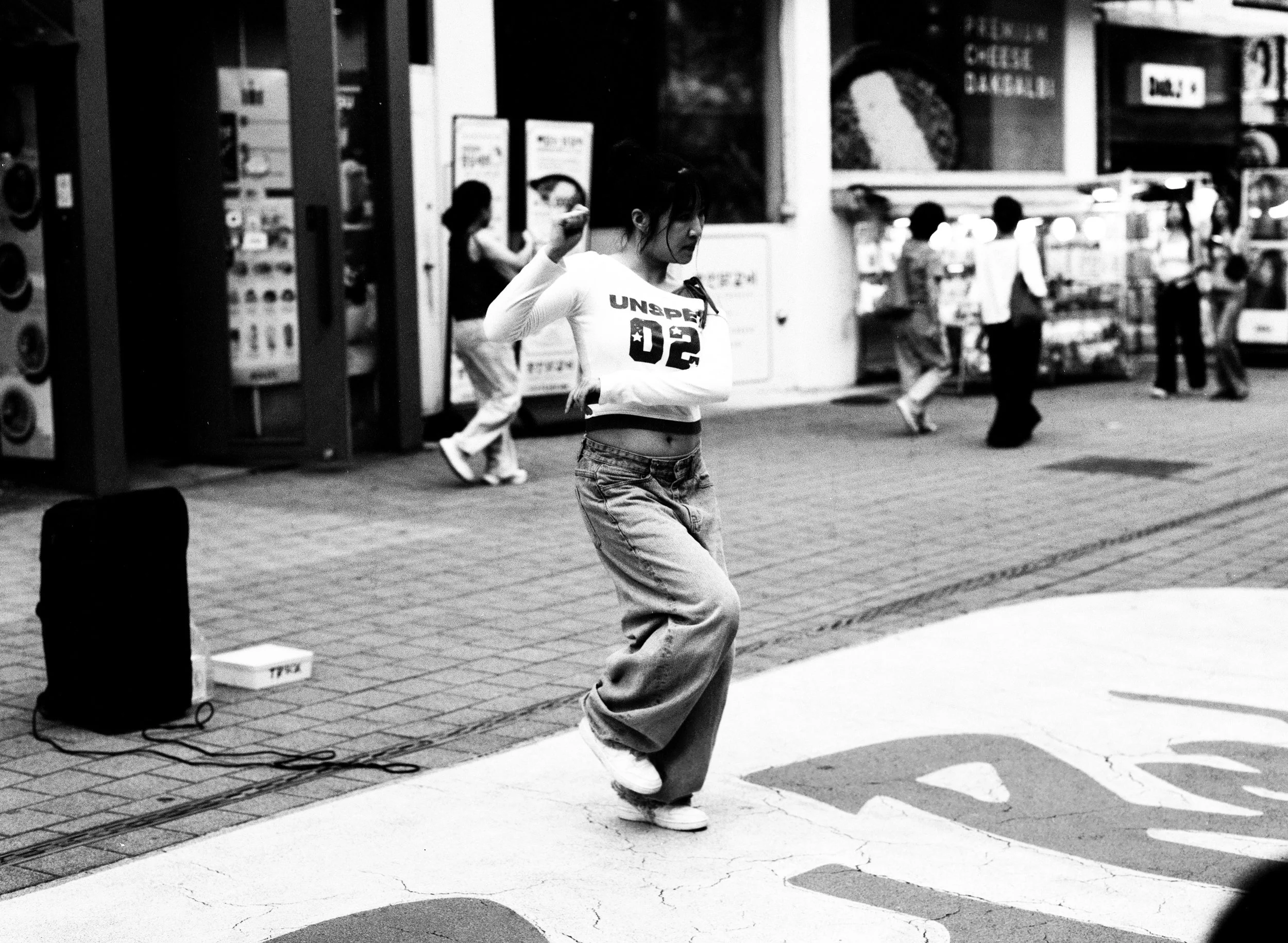
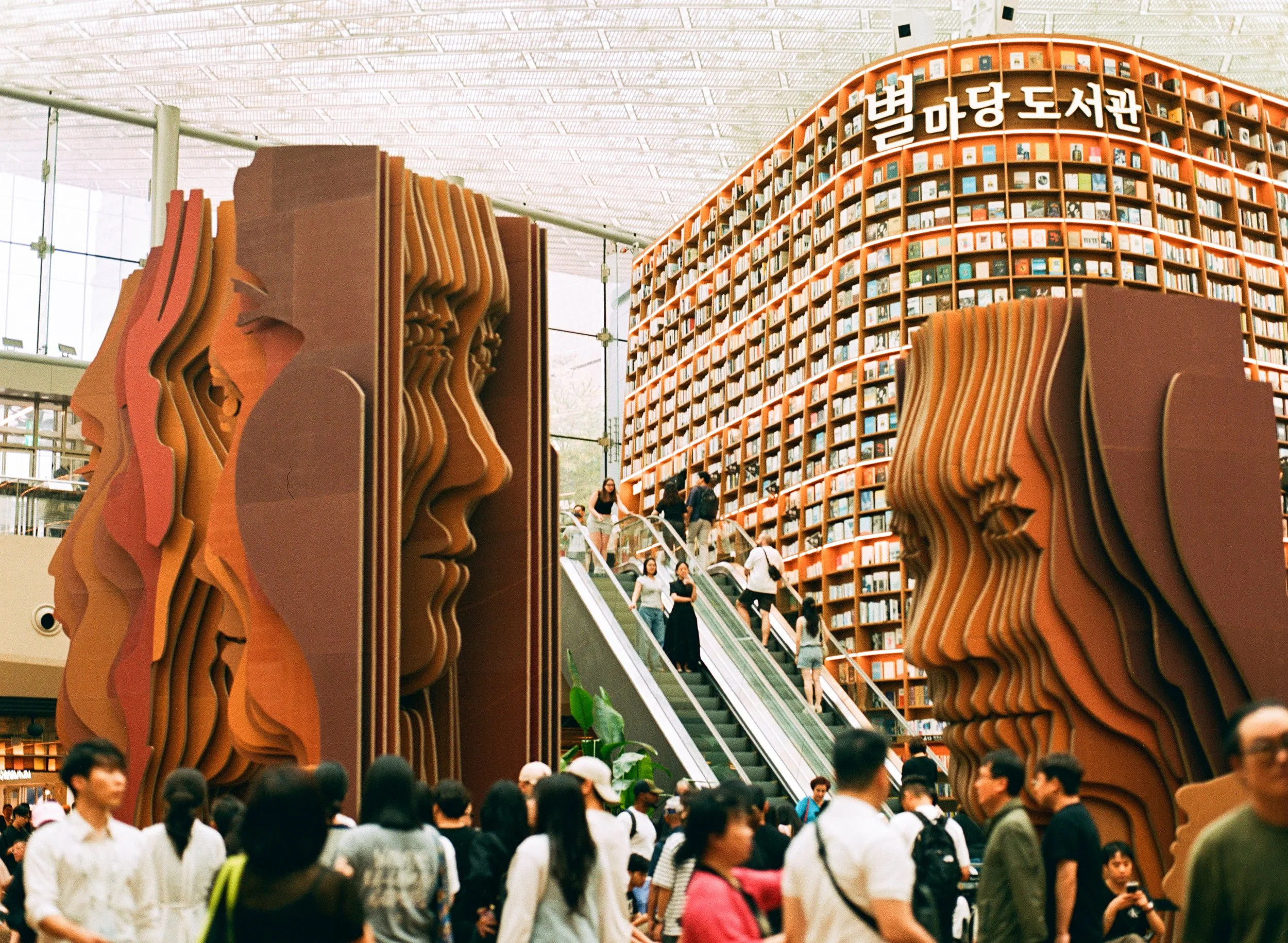
Mamiya Sekor C 80mm f1.9 Review - Dreamy Bokeh At A Cost
This lens was initially rented from Yeonnam Film and the rental was paid for out of my own pocket. After renting this lens I have purchased my own copy because I’m irresponsible and enamored.
For anyone who’s dabbled in medium format SLR photography or who has researched “legendary” vintage lenses to adapt to digital, there’s a chance that you may have come across mentions of the Mamiya Sekor 80mm f1.9.
It’s used in major cinematic releases
It’s the fastest medium format lens ever made
It has portraits that are one-of-a-kind
It’s a cheap (relatively speaking) lens to use for full coverage of digital medium format sensors
There's a lot of reasons that people talk about this lens.
Having been presented the chance to rent this lens, I couldn’t help myself and took the opportunity. I want to talk about my impressions of the lens after 2 weeks with it, how it handles for street photography and how it compares so far to the Mamiya 80mm f2.8 and side-by-side with the Zenza Bronica 75mm f2.8.
Shooting Assumptions
For this article we'll be operating under these assumptions:
When using the lens it was mounted on a Mamiya M645 1000S while using the waist-level finder. I used the lens alongside the Bronica ETRSi equipped with the 75mm f2.8 so that will be a point of comparison. The 80mm f2.8 will also be brought up as I own that lens and have used it prior to shooting the 80mm f1.9.
This review is being written primarily for film photographers with film development and scanning being done by Yeonnam Film. There’s nothing stopping digital photographers from adapting this lens to their mirrorless bodies and pixel peeping sample shots to determine absolute sharpness but my use-case was more focused around how Mamiya designed the lens to be used, with film.
But to quickly address this for any digital shooters:
From what I’ve seen on forums, this lens can be soft on digital sensors when wide open, particularly in the corners. It is a beautiful portrait lens with “character” but if you want clinical sharpness, a lens from decades ago does not tend to be the best choice for that.
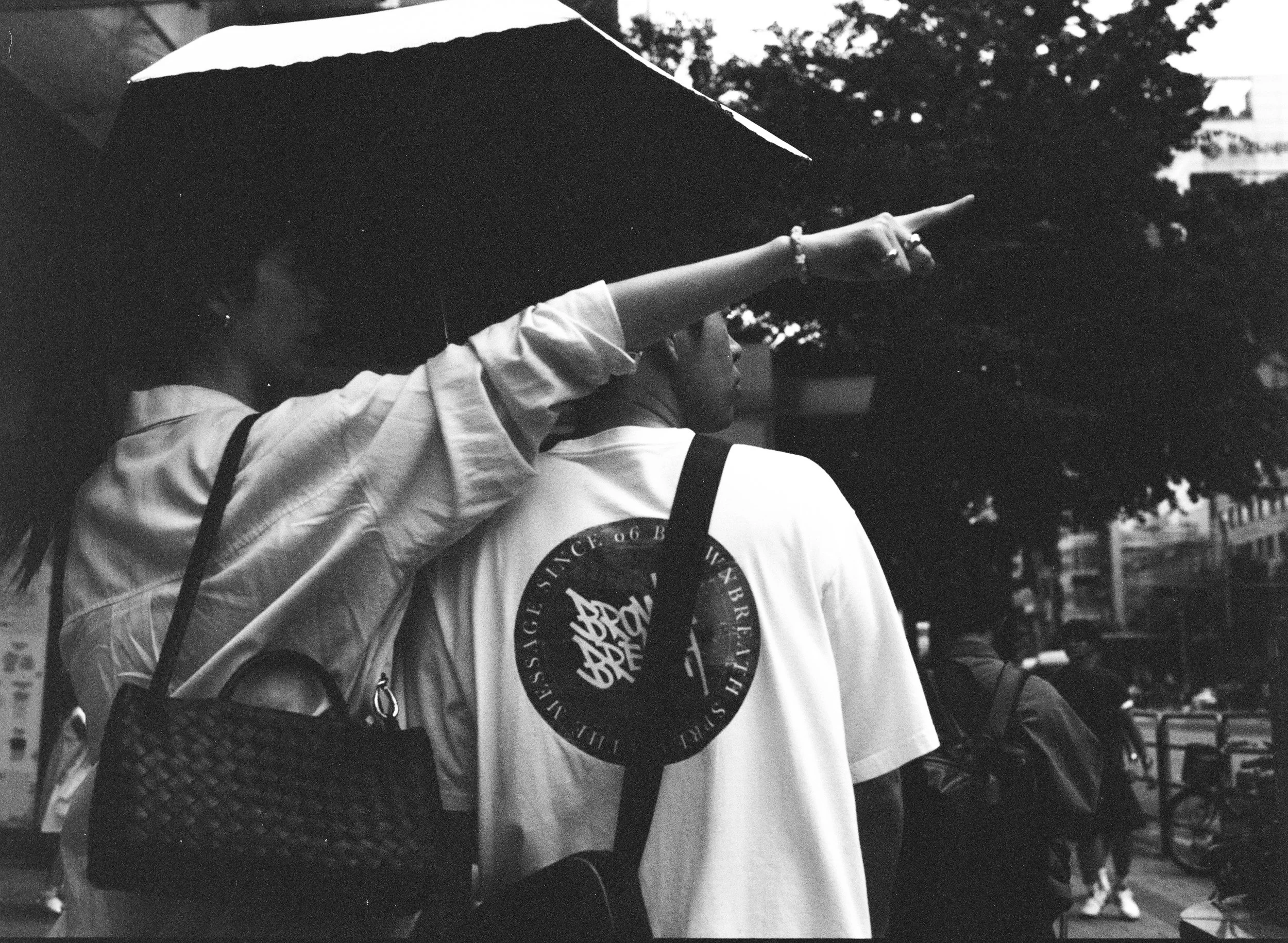
Mamiya M645 1000S, 80mm f1.9 | CatLABS X 320 Pro | Yeonnam Film
Quick Take: Pros & Cons
Pros:
This lens is one of a kind as the fastest medium format lens to be created during the hay day of film photography
Sharpens remarkably as you close down your aperture while having a signature rendering wide open that only this lens has
Despite the wide aperture, the lens isn't large and handles well on the Mamiya M645 and Super line of bodies
Easily adaptable to digital systems with perfect coverage on digital medium format bodies
Prices are not astronomically high despite all the hype around the lens; it can be found for under $1000 USD in 2026
Cons:
This lens tests your vision so having a focus screen with a focus aid is a necessity if you want to use the lens wide open; this lens isn't forgiving when focus is missed
The Mamiya’s mirror slap shaking the body is often enough to knock focus out of place if you’re shooting at slower shutter speeds
The waist level finder isn’t very ideal for this lens, you’ll want to use the prism; ideally the Auto-Exposure prism
The lens, while small, is also very dense and the weight can be noticeable after a while of holding the camera
Confidence when shooting without depth of field preview can be low
Neutral:
The focus throw is 180 degrees to make precise focusing easier but some may find this long
Above average distortion that is noticeable in scenarios involving perfectly straight lines though it's easily correctable in post
First Impressions
As stated earlier this lens was presented to me in a rental opportunity that I wasn’t exactly expecting. When I saw it, I knew I had to try it. The large glass element at the front that I had only seen on pictures online looked stunning with its amber coating.
As I handled the lens I immediately noticed that despite being the fastest medium format lens ever made, it’s not that large nor was it that heavy! That’s not to say it’s as light as 35mm lenses but compared to other lenses for digital systems or 6x6 and 6x7 systems, this was more than reasonable! It felt like it could be a great street photography lens and wouldn’t be any more assuming than the lenses that digital photographers use.
I was immediately excited to start shooting with it to see what I could do. The viewfinder was bright from all the light coming in through the huge front element. The body, lens and waist-level finder created a compact combination. I felt that I could shoot this lens any time, any where.
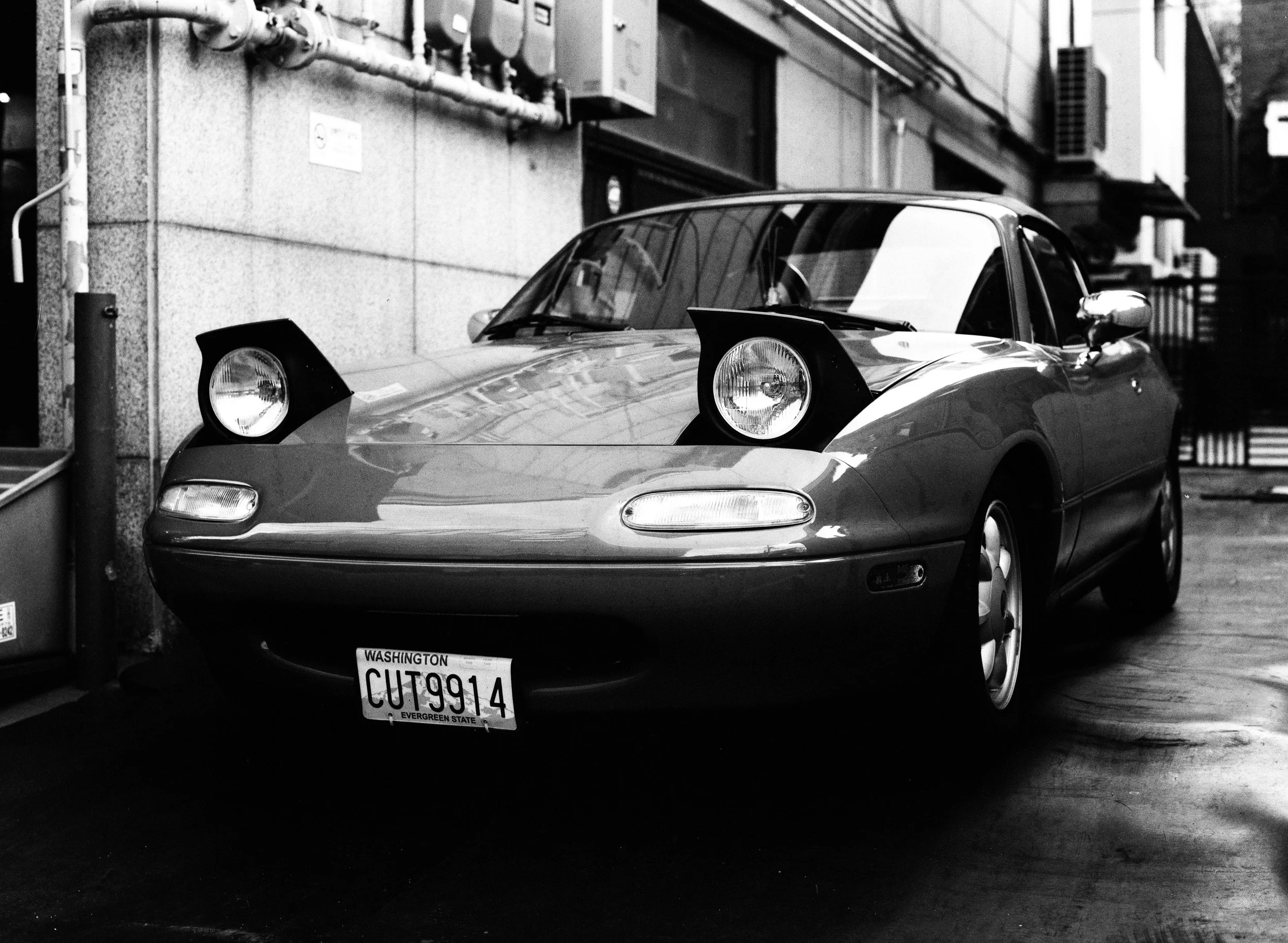
Mamiya M645 1000S, 80mm f1.9 | CatLABS X 320 Pro | Yeonnam Film
As Part of a Kit
The Mamiya Sekor 80mm f1.9 sits in an awkward position when considering it for a Mamiya 645 kit. The focal length is the same as the standard f2.8 kit lens that you can easily find for much cheaper, often less than half of what the 80mm f1.9 costs.
Not only that, but the shooting experience with the f2.8 is a little easier. We'll get into that in the results sections.
Who This Isn't For:
If you already have the f2.8, I would say you likely don’t need this lens. The only thing this lens offers that that lens doesn’t is one more stop of light. Furthermore, if you only have the waist-level finder then I don’t know how ideal this lens would be for you. I found that the prism finder is really helpful for helping you concentrate on hitting focus. I was much less confident when trying to use the waist level finder and constantly had the magnifier out with my eye to it creating this weird hunchback scenario whenever I was using the camera because I couldn’t focus accurately otherwise.
Who This Is For:
But if you don’t already have an 80mm from the Mamiya 645 line and are looking to add this or the f2.8 then I’d say this is worth considering. This lens gives your photos a one-of-a-kind look and pairs well with any of the wider and more telephoto lenses.
It’s up to you if the price difference is worth it but either way, either of the 80mm lenses are a must have for a Mamiya 645 kit. Both lenses have outstanding performance.
The only exceptions for when I would consider adding this to your kit even if you already have the 80mm f2.8 is if you’re a portrait photographer or if you do a lot of low light photographer where every stop of light matters. For those scenarios this lens is a one-of-a-kind that is highly recommended.
Results
Sharpness & Rendering
The Mamiya 80mm f1.9 is simultaneously a soft dreamy lens and a sharp optic suitable for professional work. Wide open, the lens exhibits a unique softness across the frame but particularly noticeable in the edges. Stop down and the lens delivers sharpness that is undeniably noticeable even when using budget quality film stocks.
Something to watch out for with this lens is that the distortion is pretty bad. Normally, I don't care about this sort of thing and don't notice it but in this case it could end up very noticeable when taking pictures that have verticals or lines in the shot. Using a distortion correction of around +10 in Lightroom fixed this issue but when shooting the Bronica 75mm f2.8 in near identical situations I didn't see this issue
Look at the line to the far right of the frame. You can clearly see it bending despite the other lines not doing the same thing. Image below is corrected for this distortion.
When shooting against high contrast scenes blooming didn't happen unless the film I was using did not have good halation control. The lens itself controlled this well preventing the image from washing out.
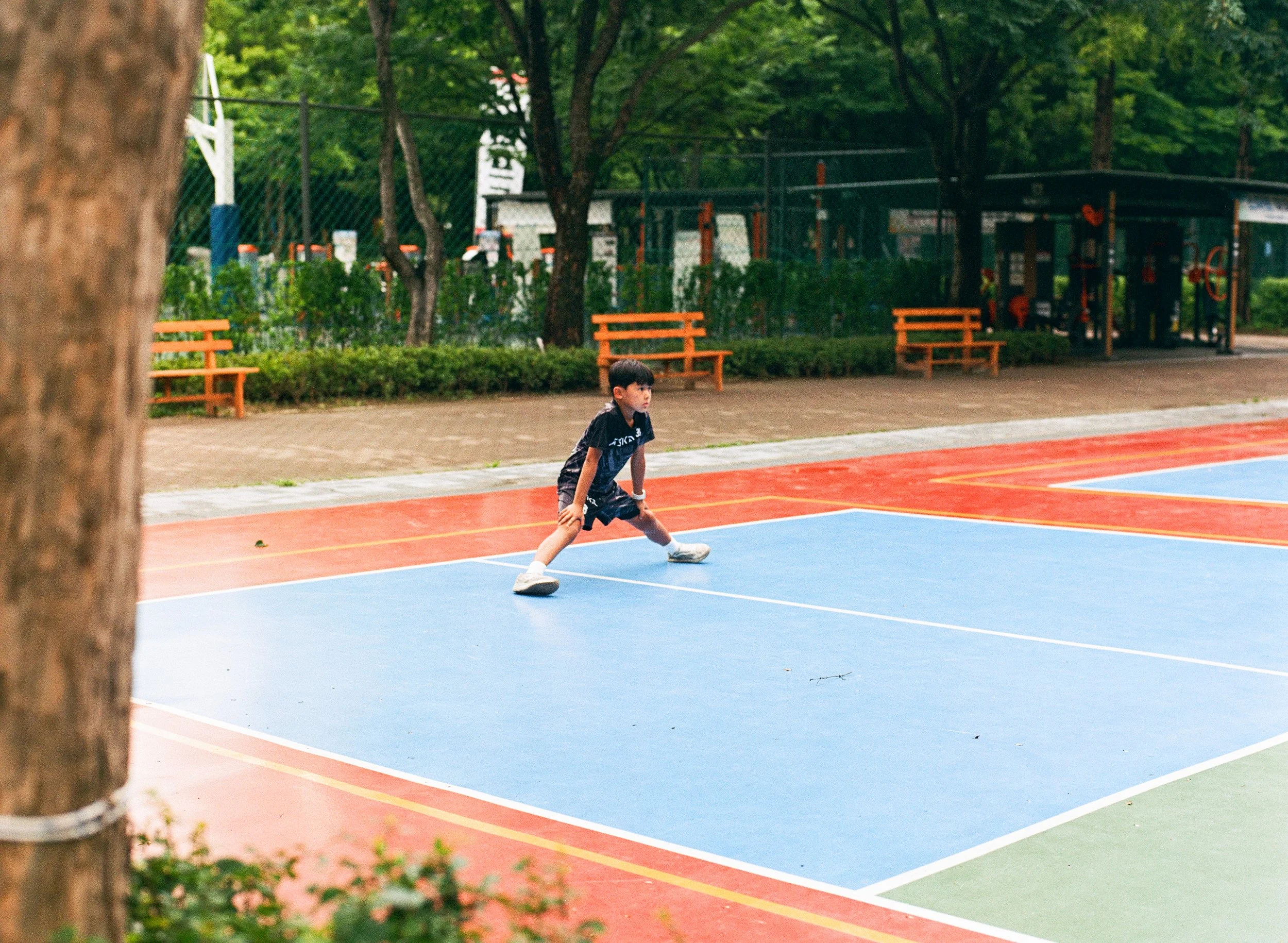
At apertures f2.8 and smaller, I did not see any benefit to using this lens compared the its lighter sibling the 80mm f2.8 nor was it sharper than the Bronica ETR's 75mm. You could shoot with any of these 3 lenses and get exceptional results at comparable apertures.
Color Rendering
When looking over photos taken I don't notice any color shifts or color casts from the lens. Colors are generally true to life and if there's any deviation it seems to be more towards a softer pastel color. If there is any color shift I suspect it will manifest being warmer as the coating on the lens is a very warm orange/yellow. This will be corrected in post when scanning since setting the white balance of your scan is part of the process you have to do anyway.
With the lens being more than 50 years old now, there will be sample to sample variation with how the coating has aged but from results I've seen, I don't think this is an issue nor have I seen anyone report it as an issue.
Having seen videos and phots from others, flaring & chromatic aberrations are possible but I personally haven't seen them. The weather has been rainy so harsh light hasn't presented itself for these to occur. The lens flares when shooting in color do have a distracting quality to them if not controlled and used intentionally.
Bokeh & Out of Focus Character
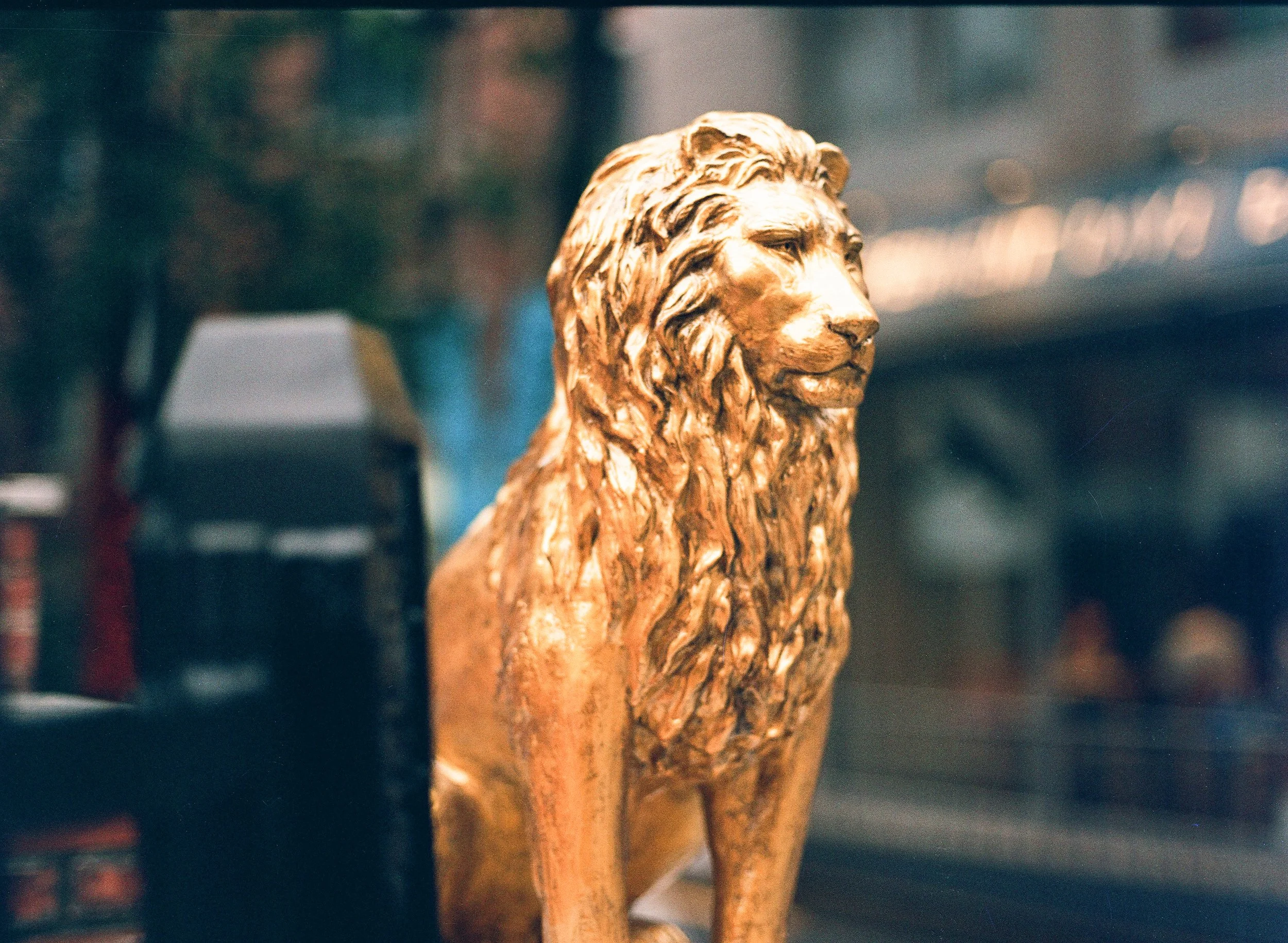
The main reason to use this lens. The depth of field of the f1.9 aperture with the compression of the 80mm focal length give your subject that "medium format look" that people love to talk about. Even from further distances you're able to take shots that let your subject pop out from their environment.
The out of focus rendering is creamy if you’re looking at just the color. The lens has a painterly quality to the way it captures scenes through its vintage coatings.
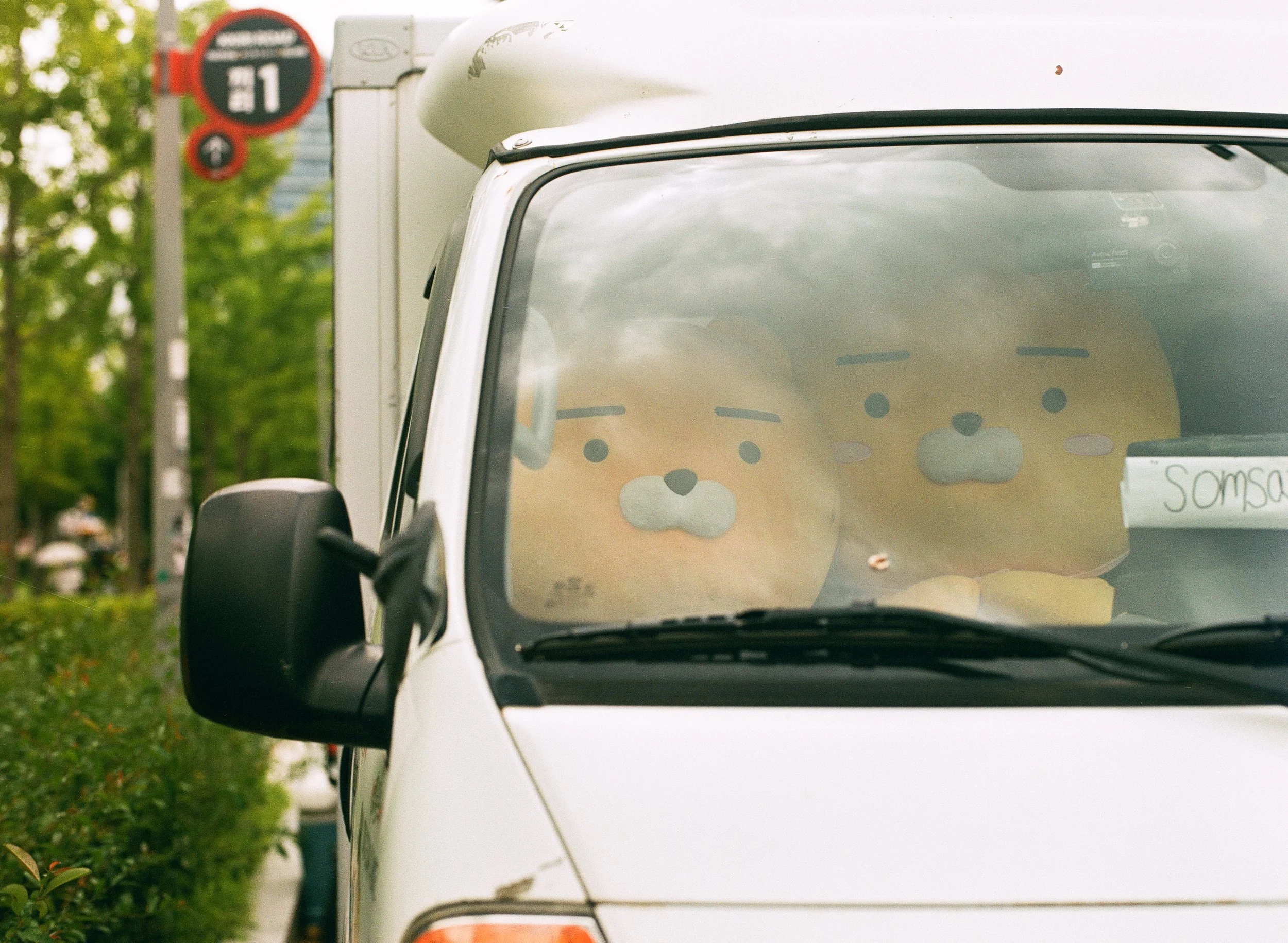
Unfortunately, the bokeh balls themselves are not so easy to romanticize. They’re a harsh and distracting in scenarios that are already busy, especially in full body portraits. It can be particularly noticeable in color. In black and white this is less of an issue but then you don’t get the lovely color rendition of the lens.
Real-World Handling For Street Photography
In this section I'll be primarily comparing the Mamiya Sekor 80mm f1.9 to the Zenza Bronica 75mm f2.8 as I tried both of these lenses back-to-back for different articles.
I'll start with the negative as I believe this will be the make or break for deciding if this lens is for you.
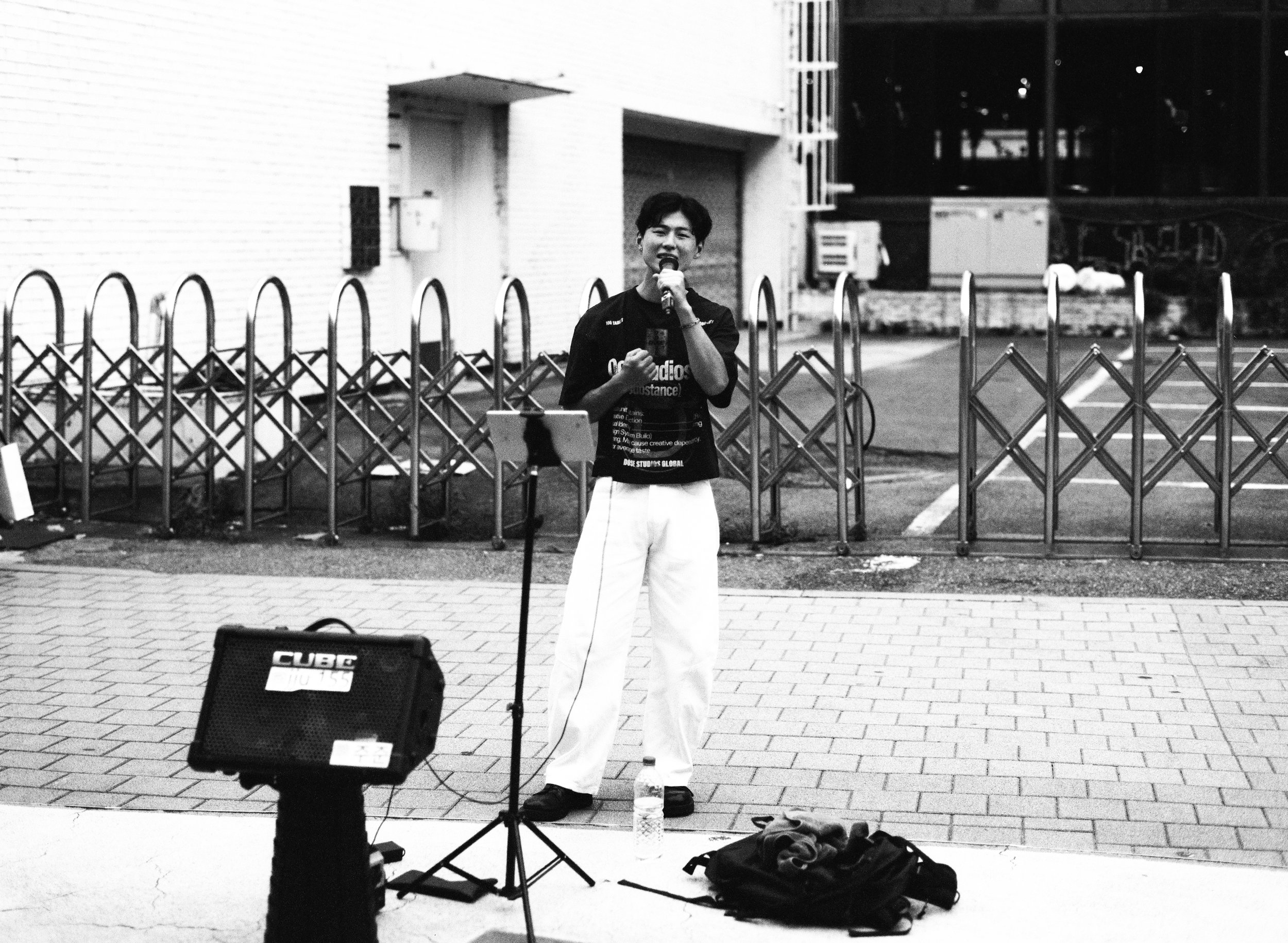
When using this lens for street photography you're going to need to decide between two things upfront. Do you want a higher percentage of photos in focus but without the f1.9 depth of field or do you want to gamble and risk having many out of focus shots in exchange for the unique shots you can only wide open?
It's a tricky dilemma. When using the lens I would constantly meter for f1.9 with the intention and mindset of landing the "shot that'll stand out." When using my Bronica though, I didn't have a thought like that weighing on me in the back of my mind while shooting. It's not a tactile or tangible thing you feel while shooting but rather it's a psychological weight that affected how I wanted to shoot, what I wanted to shoot and if I would even push the shutter button.
Not only was this mindset difference a deterrent when shooting with the Mamiya but the physical action of shooting was noticeably different between the two. Both cameras were equipped similarly, waist level finder, 50mm equivalent lens and the body; there was no grip or anything to make one camera easier to use than the other. But the Bronica was infinitely easier to use. When using the Mamiya every time you push the shutter, you feel it. But the Bronica, with its leaf shutter, is smooth and gentle. There's simply less vibration to shake your shot.
At f1.9, every shot and the shake that happened during it would make me question "did the camera shake throw off the focus?" or "was my shutter speed high enough to offset the shake?" I would avoid some photos just because the shutter speed wouldn't be high enough even though the lens is as bright as medium format could be because the shake of each shot would be enough to put me off. Comparatively, I could use the Bronica 75mm at shutter speeds as low as 1/30 of a second without a care.
Another hindrance with the Mamiya system was that the shutter button on my M645 1000S had more resistance and travel than the shutter button on the ETRSi. To some degree, this is good because you won't accidentally actuate the shutter as often on the Mamiya but what I found is that it was a bit too much of both. If the resistance was higher but the travel was the same or if the traveler was longer but with similar resistance it would have been fine. Instead, with both of these at play I found it harder to take shots without starting to worry I'll shake the camera or shift out of focus. Meanwhile, the Bronica was a breeze to use. So much so that I found myself wishing I had the Bronica in my hands for some of the shots I wanted to do with the Mamiya. Sure the f1.9 would be great but it would be even better if I could take the shot at all; struggling with just handling the Mamiya body got in the way more than I would have liked.

Mamiya M645 1000S, 80mm f1.9 | Lucky 200 | Yeonnam Film
But let's talk about when everything lines up for you. When the lighting is working with you, when you get in the flow state and when you're confidently turning the focus barrel. The Mamiya Sekor 80mm f1.9 earns its legendary status. The lens being small and dense allows it to feel natural on the Mamiya 645 line of bodies as it doesn't hang off the front of the camera. It creates a relatively compact medium format combo that visually doesn't stand out much more than a mirrorless camera with a comparatively bright lens. Audibly, you're still working with the giant mirror slap and focal-plane shutter so you'll never fully blend in. But it's worth it. When you get that feeling of satisfaction from pressing the shutter and knowing you got "the shot," there just isn't another way to get this feeling.
If you put in the work, you can absolutely get to the point where all the pain points above start to be a past thought. Many of the quirks and difficulties of the Mamiya 80mm f1.9 feel like they're part of the learning curve and can be overcome. If you use the Mamiya 645 as your main camera, you can develop the muscle memory. If you use the grip for the 645s, you can have a more stable shooting experience. You can use faster film for faster shutter speeds. There are solutions to these problems that I had. It's just that when you side-by-side it with its competitor, you notice these things much more than you would have otherwise. Ignorance is bliss, to some degree.
With how small and portable the lens feels, it feels like a lens you can take anytime you go out if your outing allows for a medium format kit. As a street photography lens it is a dream to handle when things are going well, it's just the uphill climb to be able to consistently get to that point that you need to be aware of.
Focus Accuracy
Focusing is the real pain-point of the lens. With an f1.2 full frame equivalent aperture, the depth of field for the Mamiya Sekor 80mm f1.9 is razor thin. You can focus on the eyes of a subject and have the tip of their nose already exhibiting focus fall off.
What this means is that you need all the help you can get when trying to focus this lens.
You'll almost certainly need to use a pristine focusing screen that has a focusing aid. For street photography I would recommend the micro prism and for portraiture or static shots I would recommend the split prism.
Furthermore, when it comes to prism vs waist-level finders, I think that the prism viewfinders are basically must haves. This is a portrait lens and without it you realistically can't take portrait orientation photos. Another point for the prism viewfinder focusing with the waist level finder was more of a pain than the experience was worth. I always needed to have the magnifier popped out and I was just hunching over the camera trying to make sure my focus point was accurate even when stopped down. It added a point of friction that was constantly eating away at my concentration while I tried to dial in focus.
That brings me to another point, focusing with this lens is a nightmare for your confidence. When using the lens’ auto stop down, you’re always focusing with the f1.9’s depth of field. This CONSTANTLY left me second guessing if my focus was right even if I knew in the back of my head that the lens was stopped down.
I assume you can get used to this and if you shoot with lenses like a 50mm f1.2 in 135 then you’re already used to it but because it’s medium format and costs more, I was often unwilling to take photos from fear of missing focus. The solution would be to shoot with depth of preview always on, right? Well, when using the split focusing screen, I’d get the center of my frame blacking out as I stopped down which was a pain to work around.
That's why I suggest using the micro prism focus aid for those who are doing street photography where you can’t stop and fiddle with focus. With the micro prism focus aid you can use depth of field preview all the time with the only trade-off being the darker viewfinder which would happen regardless of focus screen.
But here’s the thing: if we’re talking about stopping down the lens then at that point, why even use the f1.9? You can just use the f2.8 at that point. When using the f2.8 I was able to do skateboarding photography and I had a great time. Focusing felt simple and I felt confident in my shots even if I didn't land every single one.
While using the f2.8 on a photo walk, focusing on split second moments was no issue and I didn’t second guess myself. I don’t know if I would have been able to use the f1.9 in those scenarios. I think that the f1.9 could have created incredible shots, sure. But I’m not sure if I would have been able to land the focus for those shots to come to be.
Alternatives
Mamiya 80mm f2.8 (non-autofocus) - This lens competes directly with the Mamiya 80mm f1.9 as it has the exact same focal length and is also for the M645 system. The differences are that the f2.8 can be had for less than half of what the f1.9 goes for and it is also lighter weight making it easier to carry around
Mamiya 80mm f2.8 (autofocus) - A valid choice to consider if you're using a Mamiya 645AF body. As it has autofocus it's basically in a different class of lens but it serves the same purpose: being a 50mm equivalent for medium format 645.
Zenza Bronica 75mm f2.8 - The ETR line's normal lens. If you haven't already bought into the Mamiya 645 system, this is a lens to consider as well if you use flash photography due to this lens using a leaf shutter. With a leaf shutter you can use a flash at all shutter speeds as opposed to the upper limit of 1/60 with the Mamiya 645 system. Additionally, this lens performs better at lower shutter speeds when it comes to handheld photography due to the leaf shutter creating less vibrations on photo capture.
Quick Questions and Quick Answers
What is the full frame equivalent of this lens?
50mm f1.2
What is the focus throw distance?
180 degrees
What is the minimum focus distance?
0.7 meters
What is the magnification ratio/reproduction ratio for macro photography?
0.15 / 1:6.6, this lens can isolate details but it doesn't excel at macro photography
What is the maximum flash sync speed for studio photography?
1/60 of a second
What should I look out for when buying this lens?
Many of these lenses are coming in from Japan which is notorious for humidity. Be sure to check for mold and traces of mold cleaning
Who should buy this lens?
Portrait photographers, low light photographers, and digital medium format photographers who don't mind optical imperfections
Verdict
Give a real recommendation: who should buy this lens, and who shouldn't. State it plainly, don't hedge into a shrug. End with a clear one or two line takeaway a skimmer could screenshot.
With that, we've talked about the highs, lows and in between's of the Mamiya 80mm f1.9. Where does that leave us and who is this lens for?
For starters, if you're a portrait photographer who uses the Mamiya 645 system, this lens is an easy recommendation. The out of focus fall off, color rendition and look of this lens are one of a kind. This lens was made to do portraits and it excels at it.
Alternatively, if you're wanting to dabble in low light medium format or already do, then this lens could be a great option for you. It's simply the fastest option you have with medium format and it lets you bring this lens places that other lenses can't go. Night time street photography and concerts open up to you in a way that they can't with other lenses or systems.
Lastly, if you're looking for a vintage optic to adapt to the Fujifilm GFX system or Hasselblad's digital system then this lens could work for you. It was designed for the 645 film format which is a larger surface area than digital's medium format. As such, you should see full coverage of your sensor.
If you already have the 80mm f2.8 and you do landscapes or daytime street photography then you can pass on this lens. If you're shooting full frame digital, you can pass on this lens too.
In the end, I had a great time with the Mamiya Sekor 80mm f1.9. It tested my ability to critically focus and my confidence in myself to be able to focus but the images that came from it are unparalleled.
I've ended up purchasing my own copy of the lens to adapt to Fujifilm's GFX mount and to use as part of my Mamiya 645 kit. If that isn't putting my money where my mouth is, I don't know what is.
Additional Reading
Mamiya G 150mm f4.5 L Review - Another extraordinary Mamiya optic that until now has seemingly never been properly reviewed online.
Lucky 200 in 120 First Impressions - One of the newest color film stocks to come out and the first color film from Lucky in many years. Worth checking out as a Kodak alternative if Kodak is expensive in your region.
Phoenix II in 120 First Impressions - The other new color film stock to come out in recent years. :-) I'll leave it at that.
Bronica ETRSi Long Term Impressions - Thoughts on this camera 1 year after using it on and off including why it isn’t a camera I use as often as I’d like