Film Photography Tips for Concerts and Music Festivals
Live music and art are two things that two things that just make sense together. A live performance is something that gets the creative muscles pumping, whether it's photography, drawing, videography or something else entirely.
If you're a photographer then you definitely see more than a couple of moments during a concert that make you think "damn, that would be an awesome shot."
Recently, I got to photograph a festival here in Seoul on film and digital so I wanted to write down some thoughts and tips based on it. This will primarily be focused on film photography but there will be thoughts that are applicable to both and some samples will be on digital as I used a vintage lens for it. :)
Shooting Experience
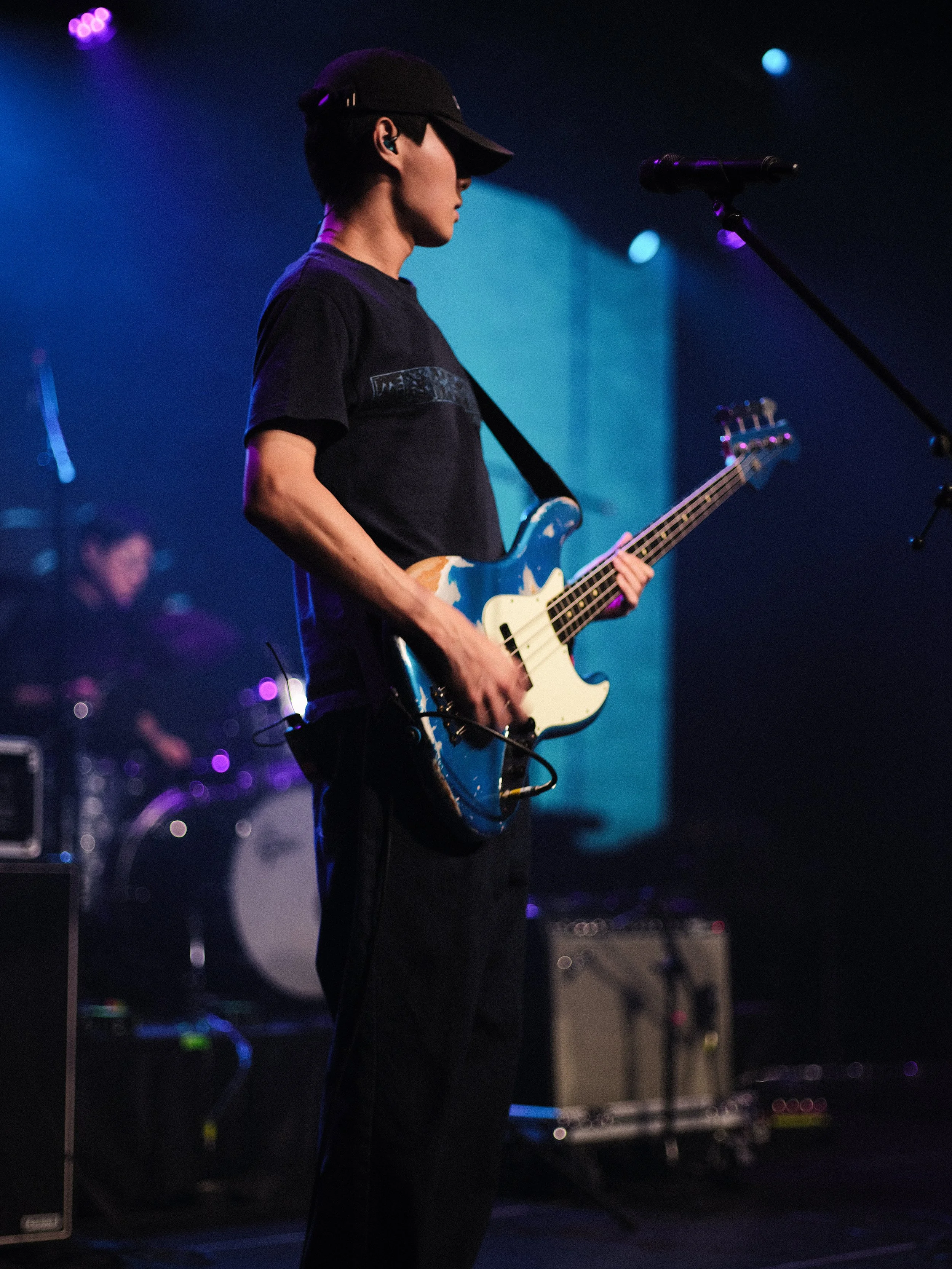
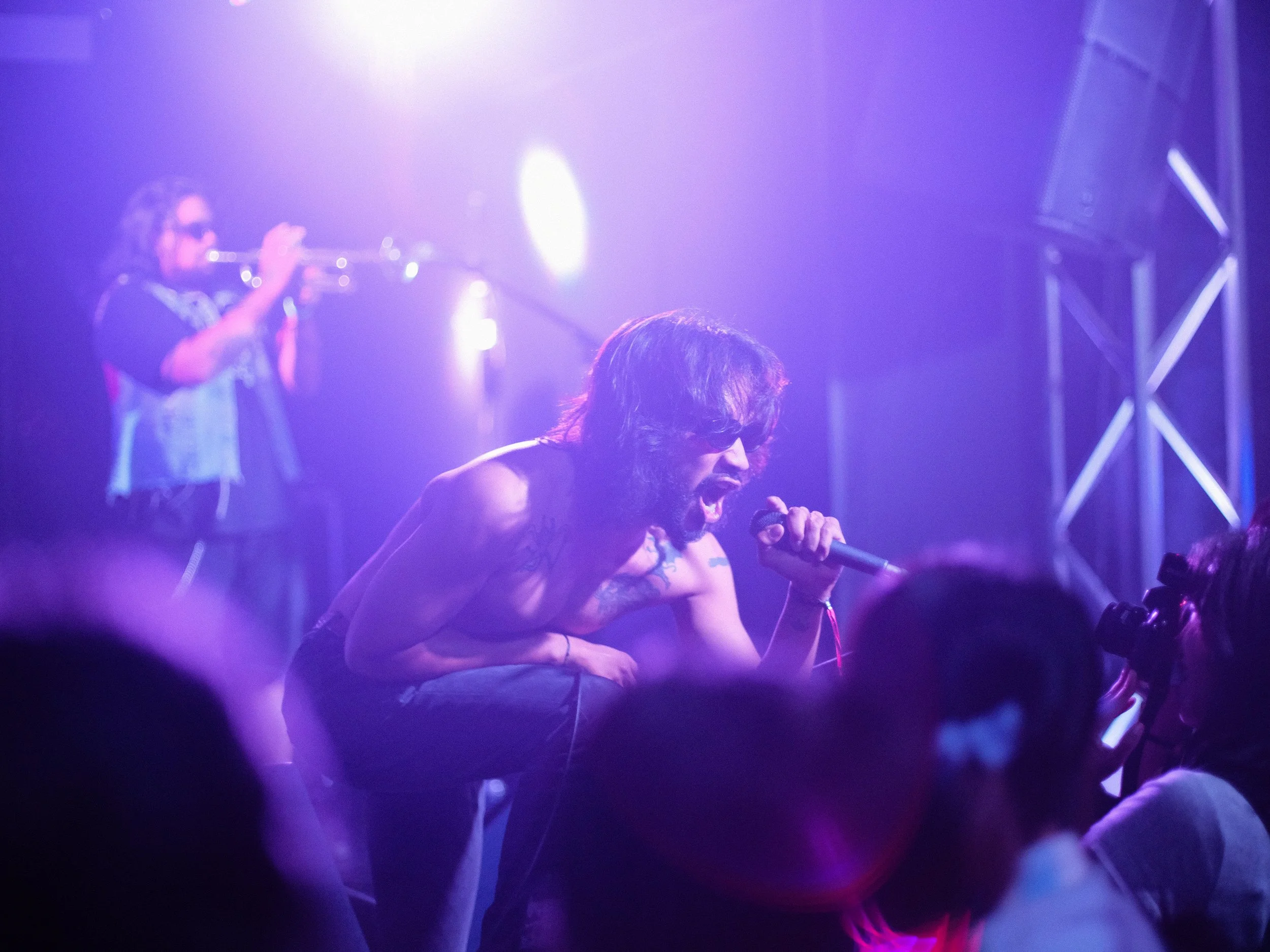
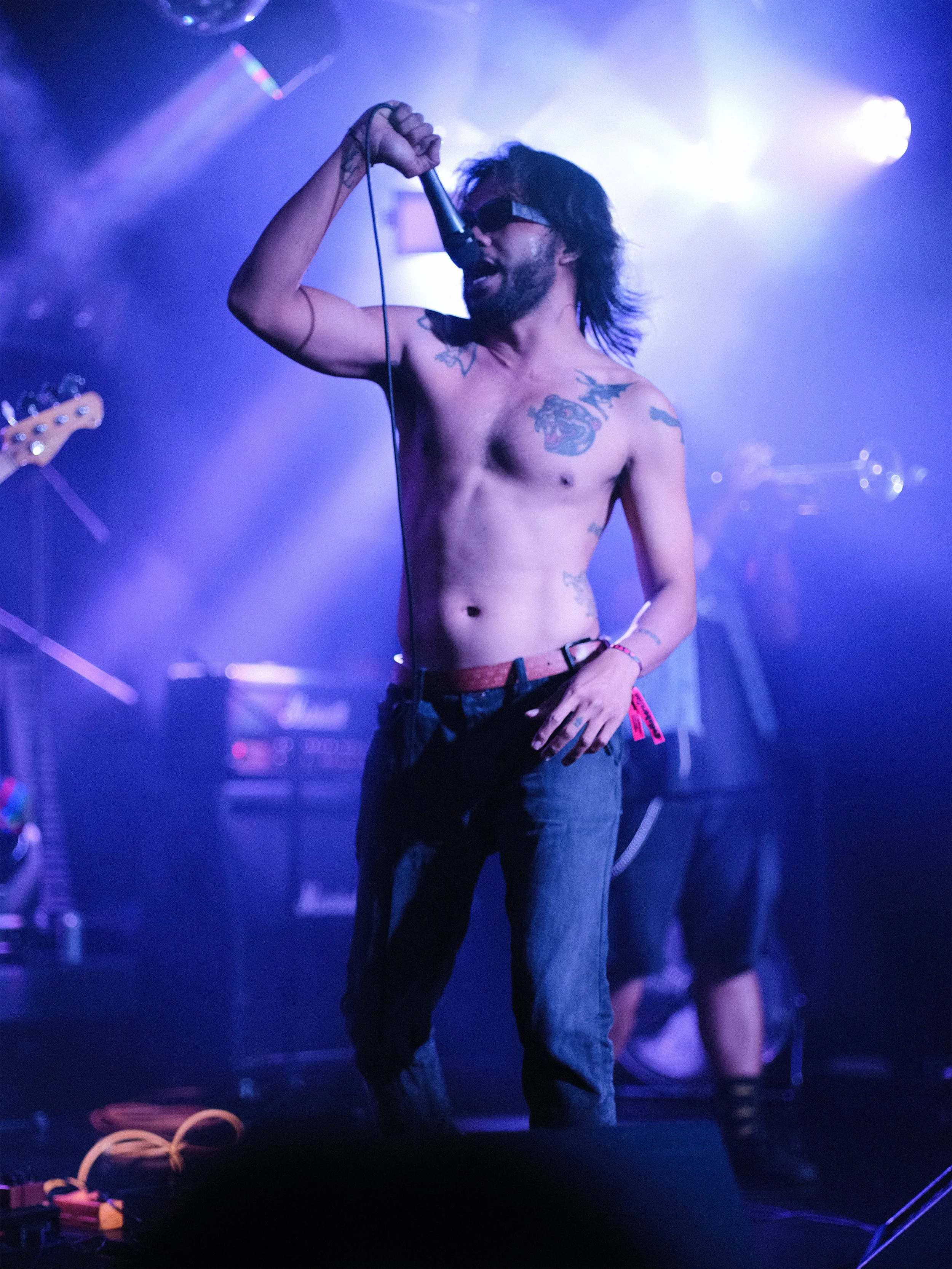
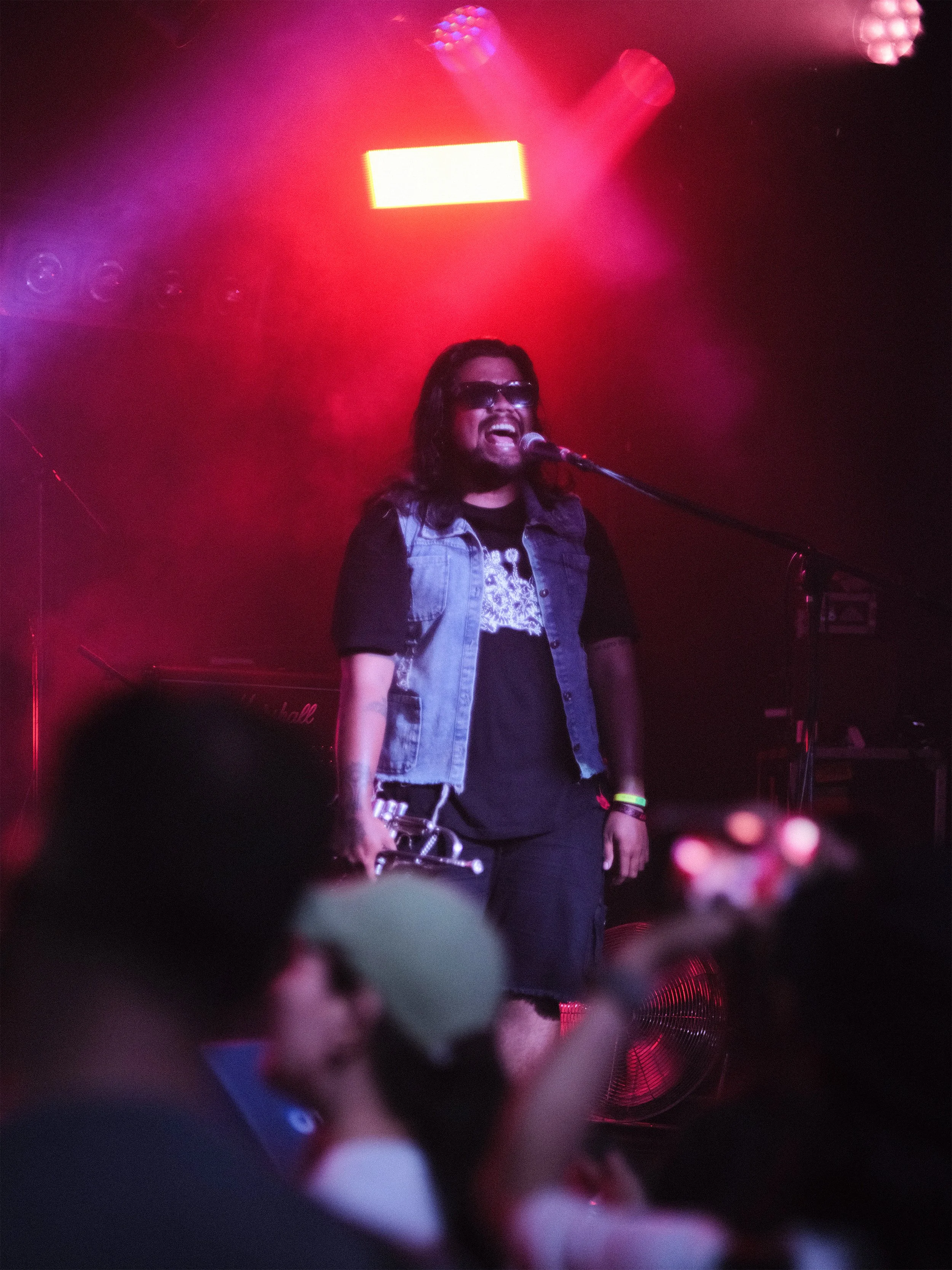
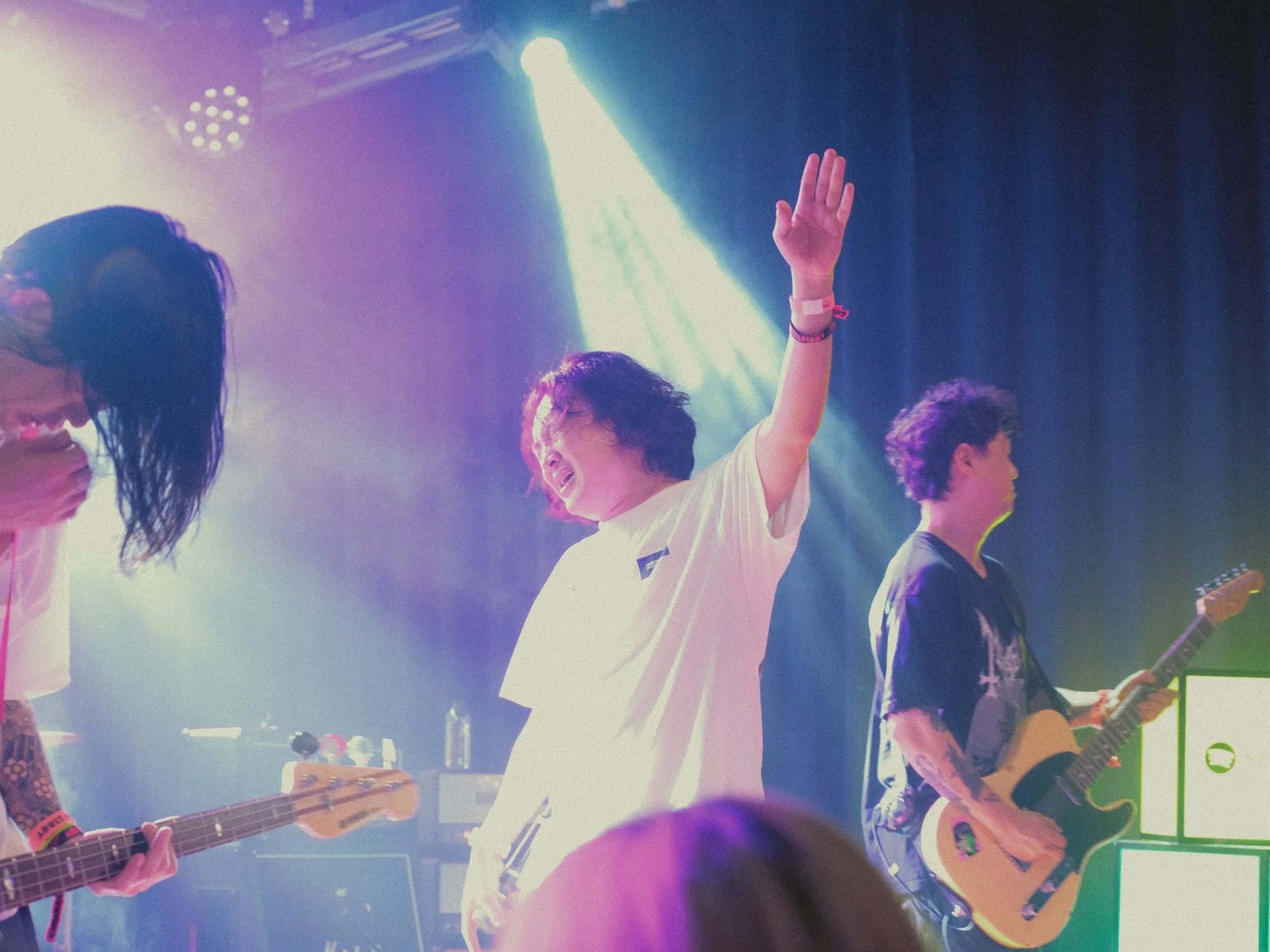
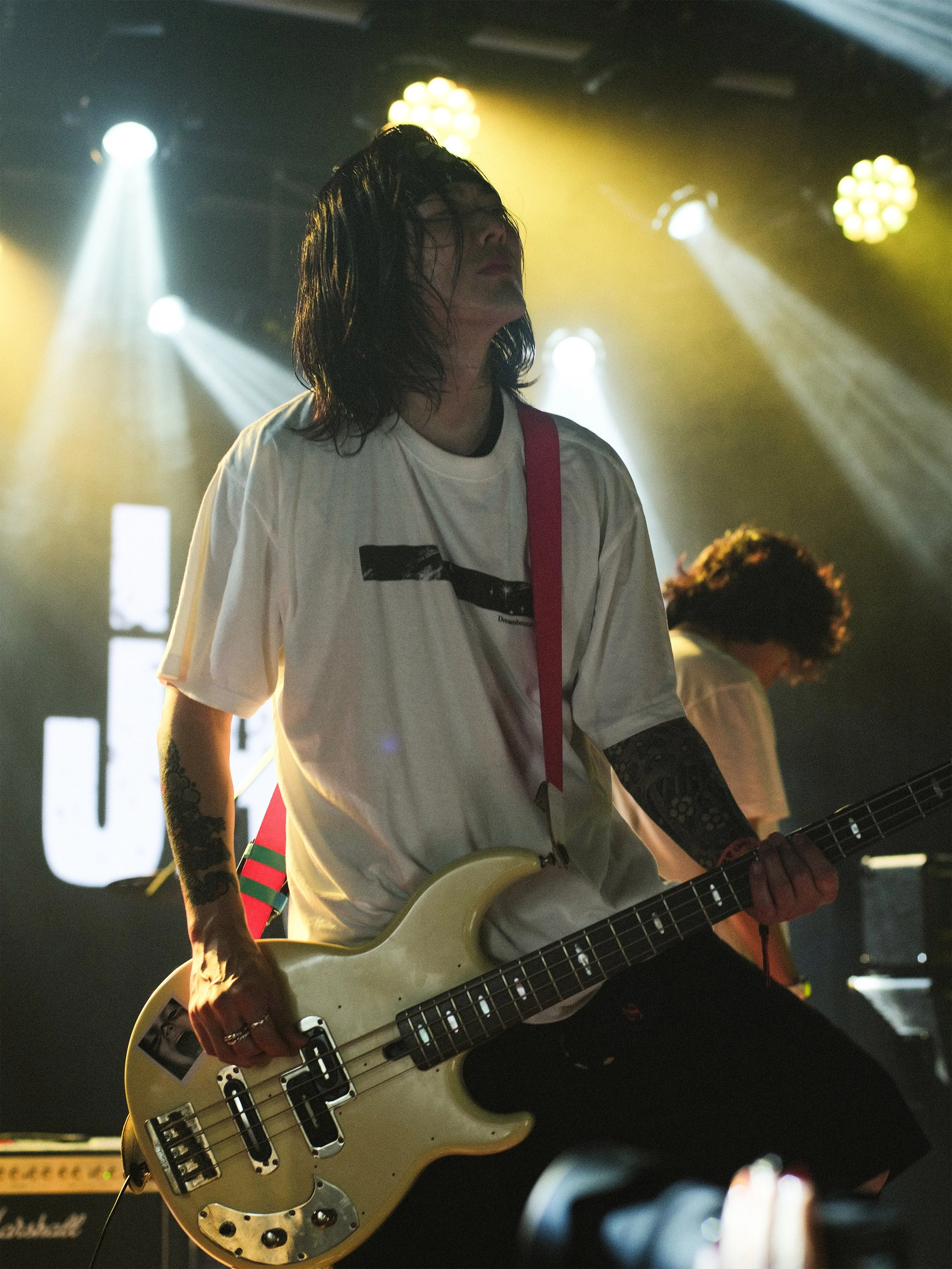
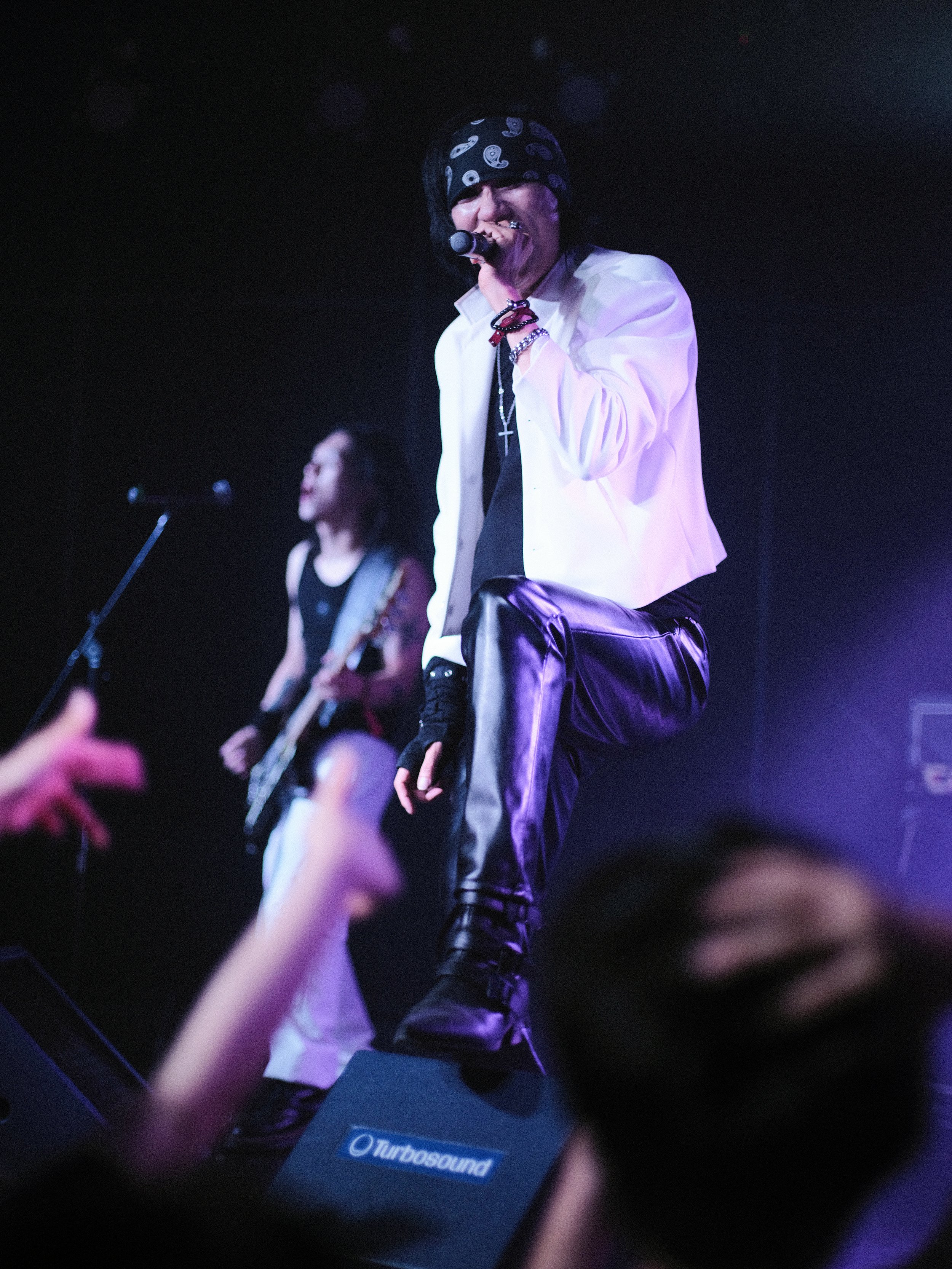
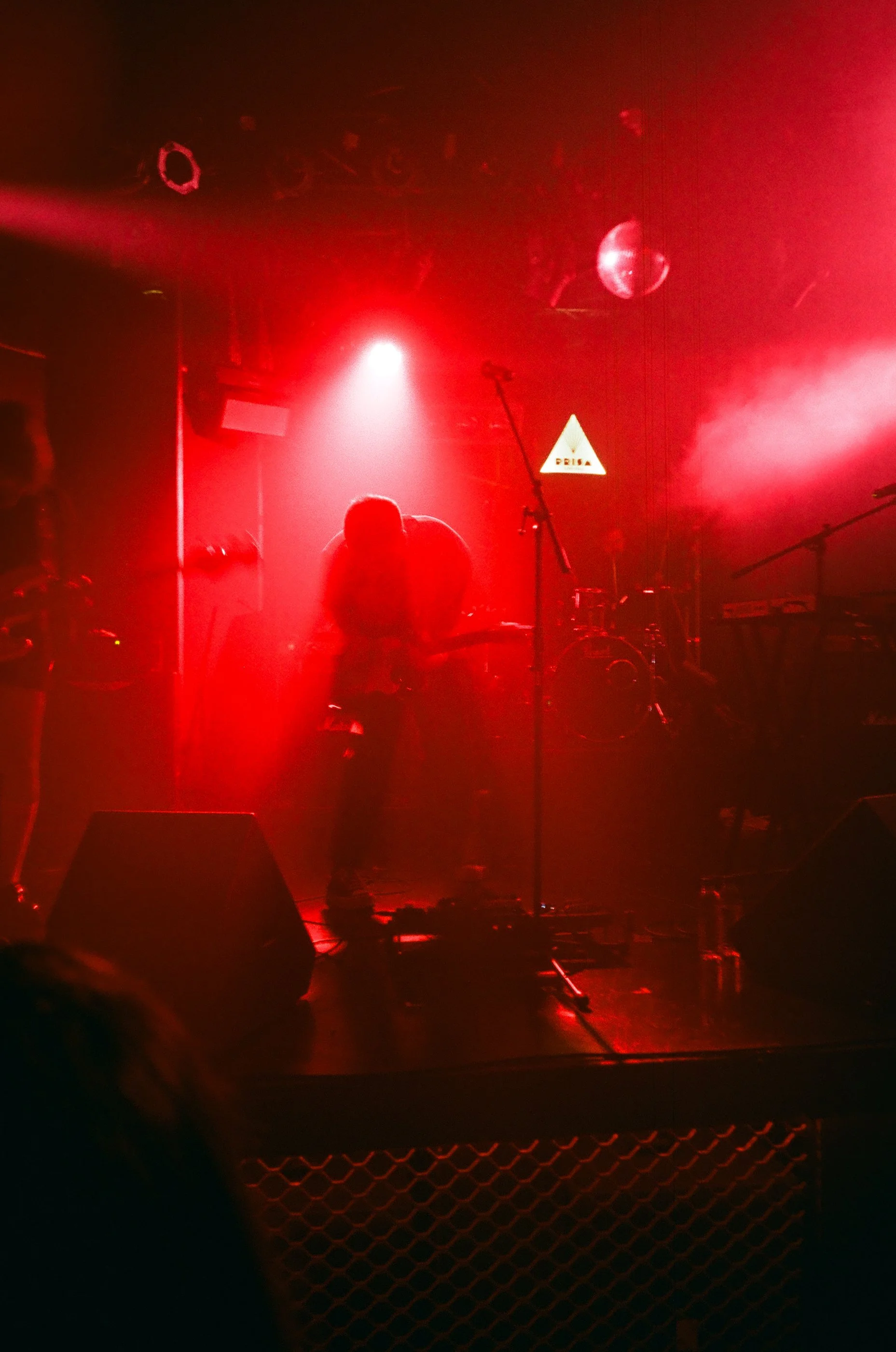
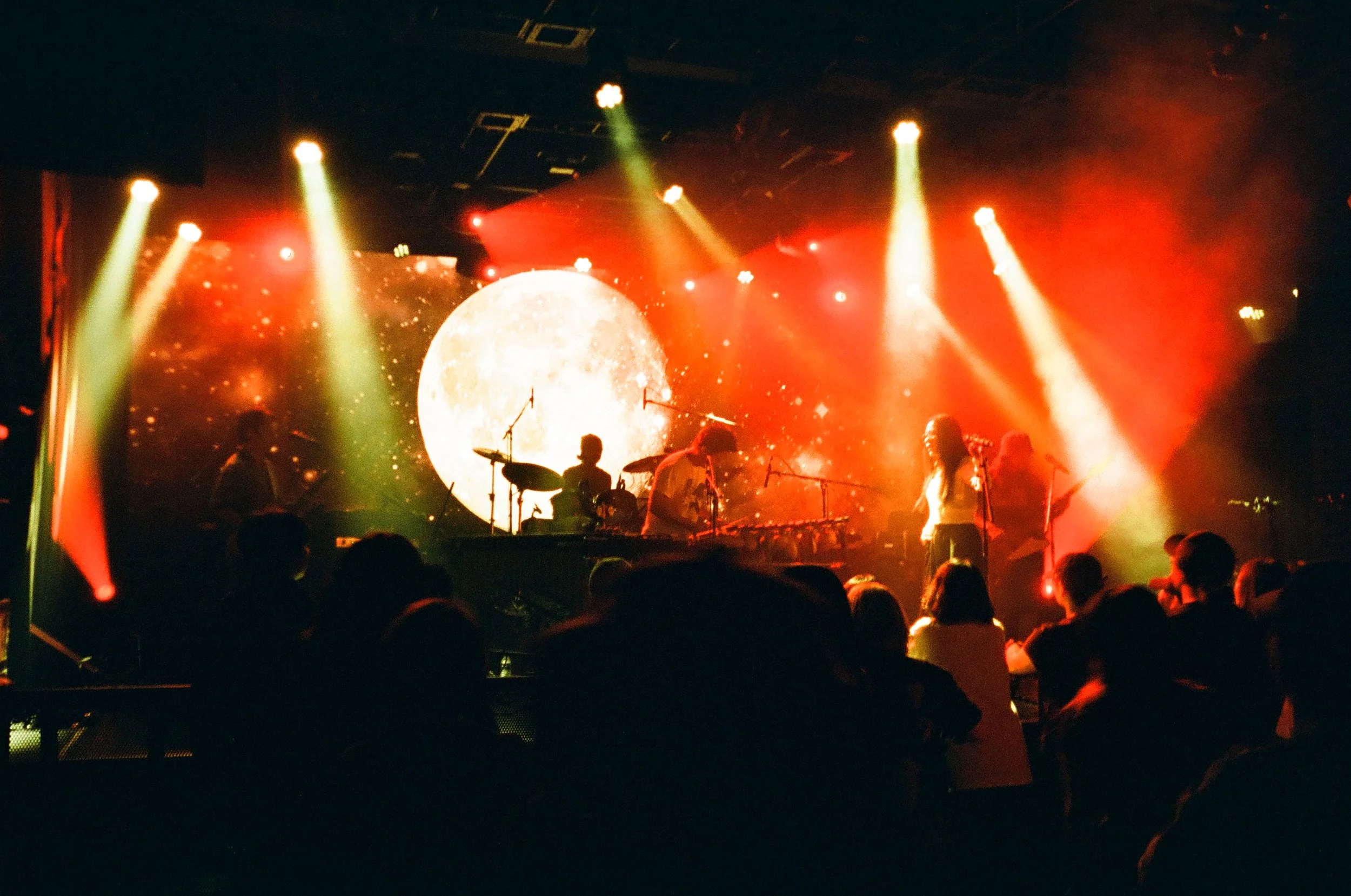
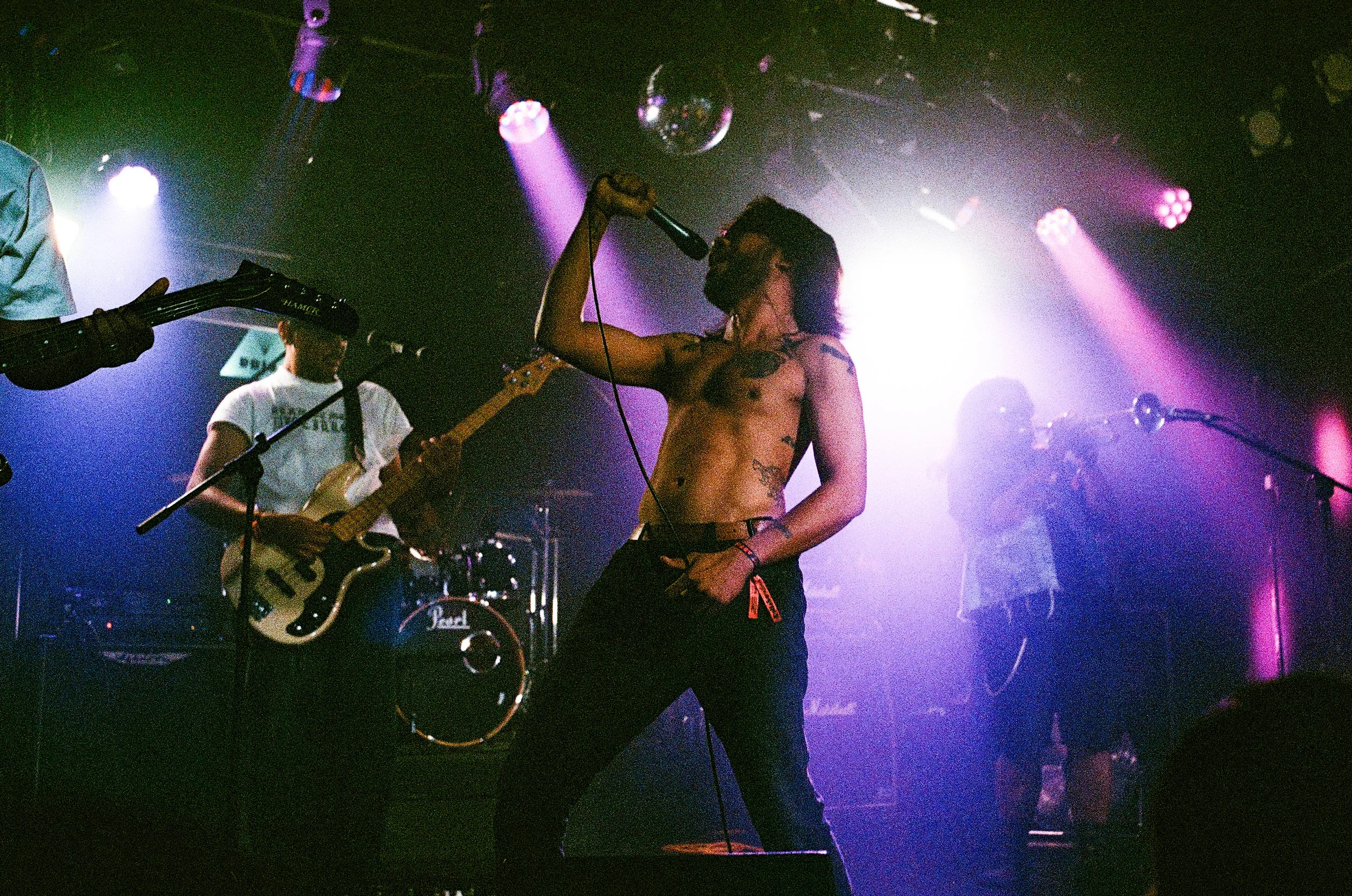
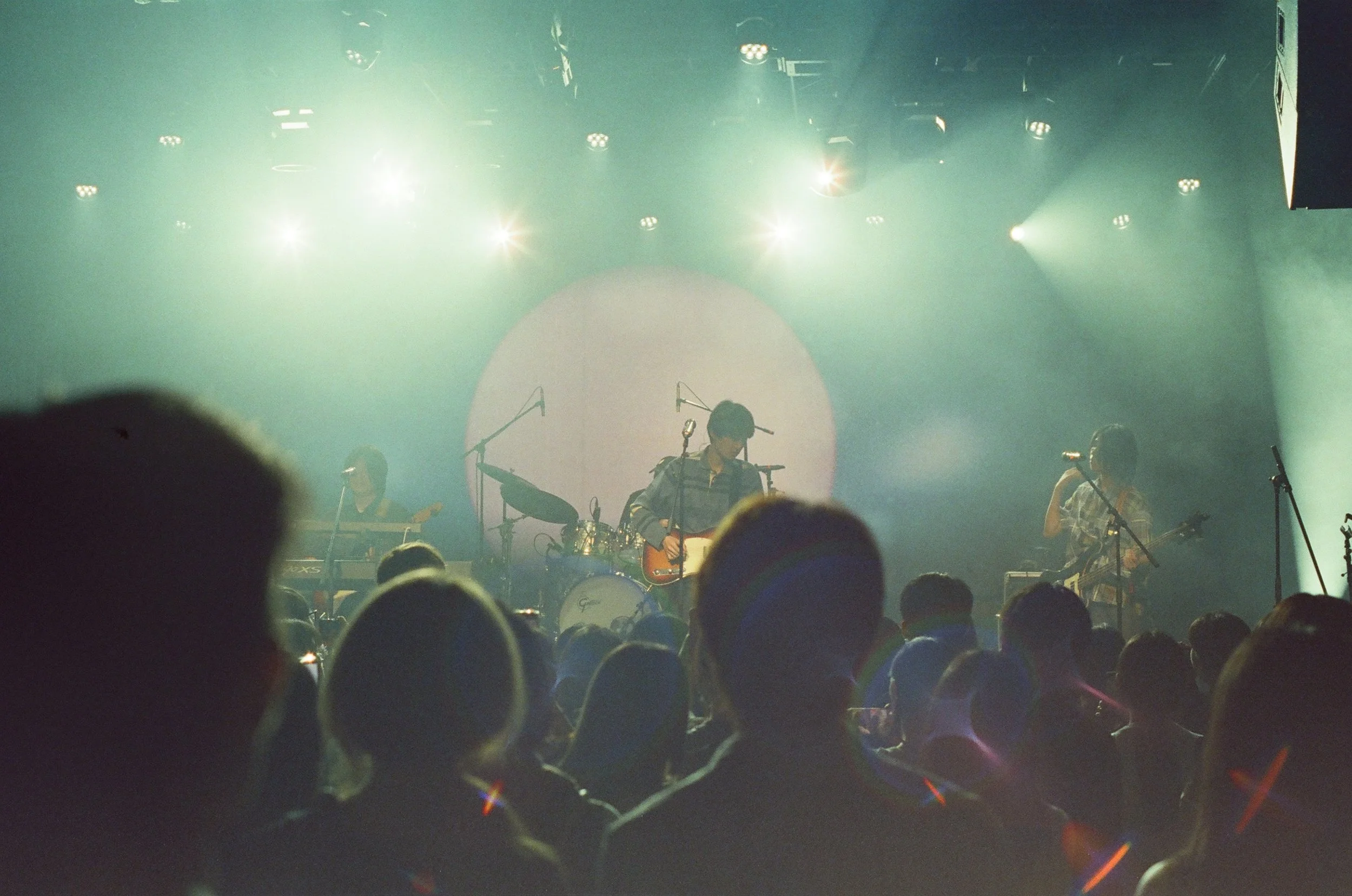
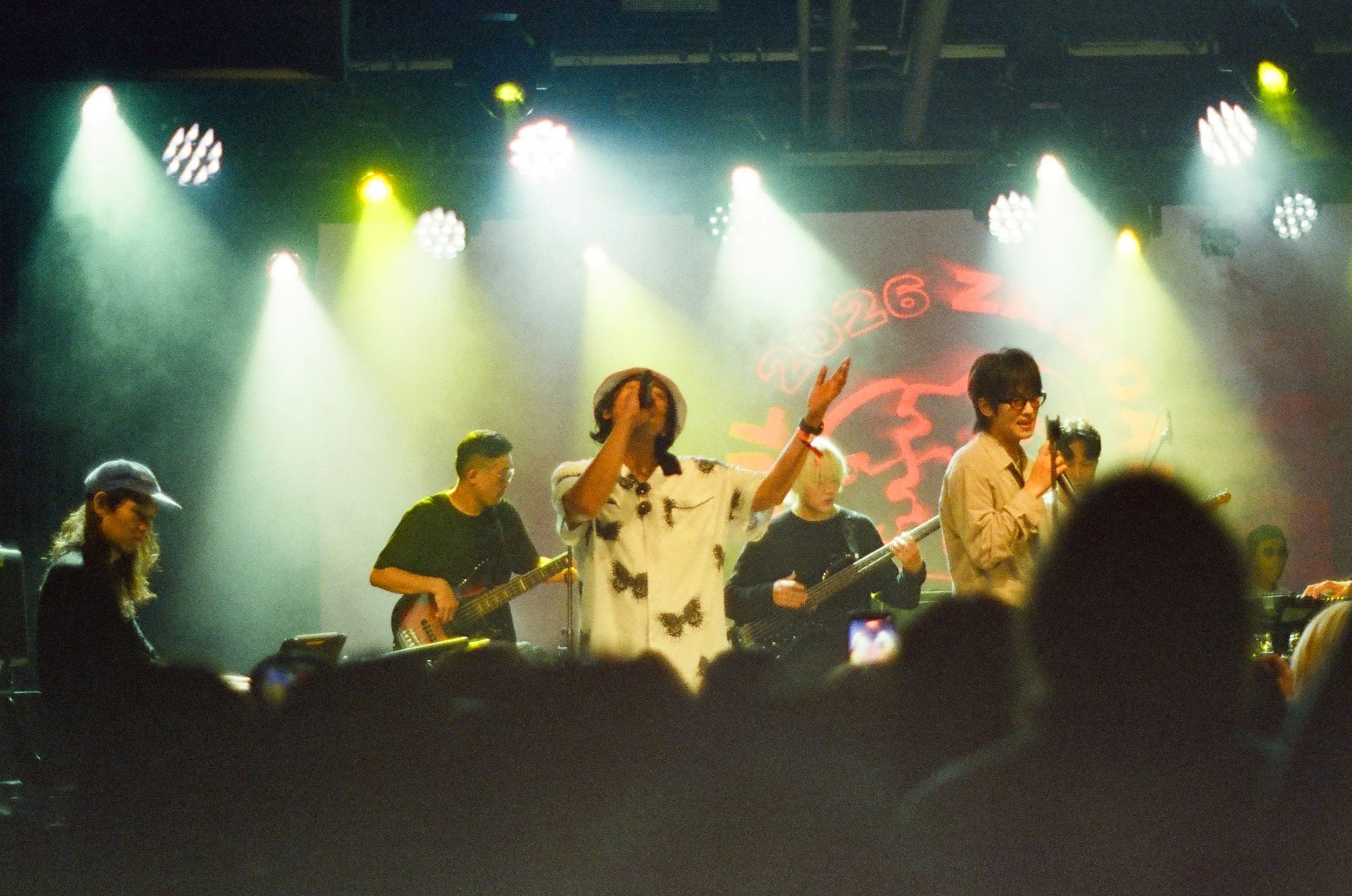
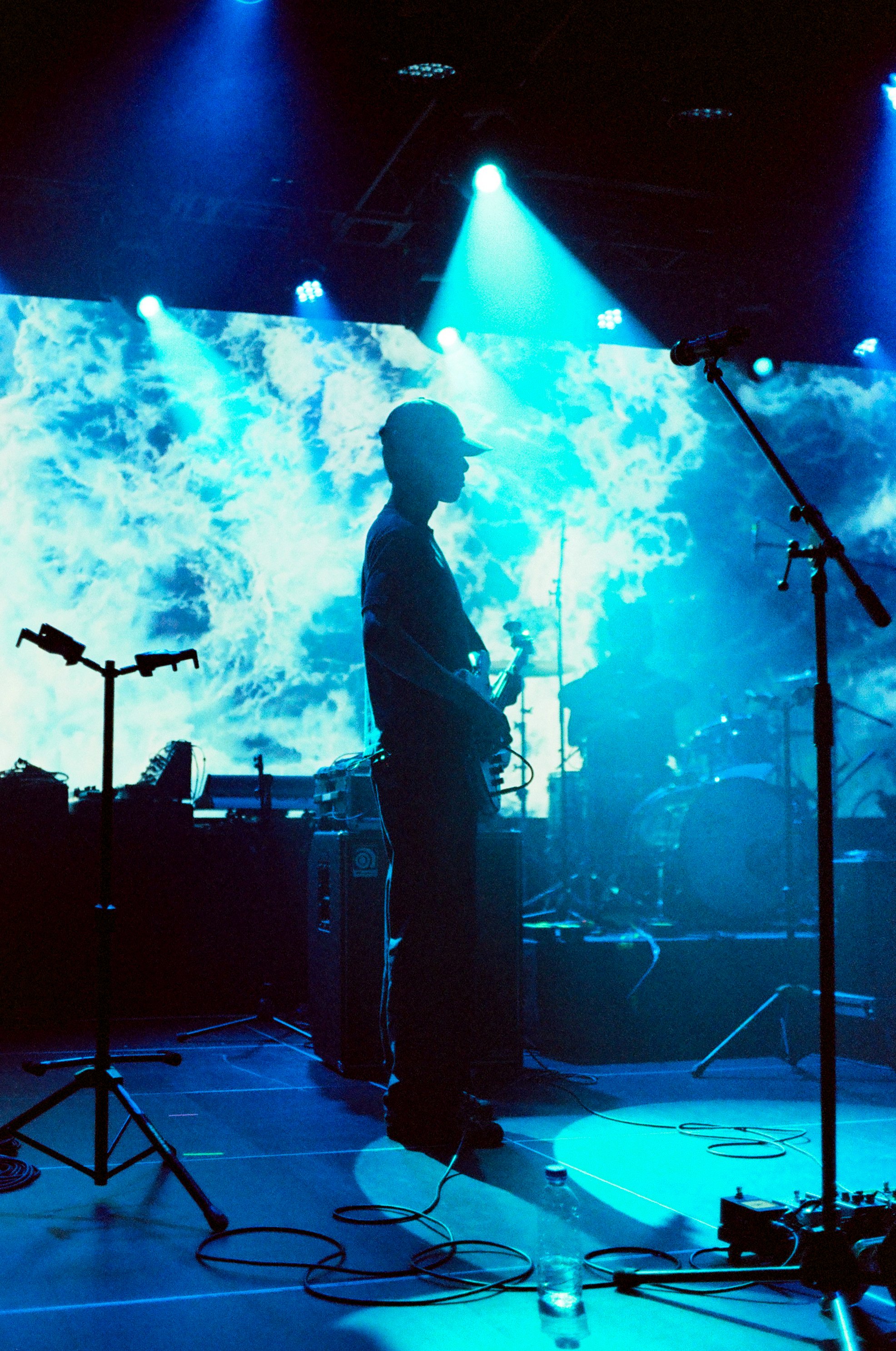
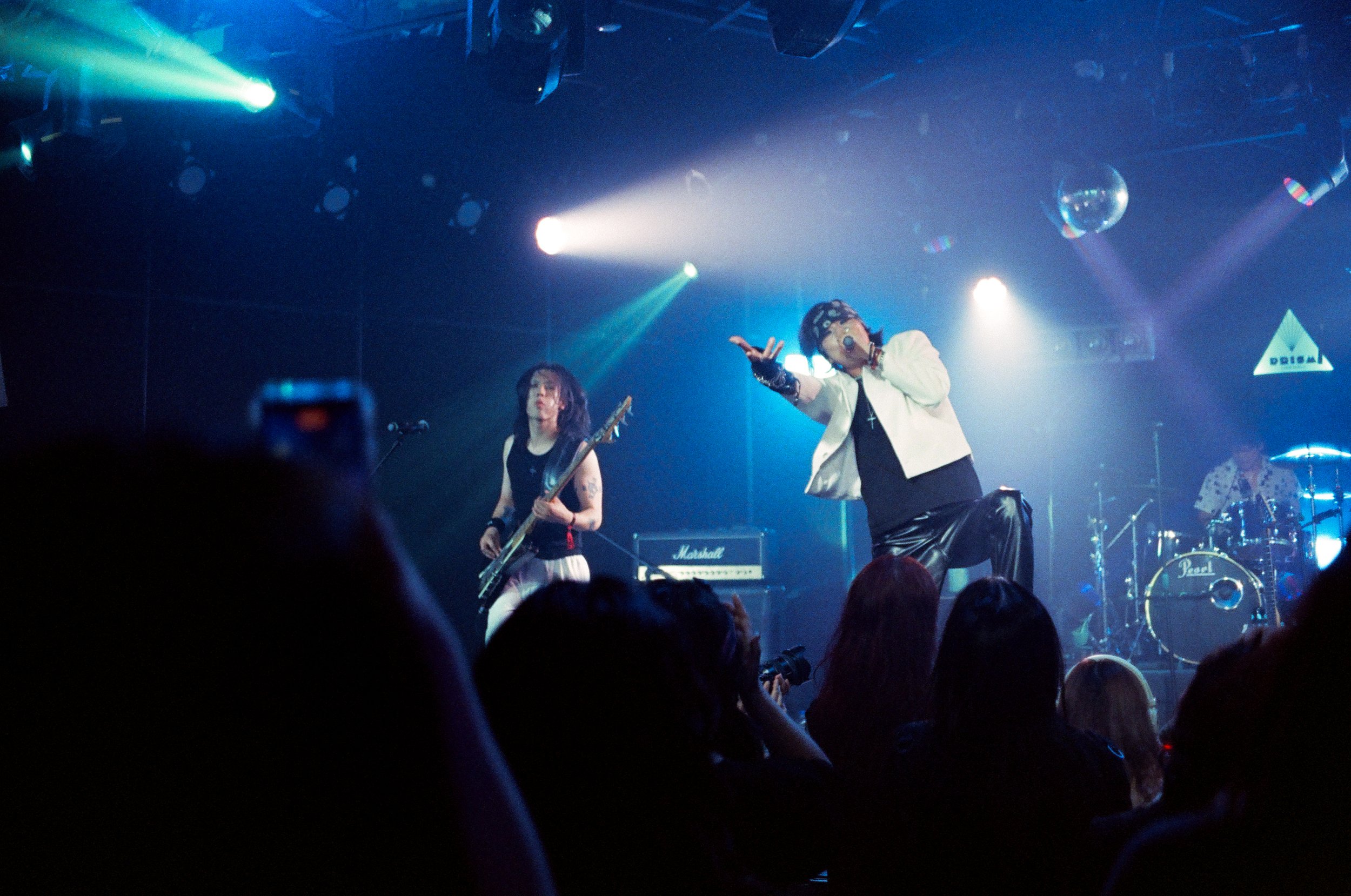
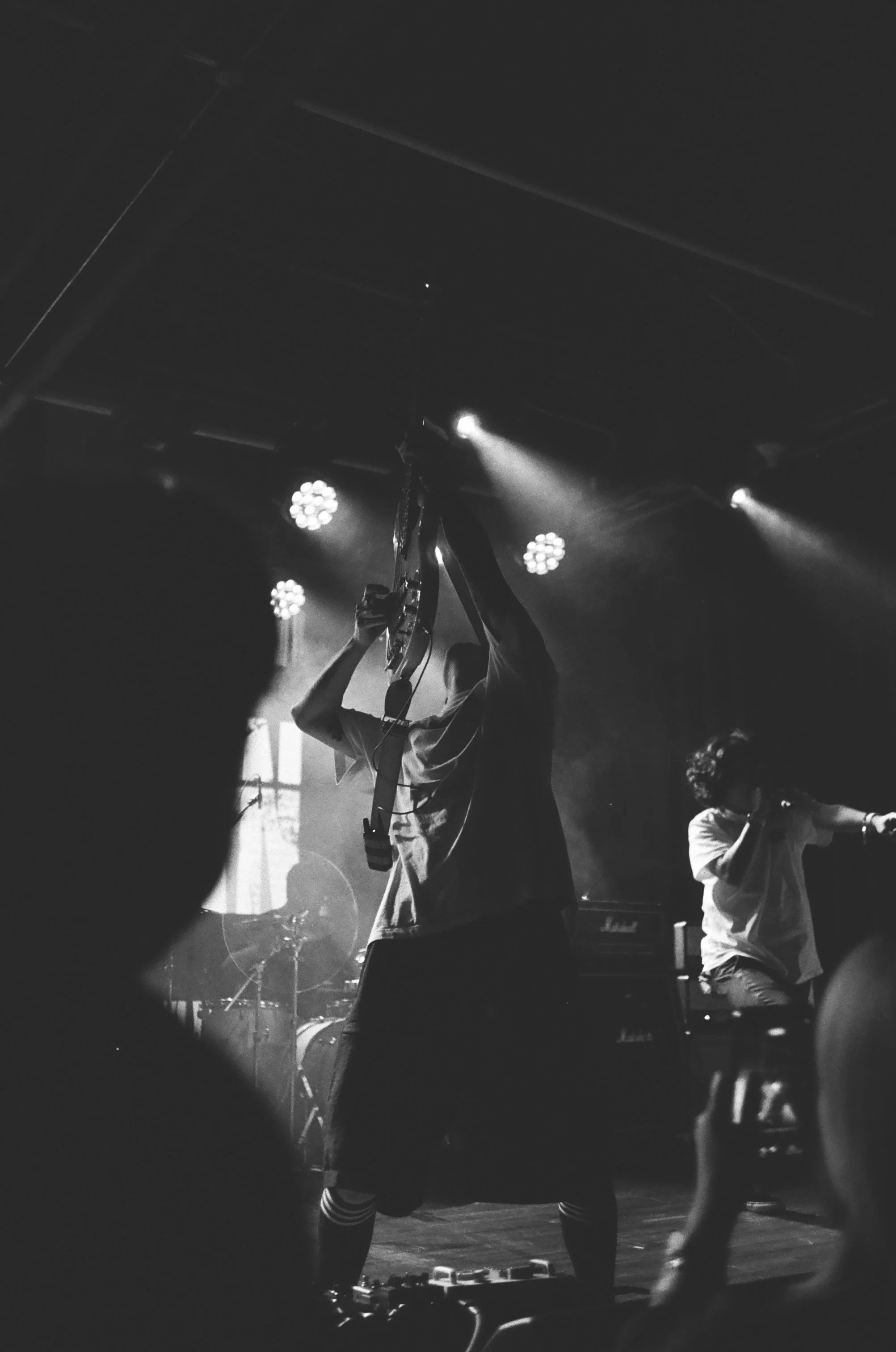
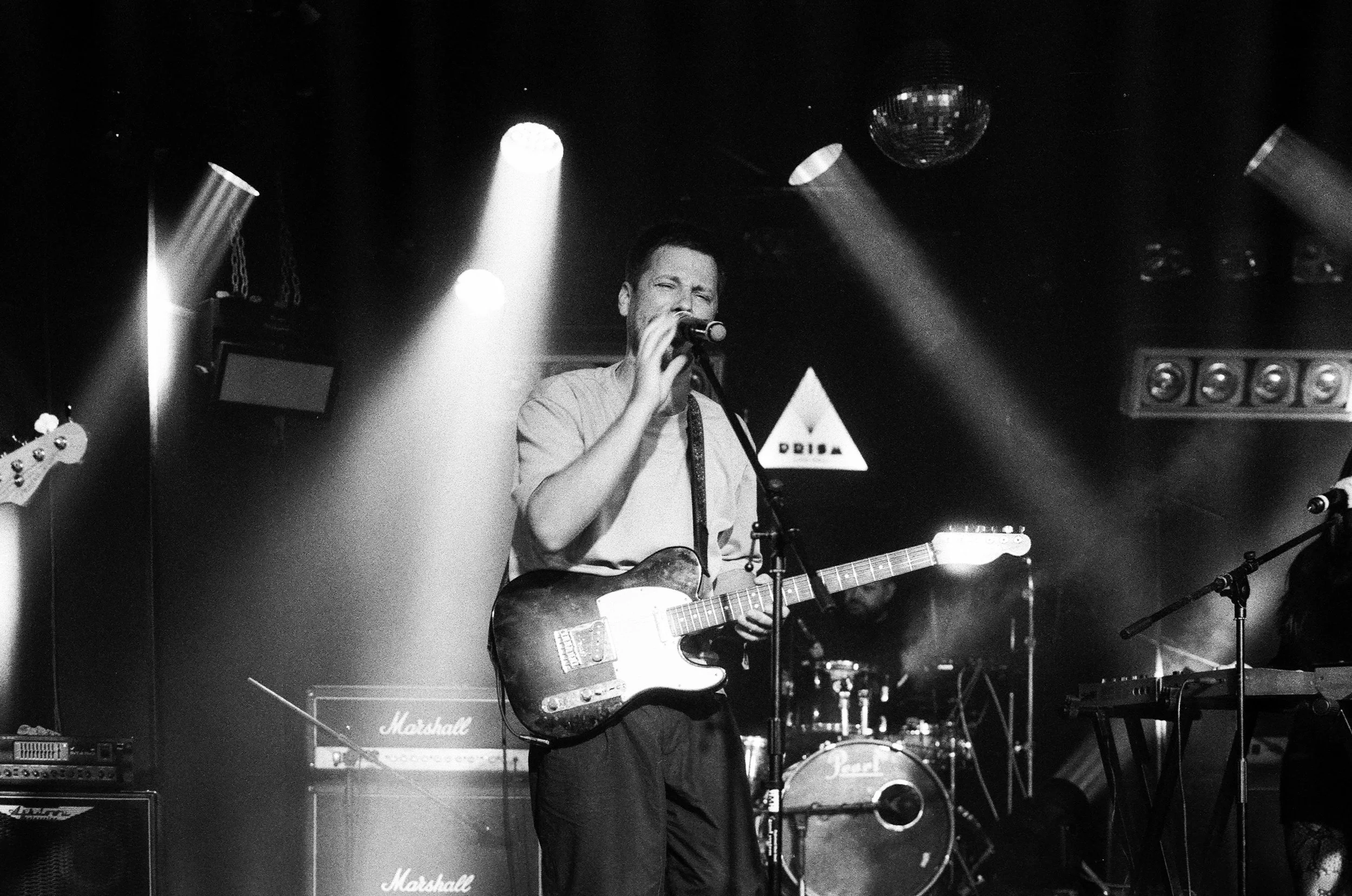
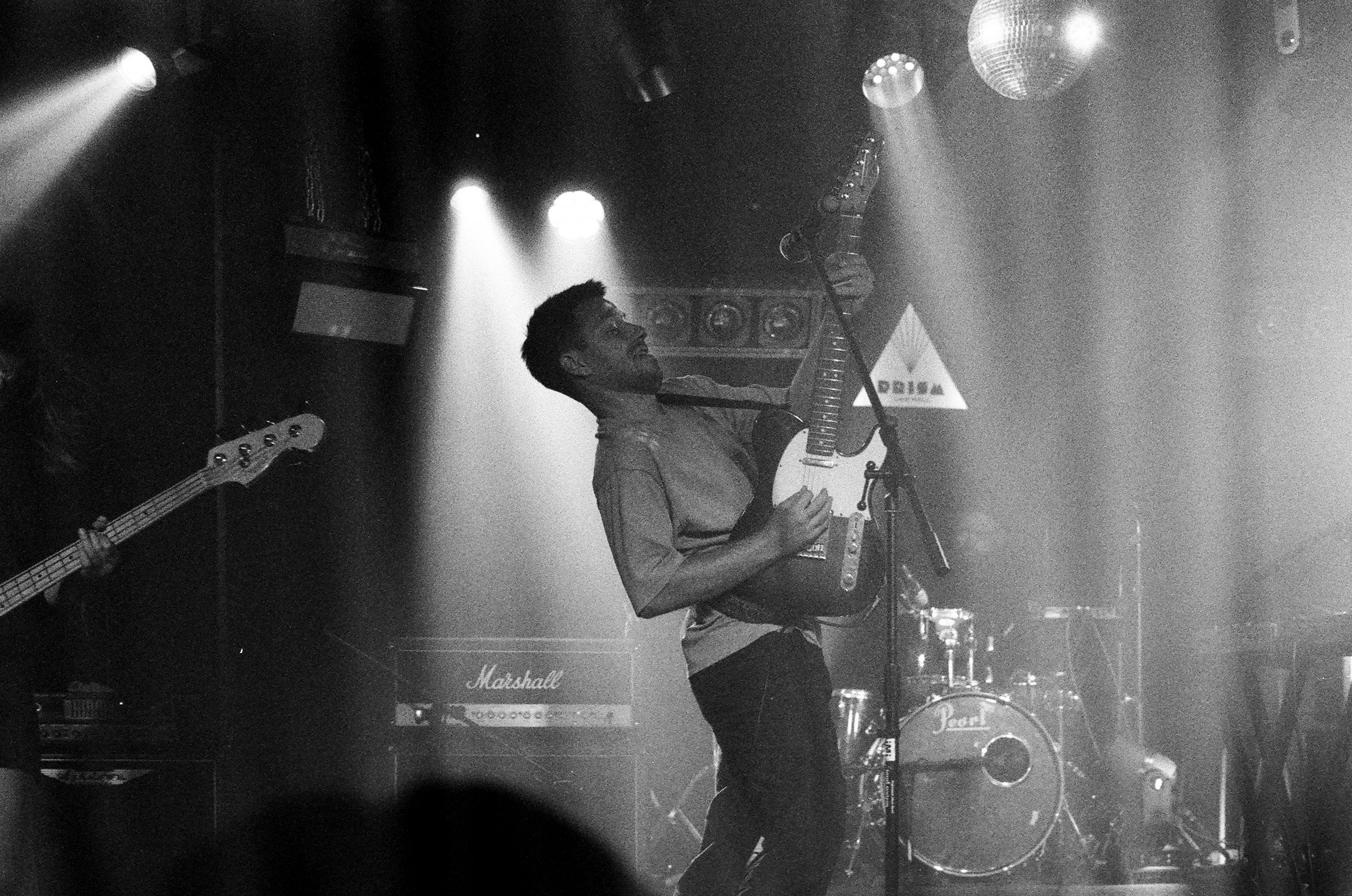
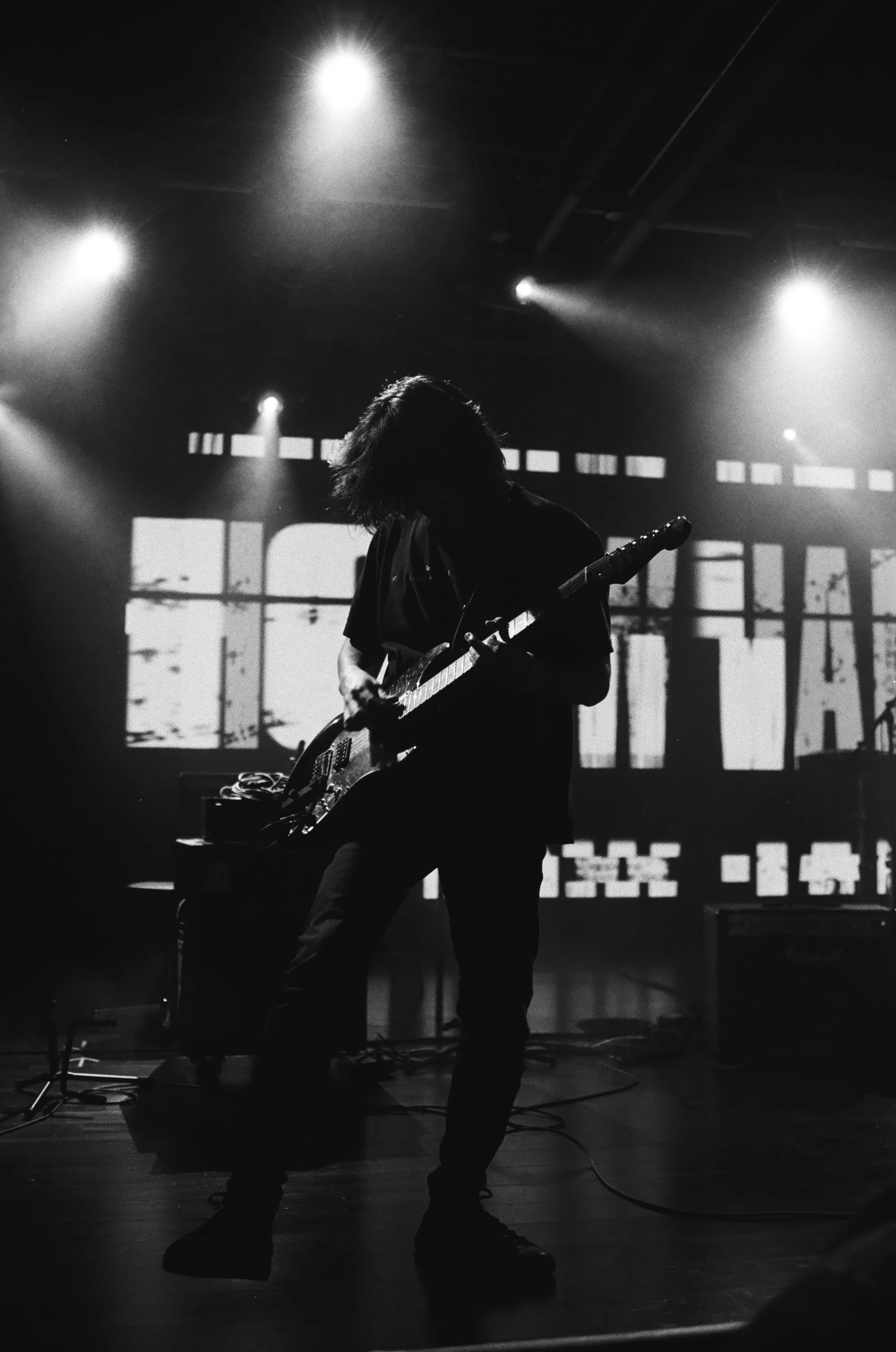
Regarding the shooting experience, I think this festival was kind of an outlier. The access I got as general audience was the same as someone with a press pass which I think is super lucky. It allowed for getting shots closer up to the artists which I think tend to be one of the biggest factors for getting those "wow" shots.
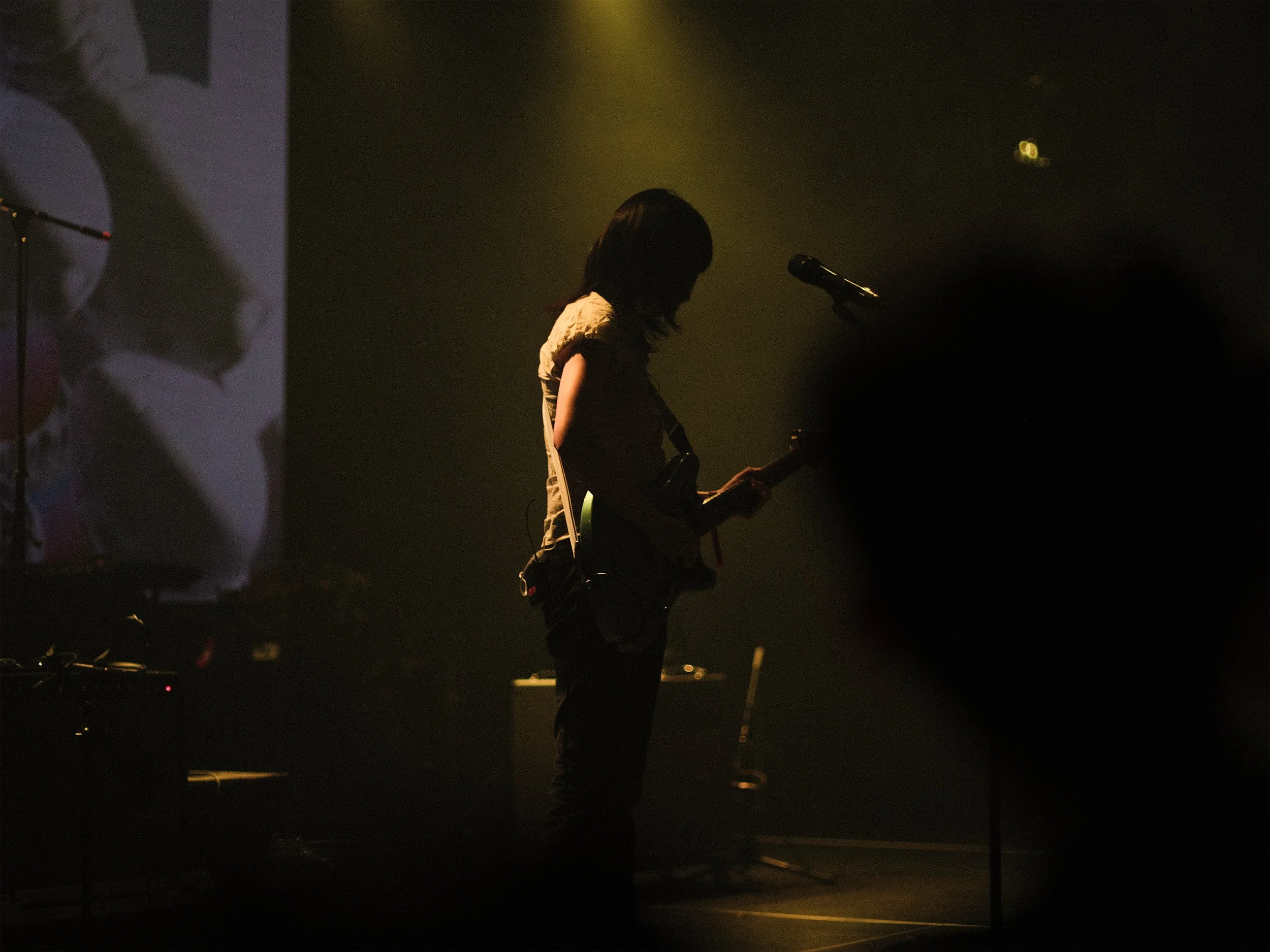
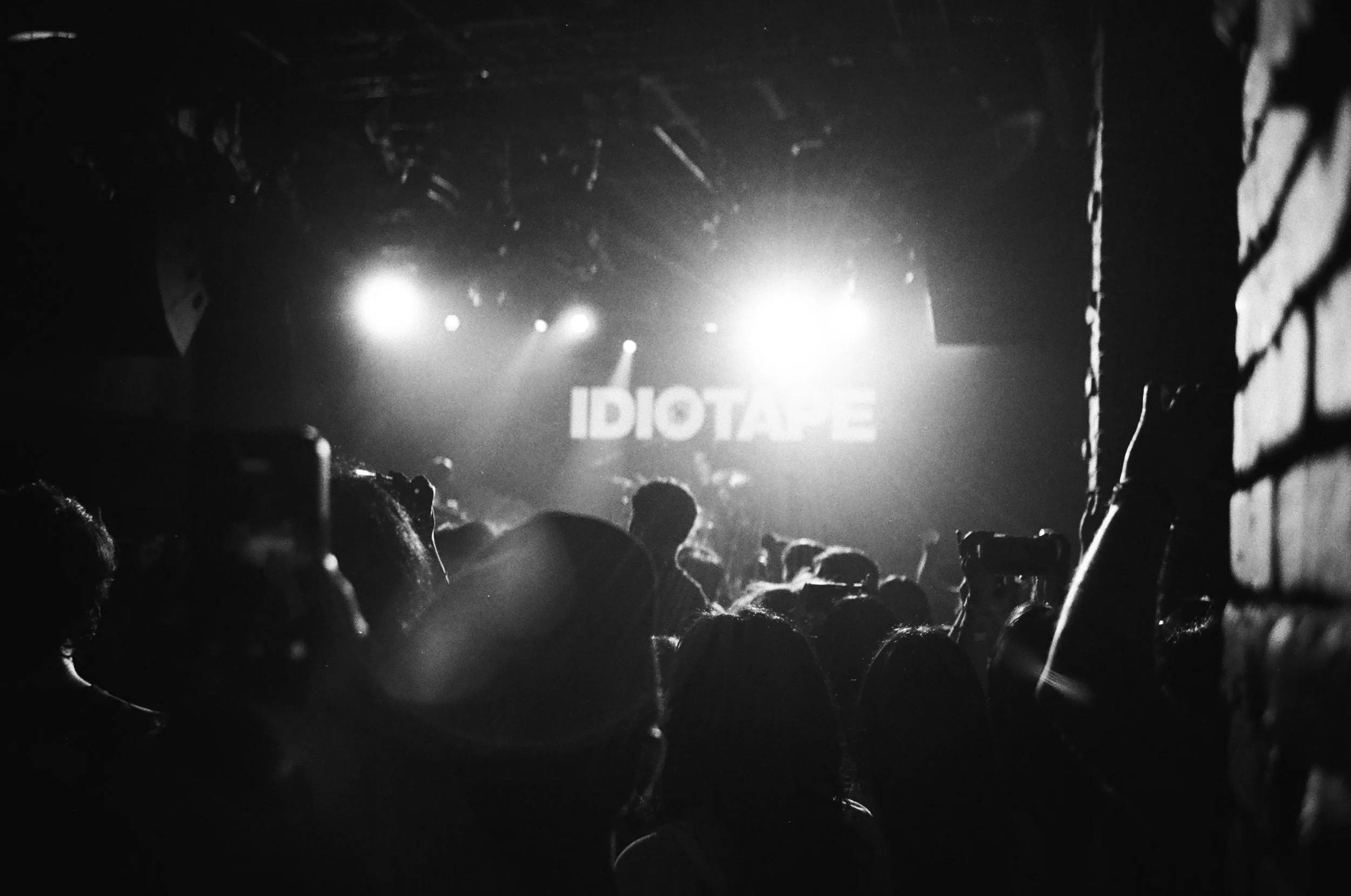
The trade-off is that I think some of the shots I got that were a bit further back were actually more "interesting" from a story-telling perspective. When you have the audience and more of the venue in the shot I think it lends to creating a more unique shot because they'll be unique to that location. Also, when events happen with the artists interacting with the audience, being a bit further back can give you a natural POV that tells the story in your shot in a way that allows viewers to experience it as if they were there.
5 Concert Photography Tips:
General Tip: Make Sure Your Camera is Allowed
This is probably really obvious but make sure you can bring your camera. To take this a step further, what I mean is that often the bigger your camera is, the more likely it is you'll need a press pass to bring it in.
If you find that a camera with interchangeable lenses can't be brought consider a point and shoot! Security will often let you pass with something small and pocket-able. Whether it's a cute disposable camera, a Fujifilm X100 or a point and shoot like the Fujifilm Tiara, a small camera is more likely to get into the concert with you and let you get some stellar shots.
General Tip: Test and Know Your Gear
During this festival I made the mistake of bringing cameras I was either unfamiliar with or that weren't as suitable for the show. I ended up with damaged rolls that sent me rushing home for gear I was more intimate with.
Let's say you know your gear DOES work. You should also be sure that you know how to use it. The lighting scenarios during concerts and especially festivals can constantly be changing so you want a camera that can keep up. Whether its the settings, focal lengths, knowing how to load film in it during action or just a camera you feel confident with.
Setting Tip: Shutter Speeds
This is just personal experience and may depend on venues, their lighting, etc. but I found that shooting 1/60 was what gave me best results when it came to ensuring the stage lights displayed properly in my photos while minimizing excessive motion blur/camera shake. At 1/125 I found that the shutter would sometimes catch moments between lights flickering during intense light show moments. Alternatively, slowing down to 1/30 introduced motion blur that was a bit excessive on the subject and would often introduce noticeable camera shake since film cameras don't have body-level image stabilization and older vintage lenses don't either. (lenses towards the end of the film era did introduce image stabilization though!)
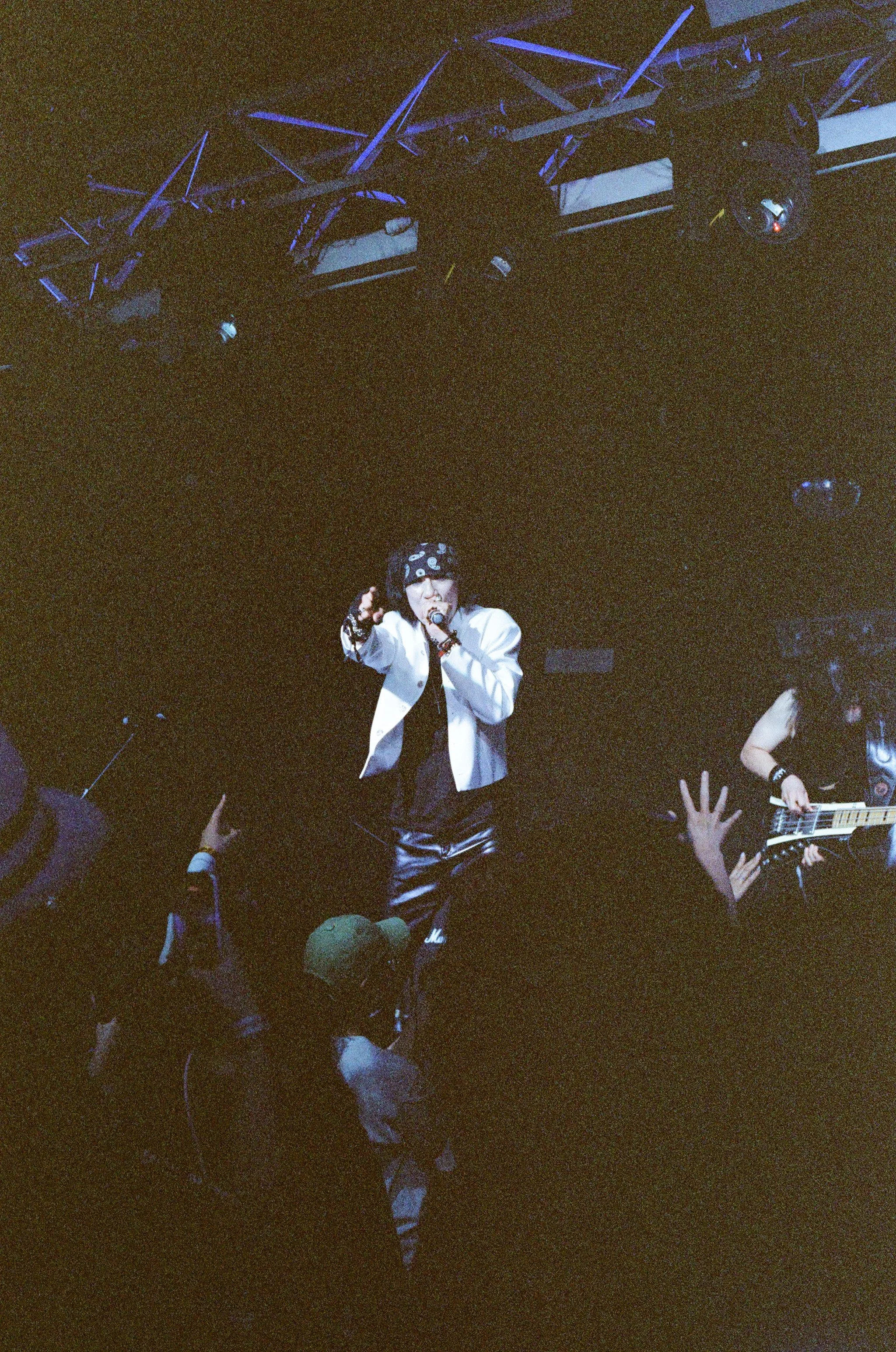
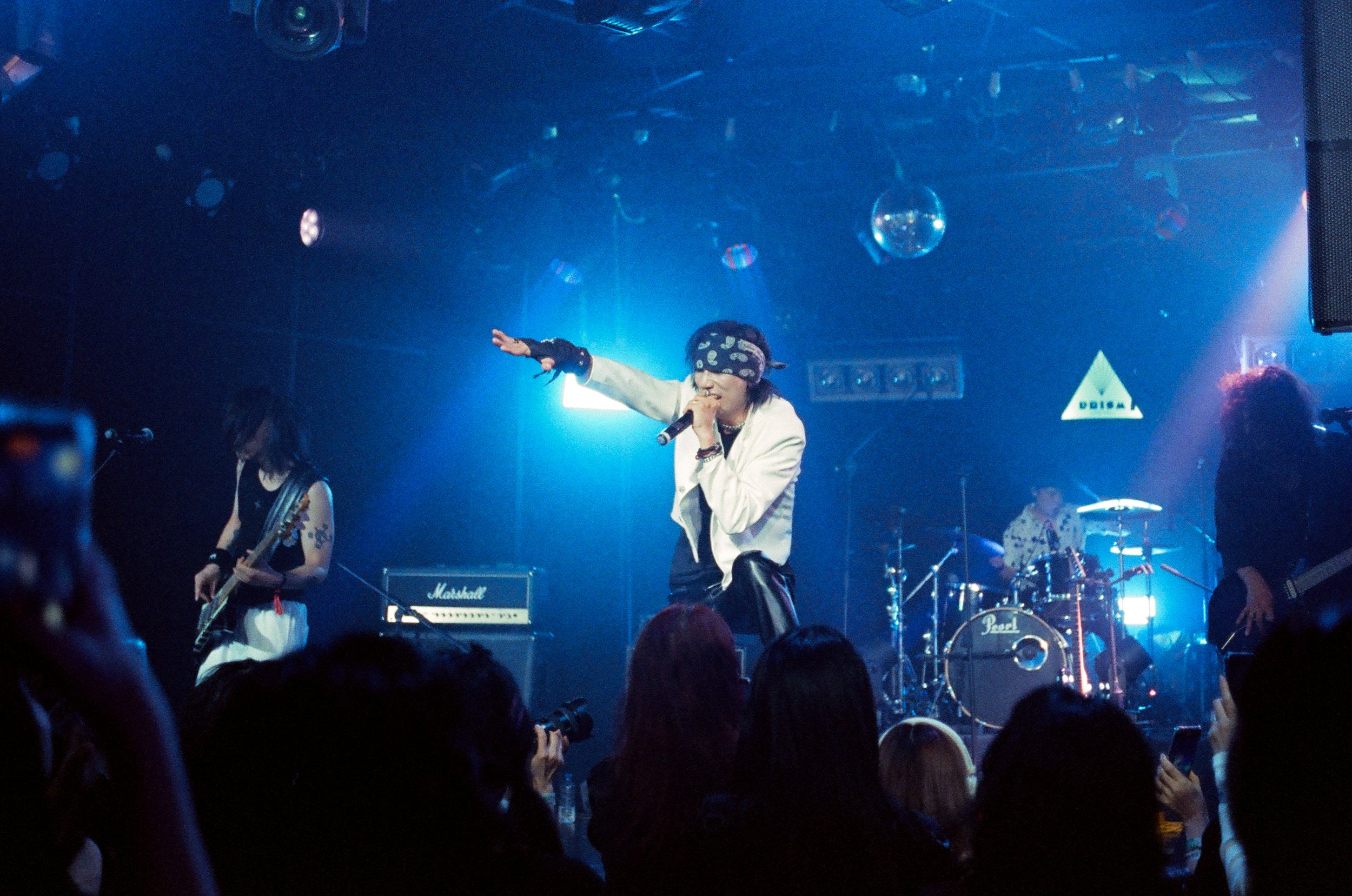
In the images above you can see that at a higher shutter speed I was able to take a shot between the lights flashing resulting in an underexposed muddy image. These images were taken moments apart and while the light strobing isn’t as perceptible to the human eye, a camera can fire a shutter between each pulse of light.
Setting Tip: Exposure Compensation
Concert venues are dark and cameras that are automatic will do their best to brighten them up. You might be wondering, "what the heck, why?" and that's because an automatic camera is designed to try and make every scene as close to "well-lit" as possible.
To remediate this, you want exposure compensation. You tell the camera, instead of aiming for "well-lit," over or under expose it by a specific amount.
For concerts in darker venues I found that around -2/3 was a good general purpose setting for film. I wanted to capture that darker feel of the venue without going so dark that I'd start to lose too much in the darkness as film doesn't preserve shadows well at all. Film also has the benefit that brighter things like stage lights preserve highlights much better than digital so those bright lights in the background have nice pleasant roll off.
In my experience, shooting any of the color films labeled 500T, 640T or 800T will give you great results as they're optimized for low light. If you're looking into black and white photos I personally like Kentmere 400 as it pushes well to 800 and 1600 but I've also had good experience with Ilford Delta 3200 in situations with super dim light if your camera can handle that. Combined with exposure compensation I find that you can get usable shutter speeds even with basic point and shoots.
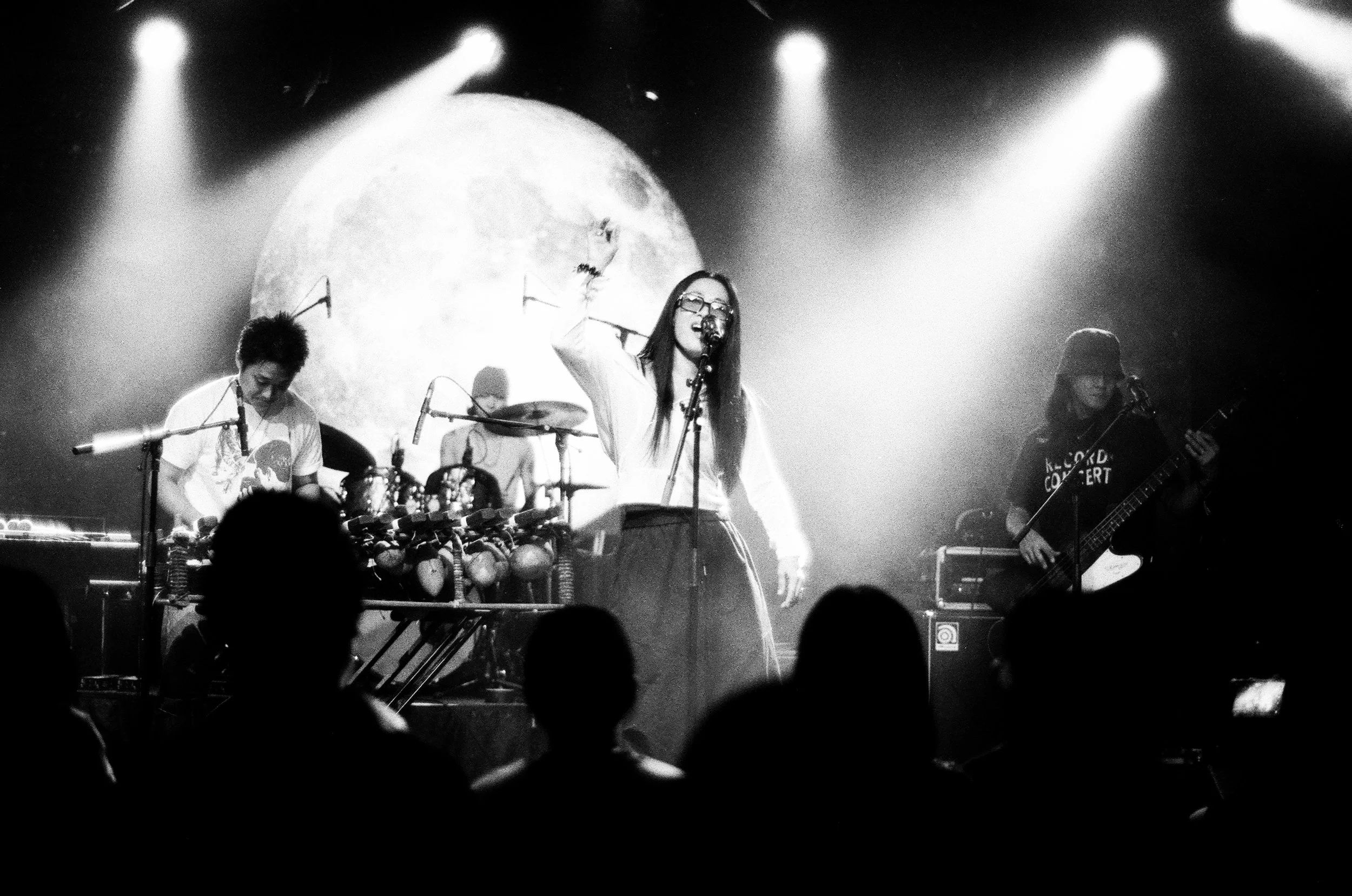
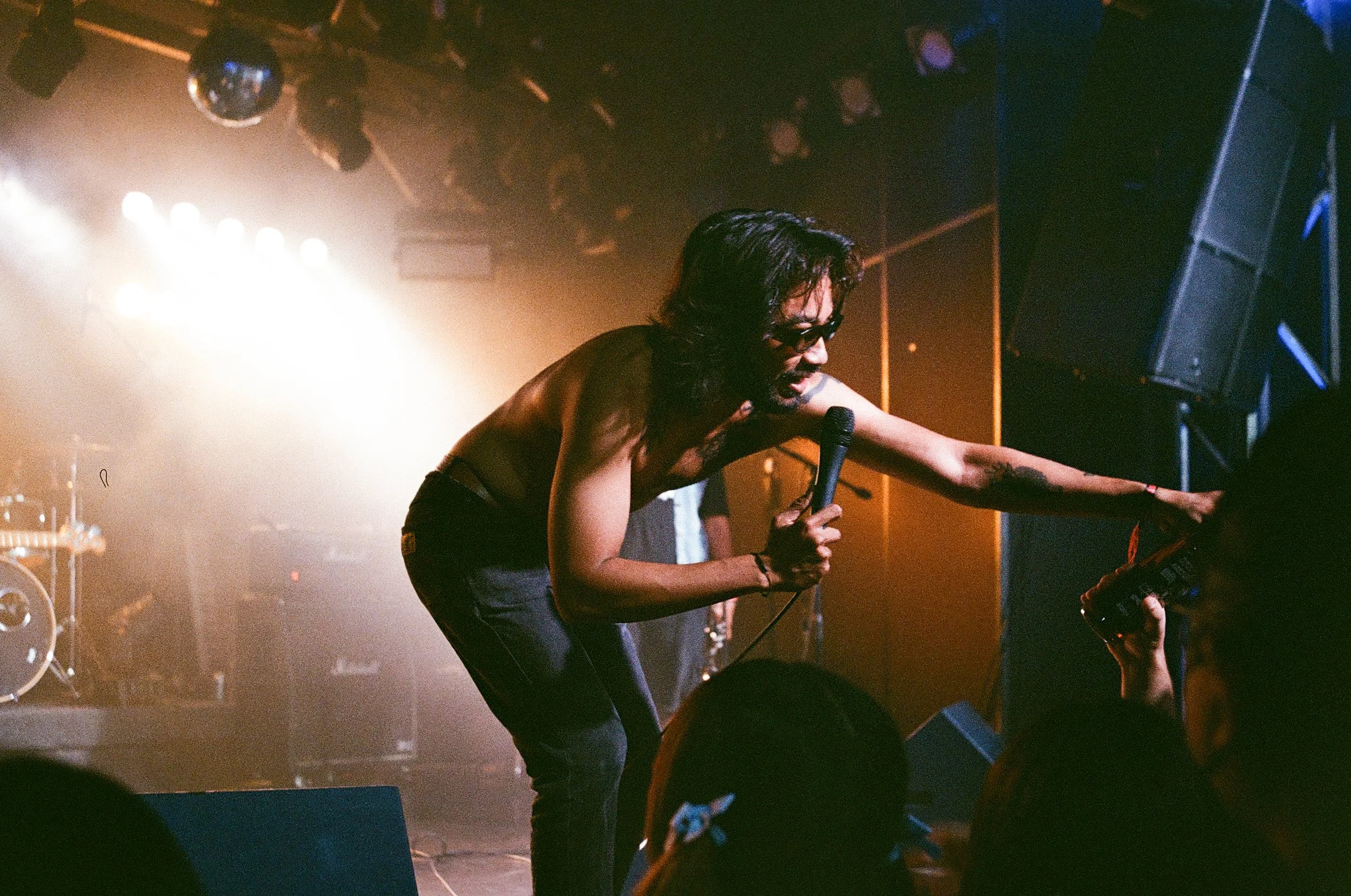
Kentmere 400 @ 800 and Ultramax 400 @ 800
Setting Tip: Flash
Flash photography has become a vibe again and honestly, rightfully so. It brings such a unique and distinct look to your pictures that you just can't get any other way and this applies to concerts too. If you can, consider experimenting with a flash as a way to create something to stand out from the other photographers. The catch is that, especially if you're shooting on film, you NEED to know your flash sync speed if you have one and whether you're using a manual flash. This is an entire article in itself but to keep it brief:
Most cameras have a max speed it can use flash at, do not exceed it.
Advanced flashes can communicate with your camera to determine power output, if yours can, you should be good at this point. Power on and fire.
Manual flashes, however, can't. You will need to learn what power setting your flash needs for your desired film speed and camera settings OR if your flash is one setting only, you need to learn what camera settings to use for your flash.
Last note on flash photography, make sure you're actually allowed to use a flash. Some venues strictly prohibit it and it would be an unfortunate way to get removed from the venue.
(BONUS TIP) Have a Back Up
You might be thinking, "I'm already doing my best with what I got now, what do you mean a back up?" and I get it but actually it's pretty simple! Just have something you'd be okay with using if your camera's batteries died or if you ran out of film.
Even if it's just your phone, that's fine. If you're going to a concert specifically to photograph it, the last thing you want is to be caught without a camera when something unexpected or incredible happens. A backup camera is the difference maker between whether you can even try to get the shot.
I'd recommend something that isn't a phone but a photography app that you like on your phone can go surprisingly far. I'd also recommend either avoiding the default app or learning how to go as manual as you can with it. The default settings will generally be... not great.
Thoughts After The Fact:
I want to say I'm super thankful that the indie scenes around the world are so great. Initially, I wasn't sure I'd be able to stroll in with my cameras but the venues in my home town and in Seoul were super kind about letting me in to take photos. :-) If you're looking to get started, remember your local independent artists and venues.
Shooting the Zandari festival taught me that even within smaller music scenes here in Seoul, there are musicians from around the world coming together to put together an awesome experience. There were bands from Europe, America, Japan and I'm sure other places too putting on the best performances they could for the fans who came out to support the scene. I was surprised because when I think of indie festivals, I tend to assume that it'll be small bands from the immediate area but seeing performances from around the globe was just really cool.
Closing Thoughts:
Like you, I'm still on my journey of learning more about this genre but I hope that these tidbits of knowledge can help at least a bit! Shooting photos at concerts is an incredibly fun, albeit challenging, experience.
Whether you're new or experienced at photography I feel like the photographs you can get from a concert have a magic that you can't capture in other genres of work. If you've ever wanted to try but have been too scared because it seems challenging, just try to take that leap of faith. Shoot a roll, take pictures until the battery in your camera dies. You'll be happier knowing you tried rather than not doing it and wondering what your pictures could have looked like.
I'll catch you next time!
Further Reading:
Fujifilm Tiara II Impressions - One of the easiest point and shoots to bring anywhere
Voigtlander Nokton 50mm f1.5 II Review - My favorite concert lens. Small, light weight and bright.
Lucky Color 200 Impressions (135) - A punchy and vibrant film suitable for bright sunny days with that hint of nostalgic warmth. Suitable for outdoors festivals.
Mamiya Sekor C 80mm f1.9 Impressions - My newest low light concert lens